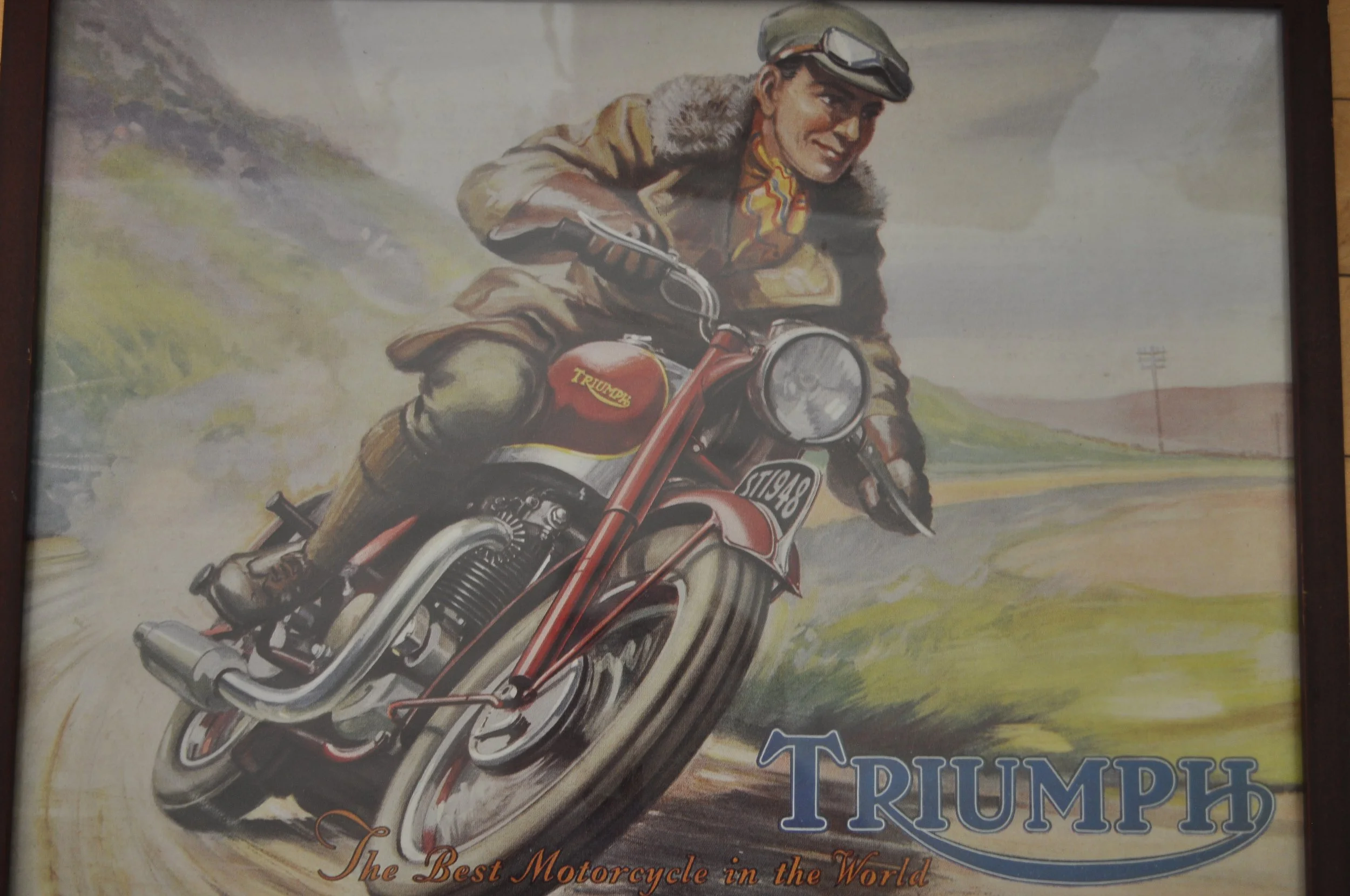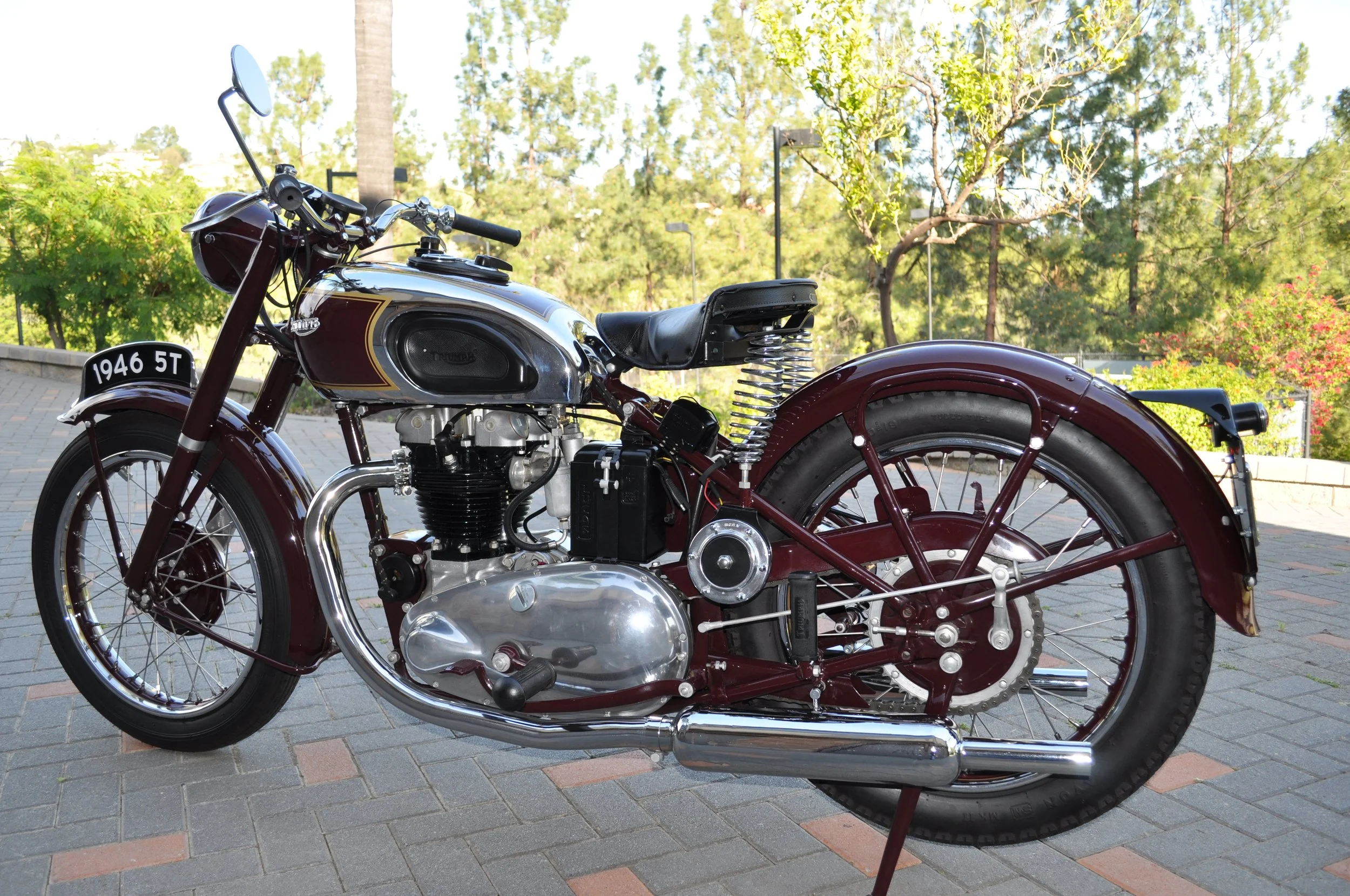
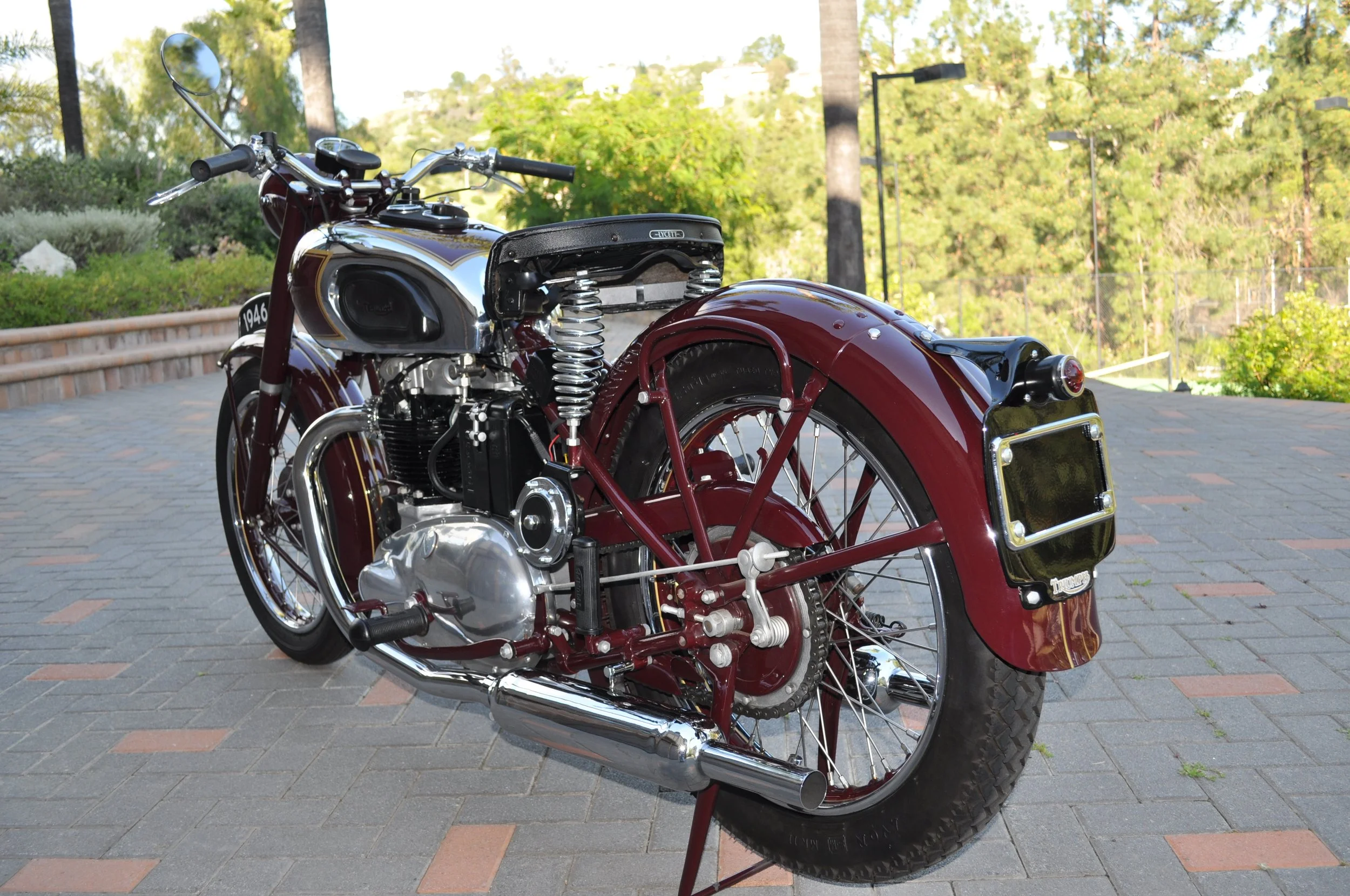
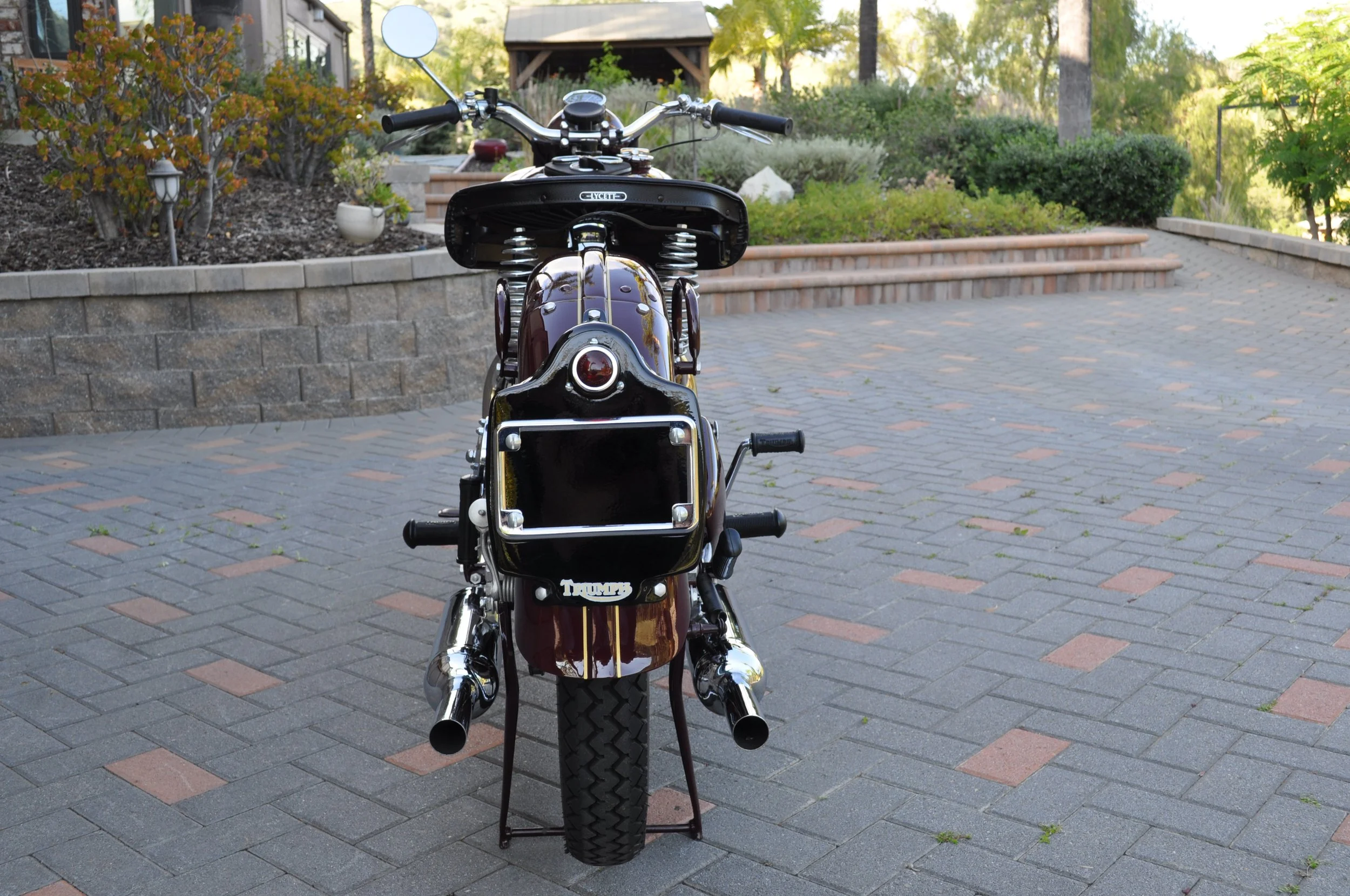
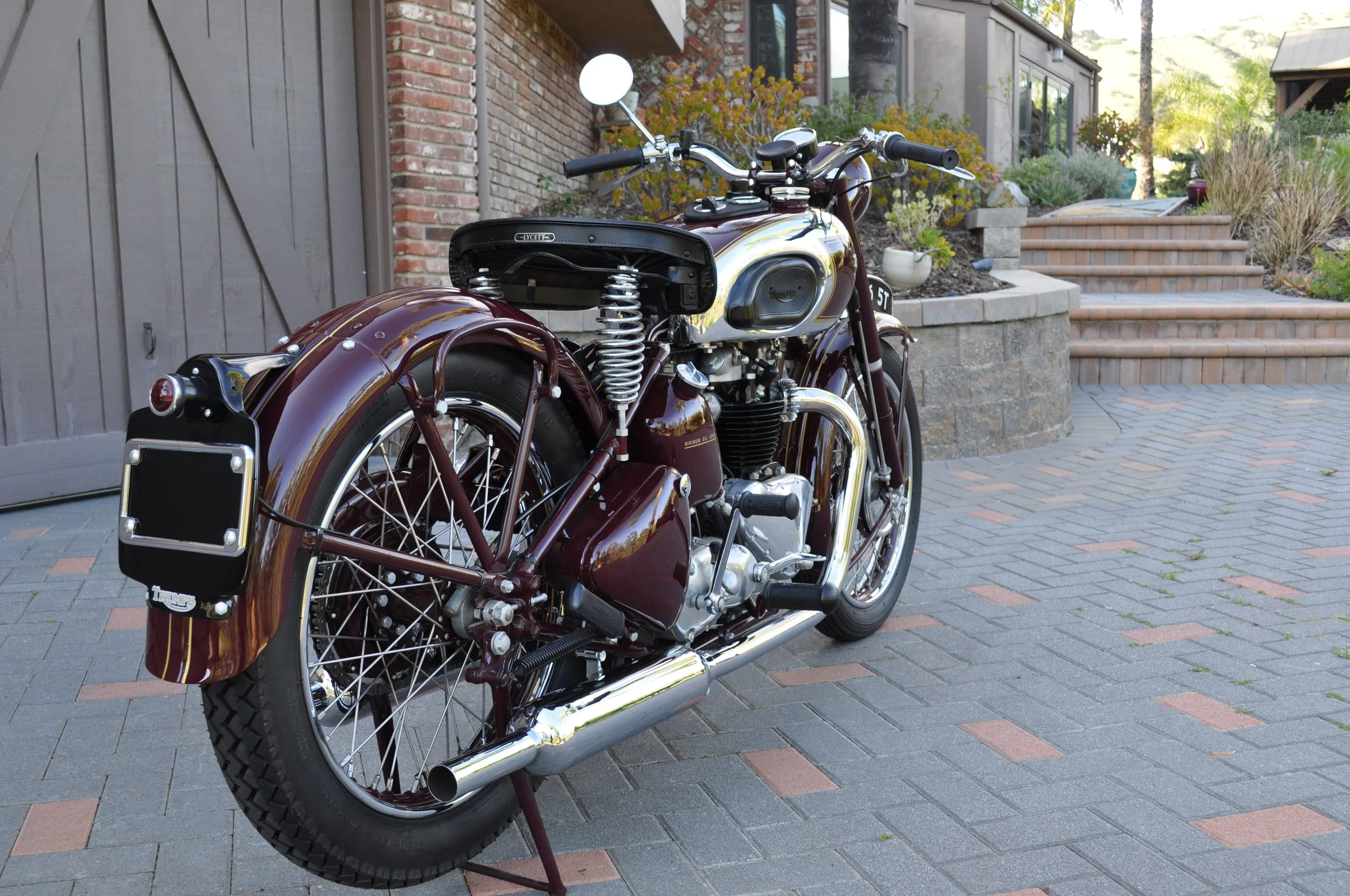
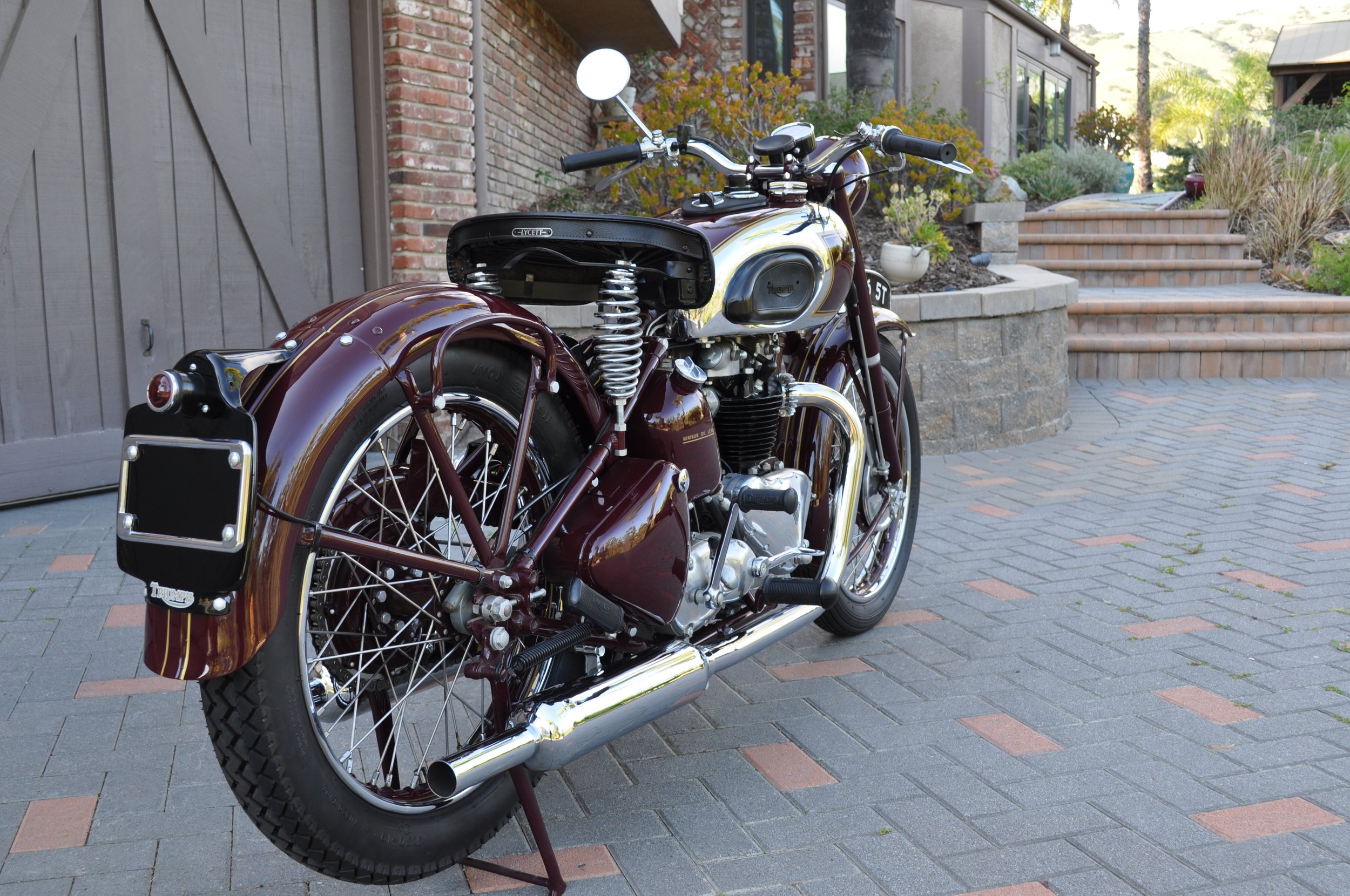
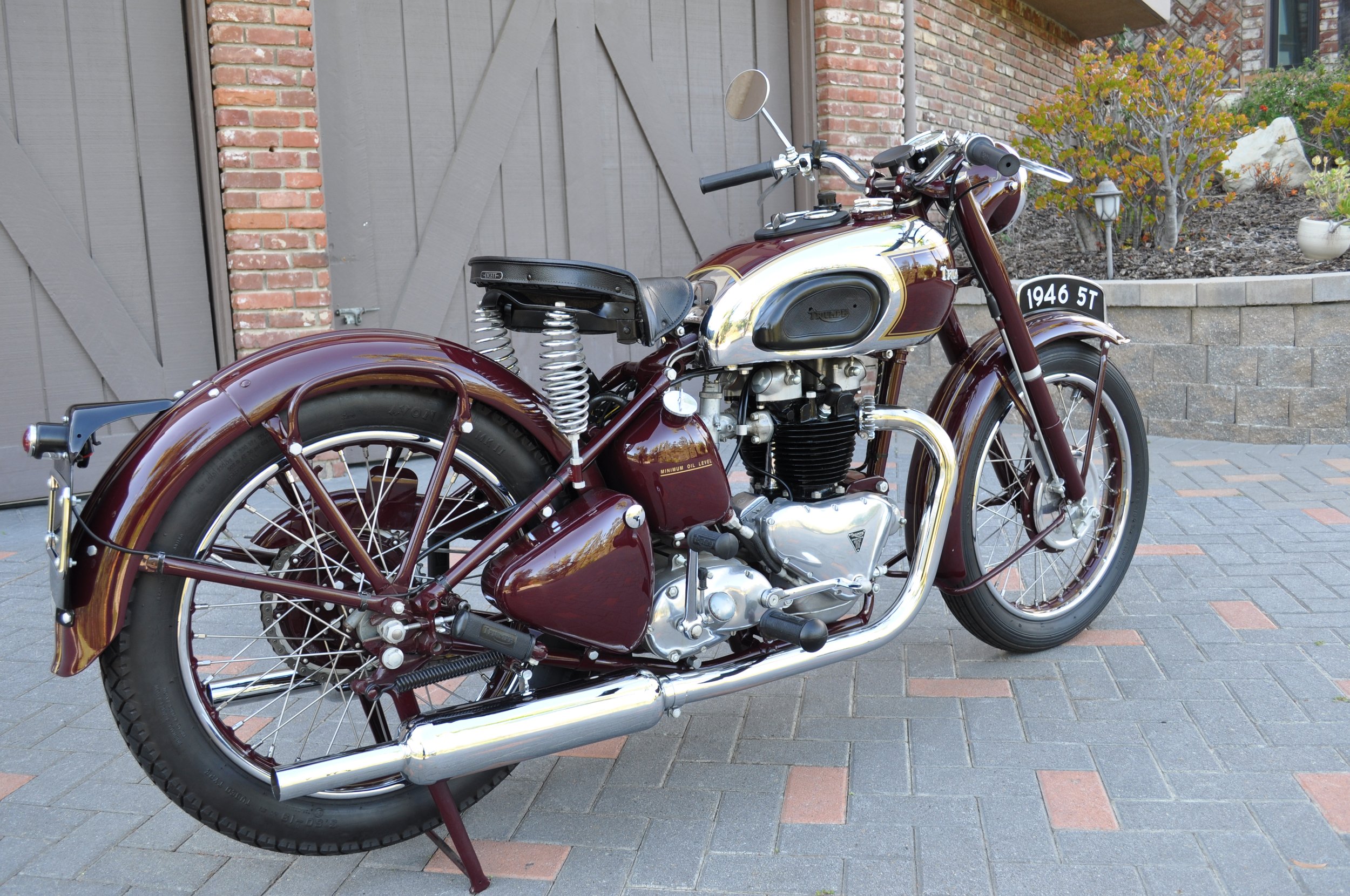
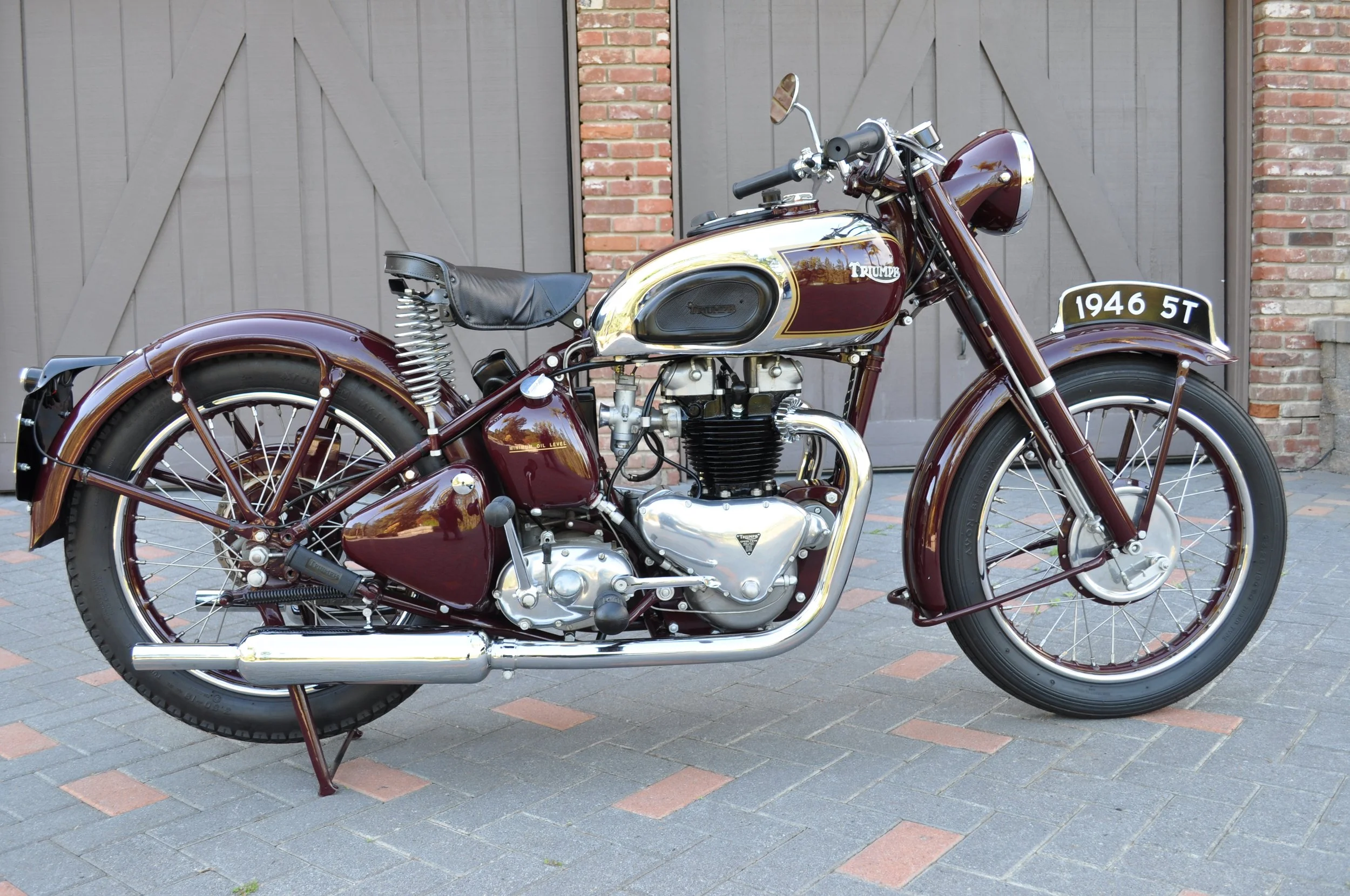
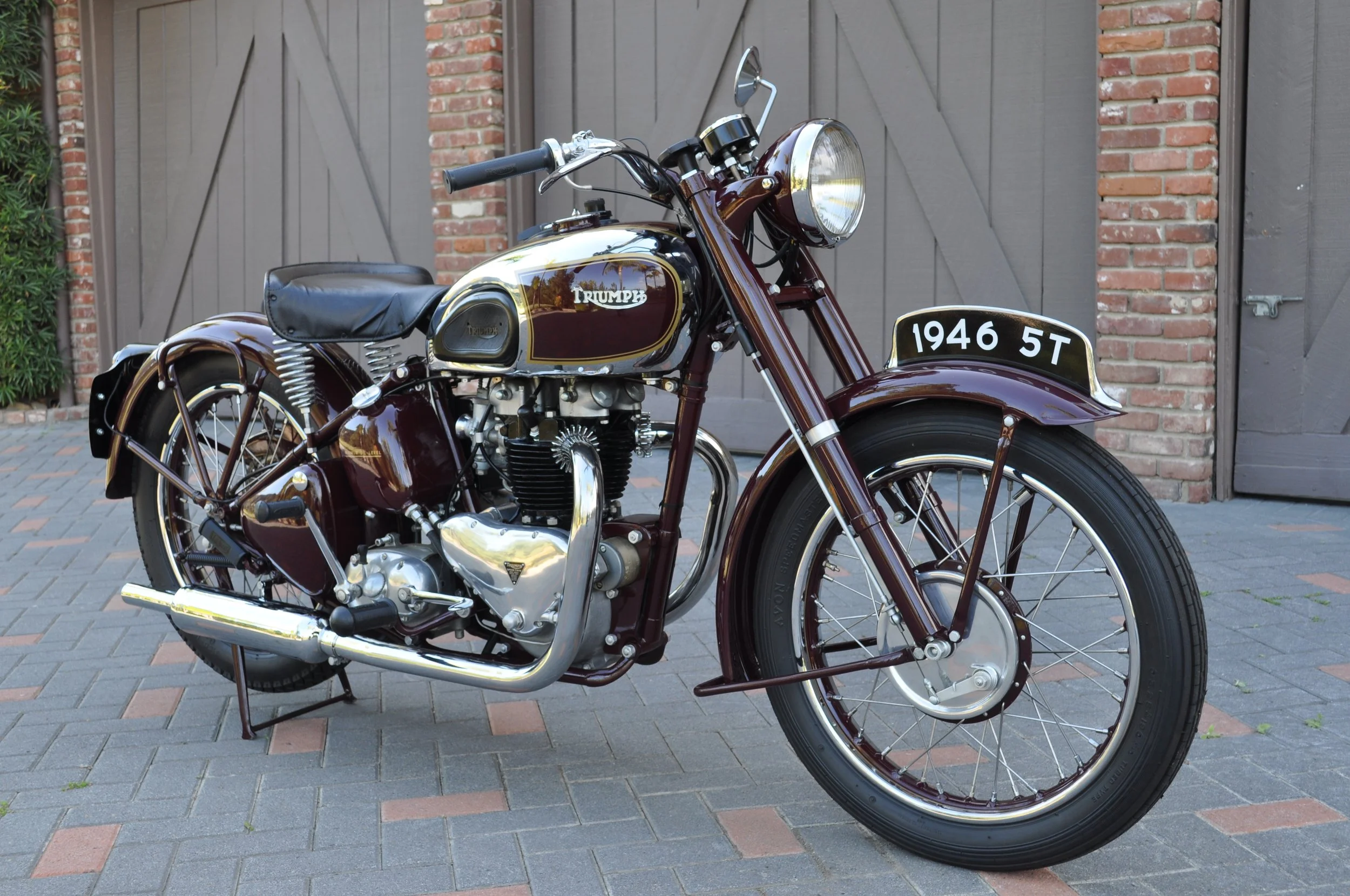
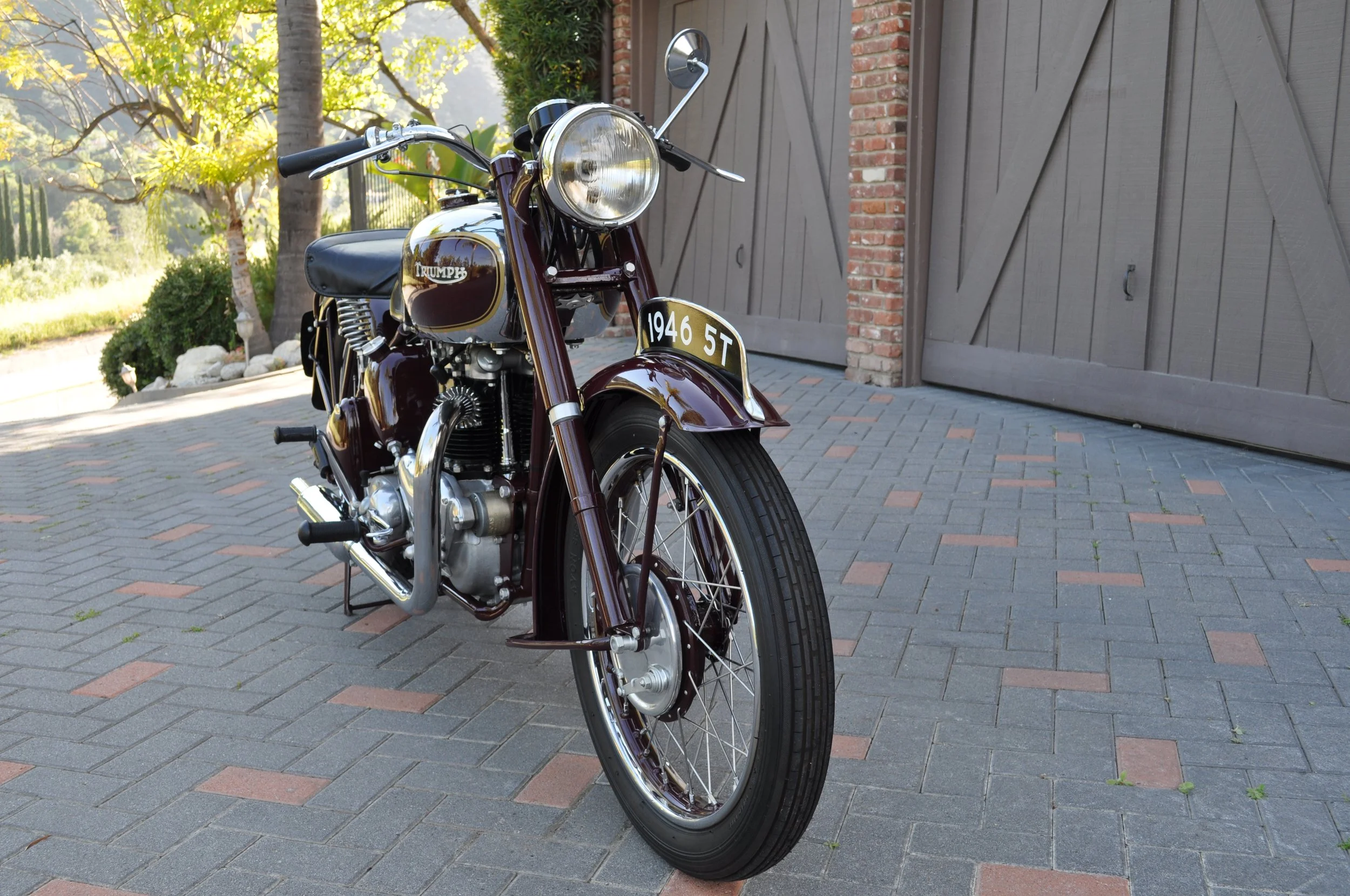
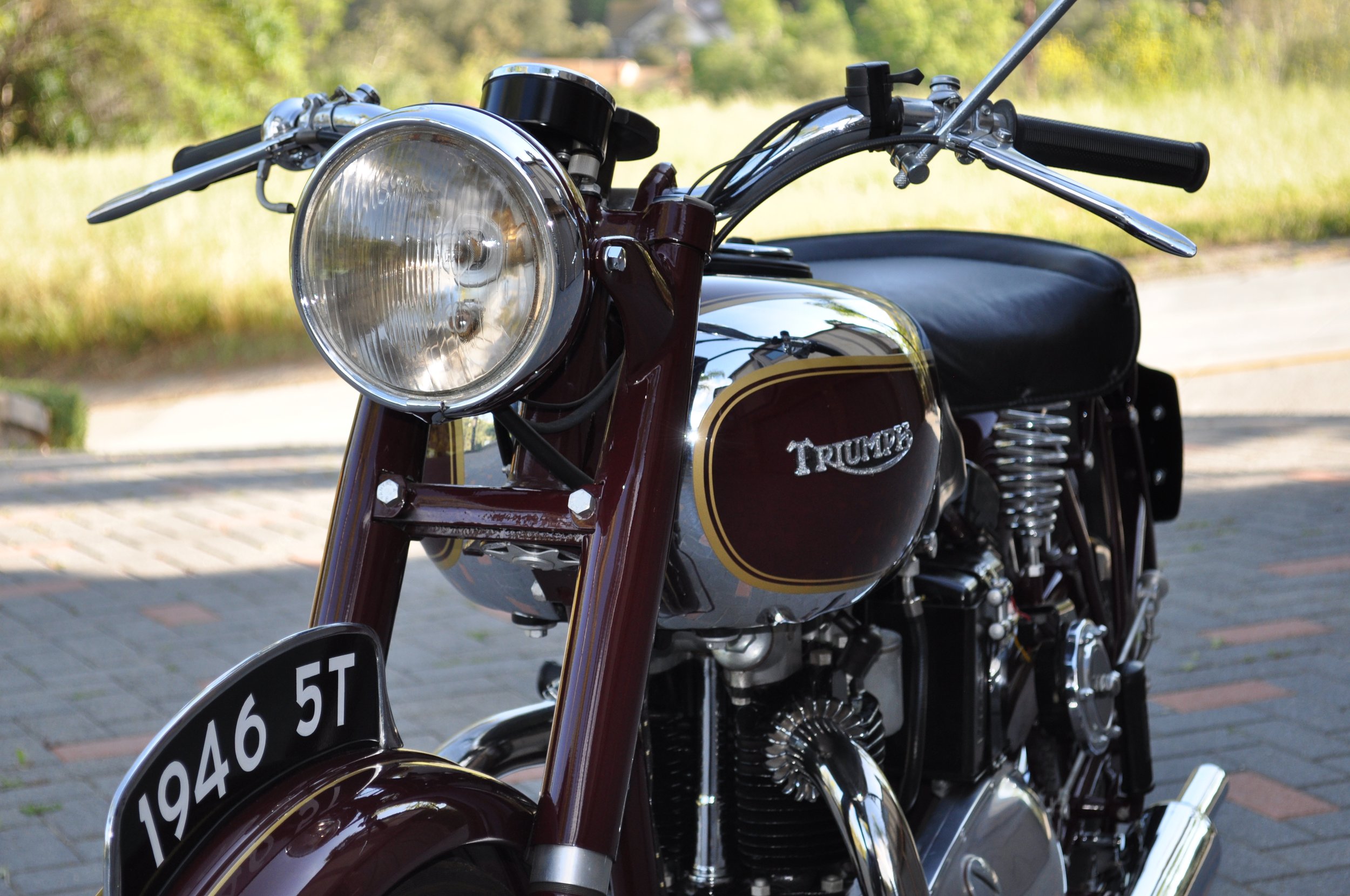
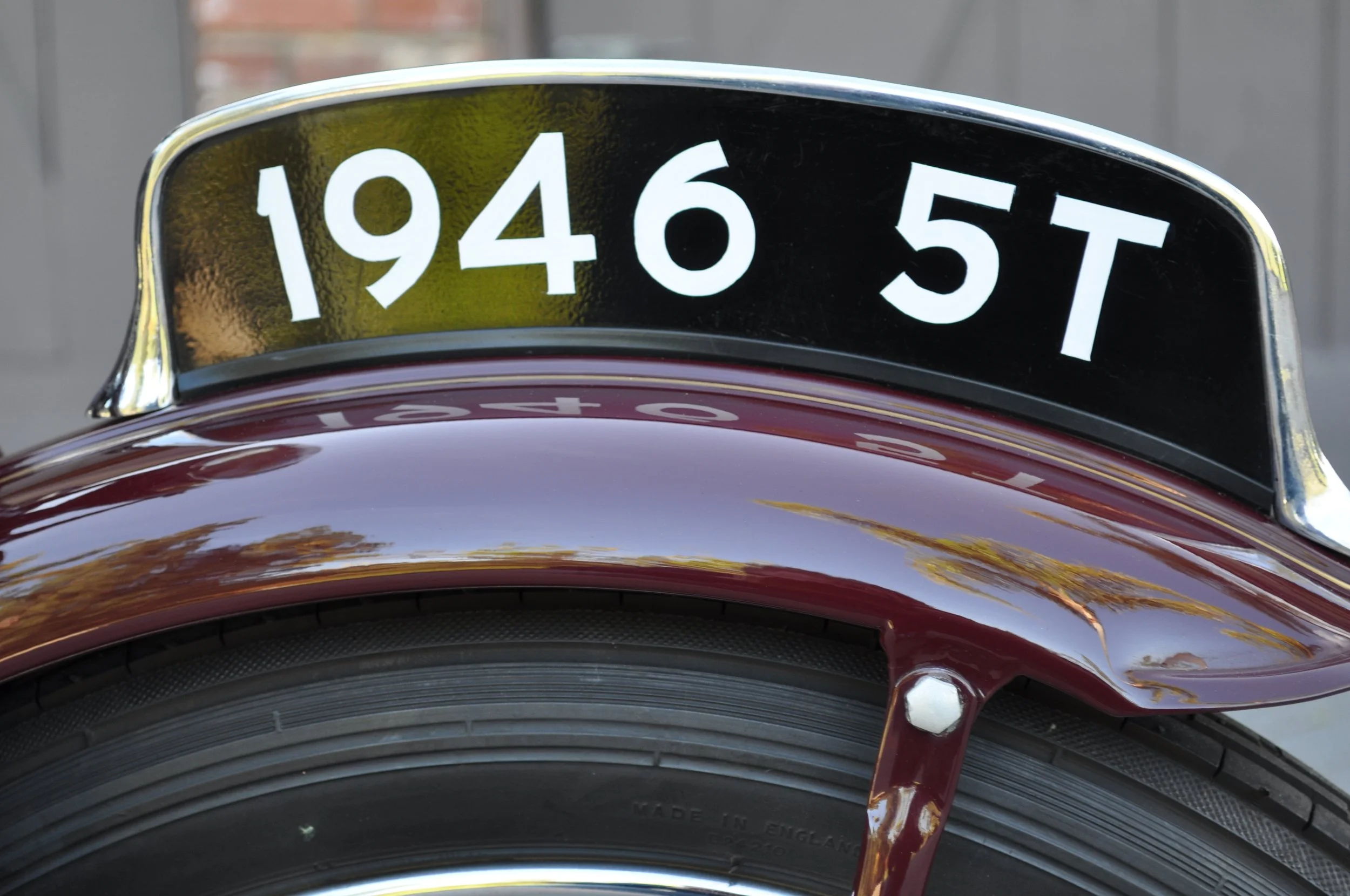
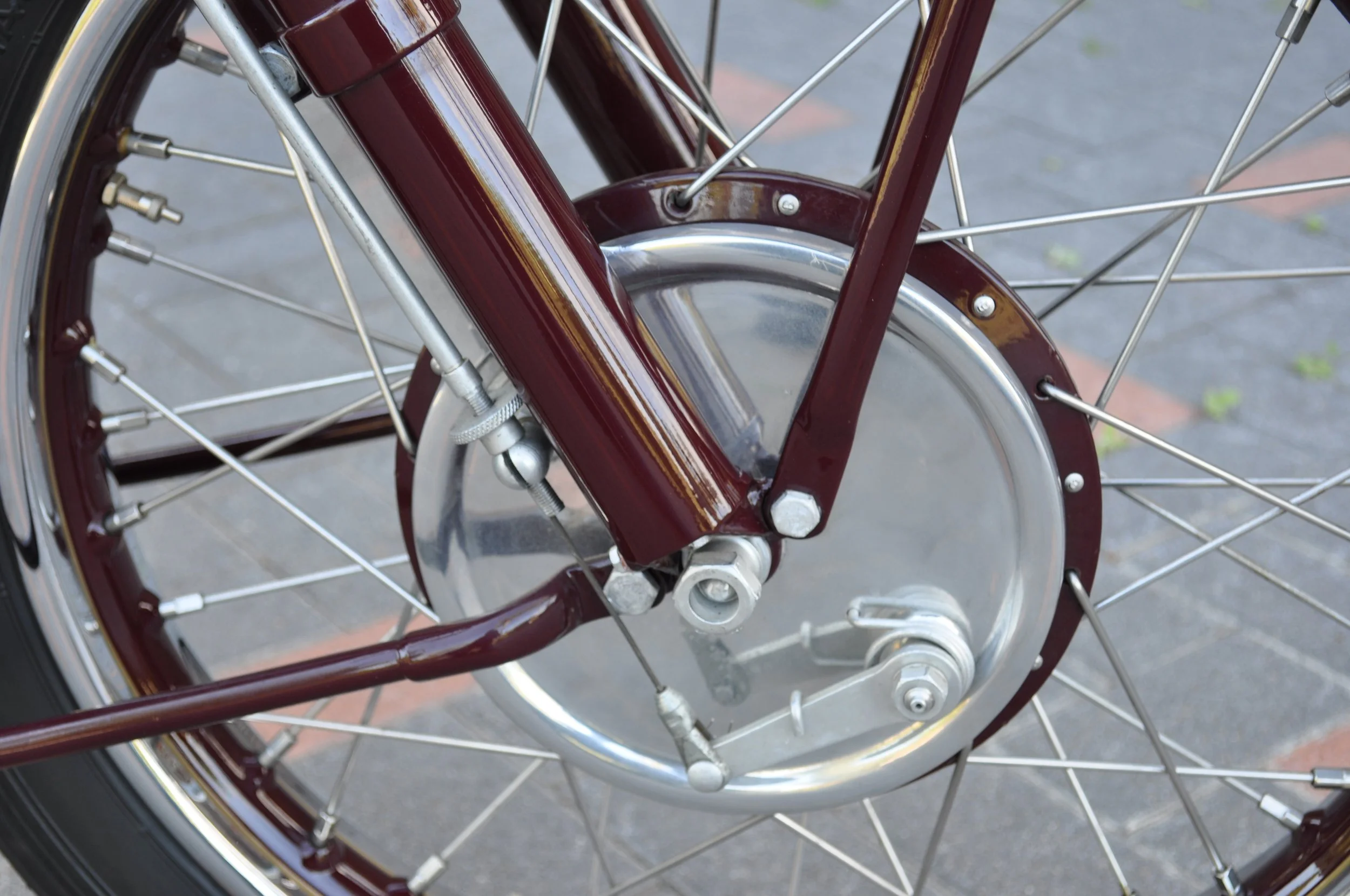
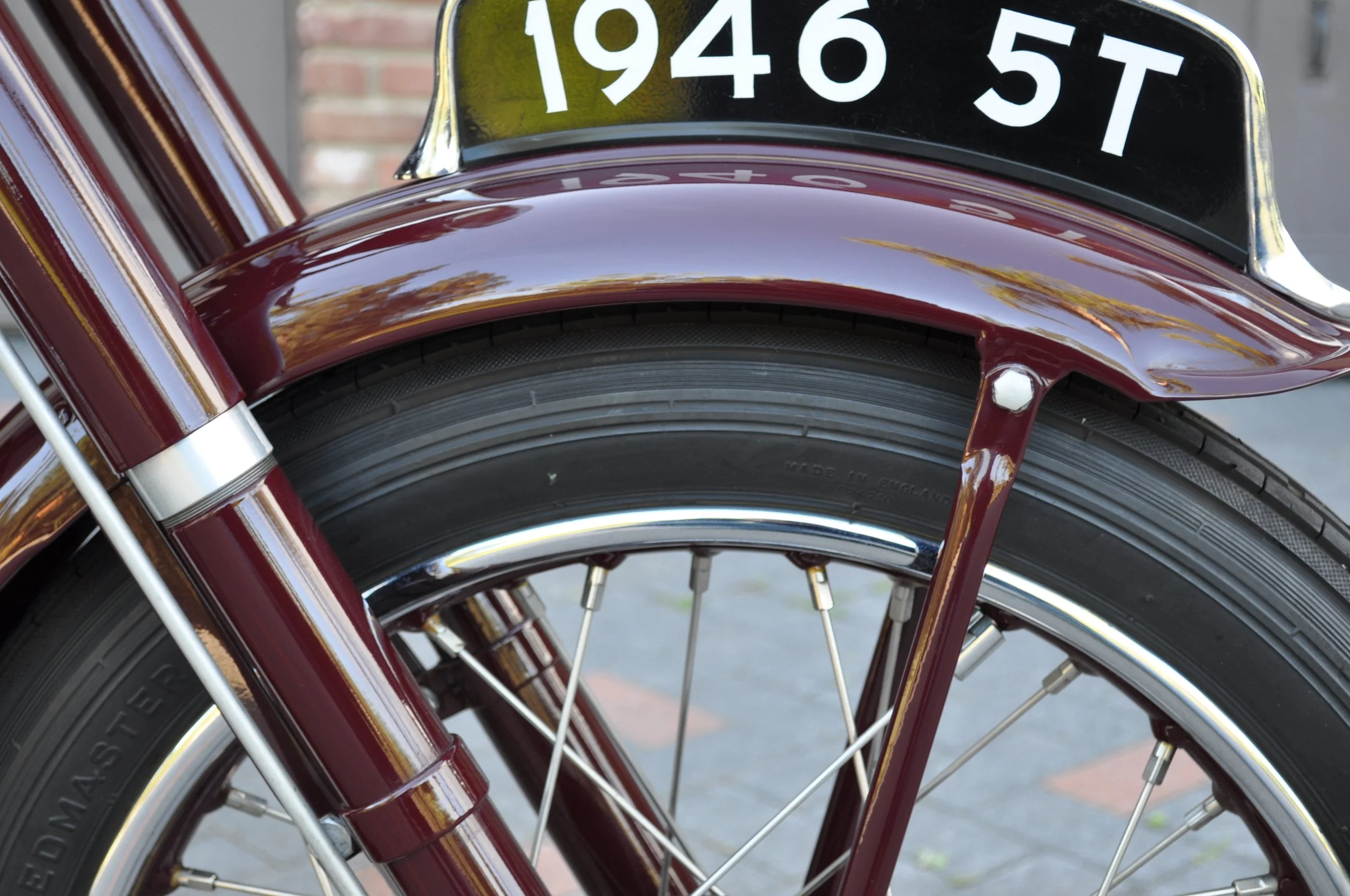
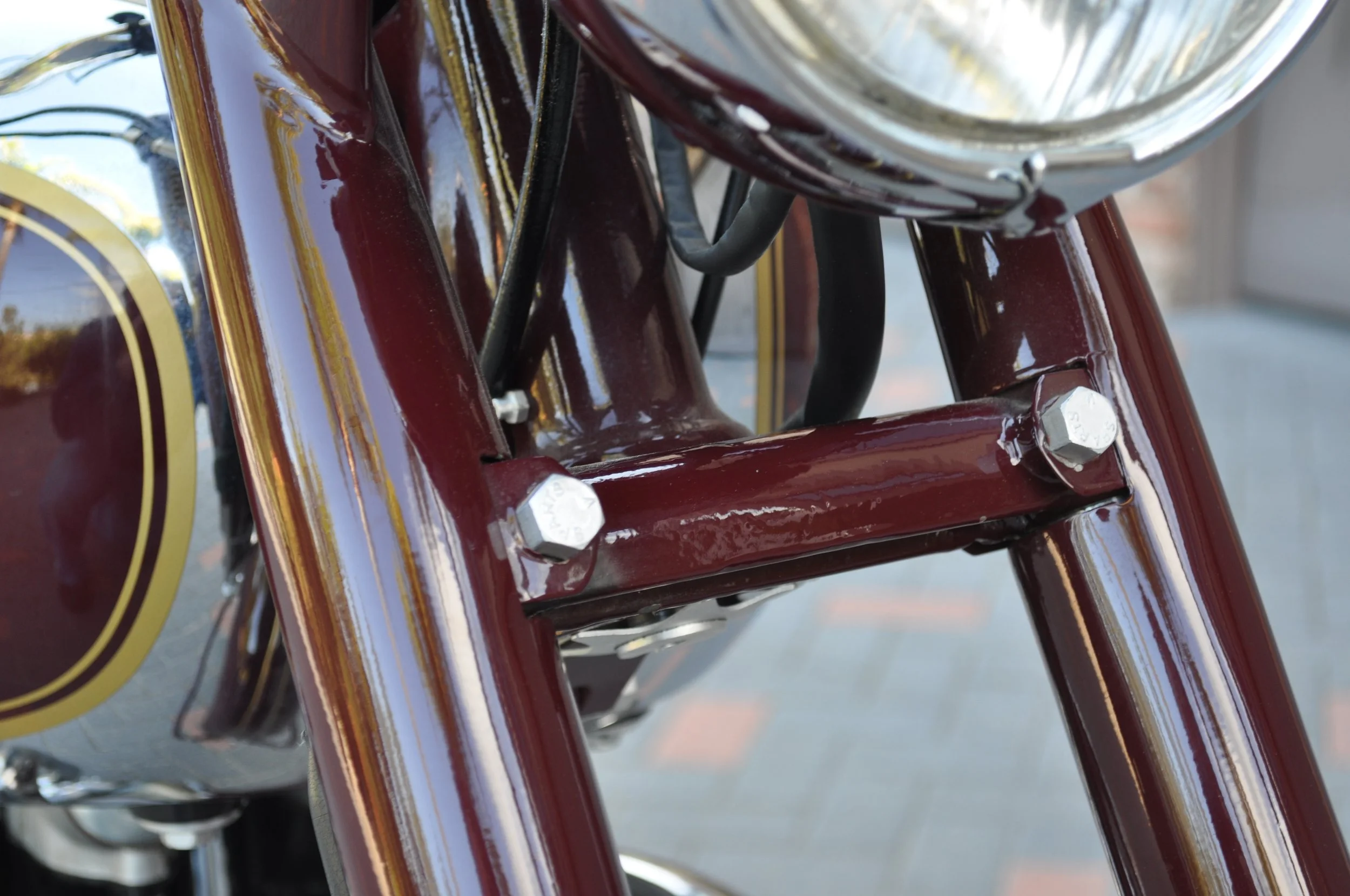
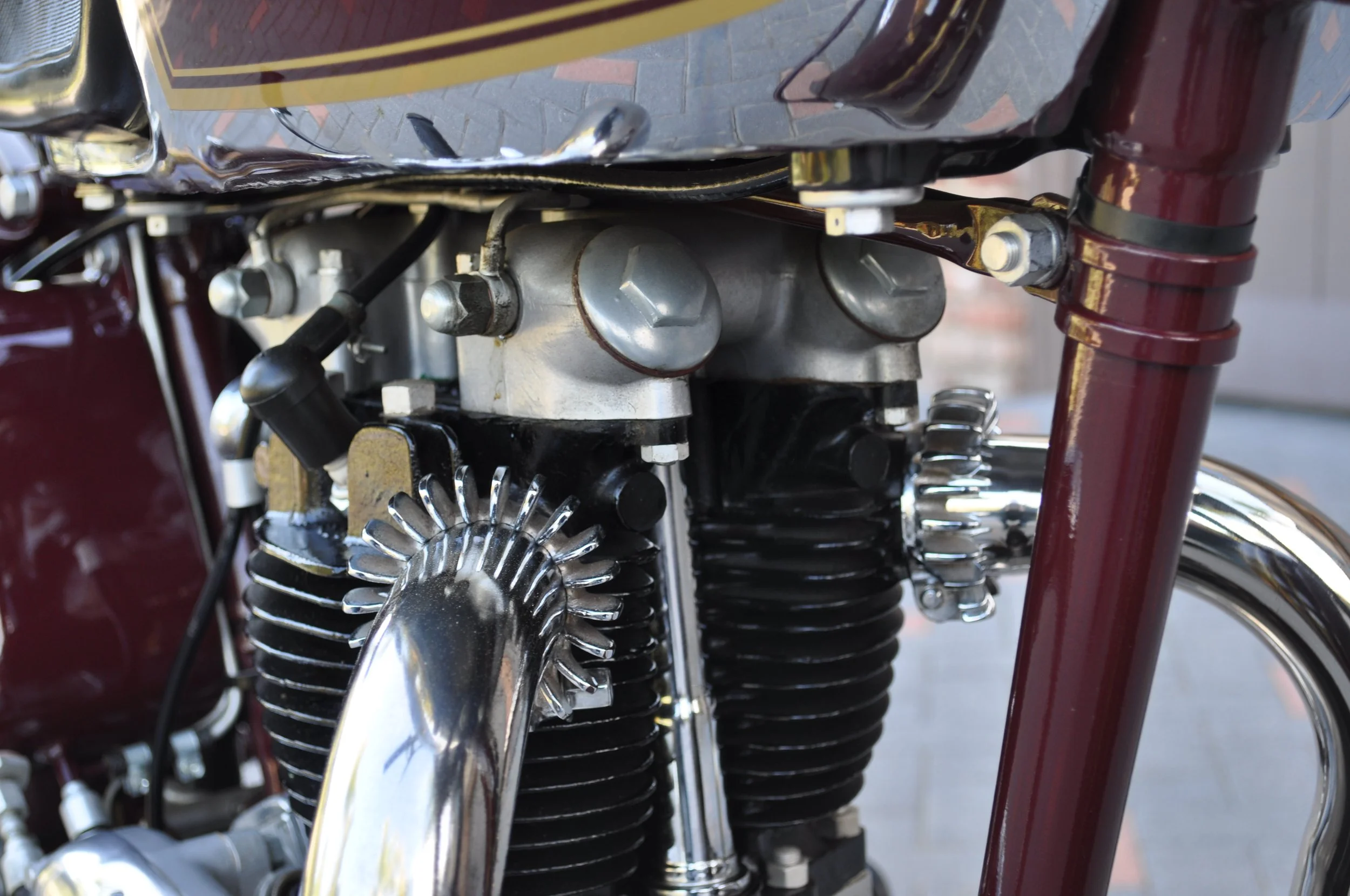
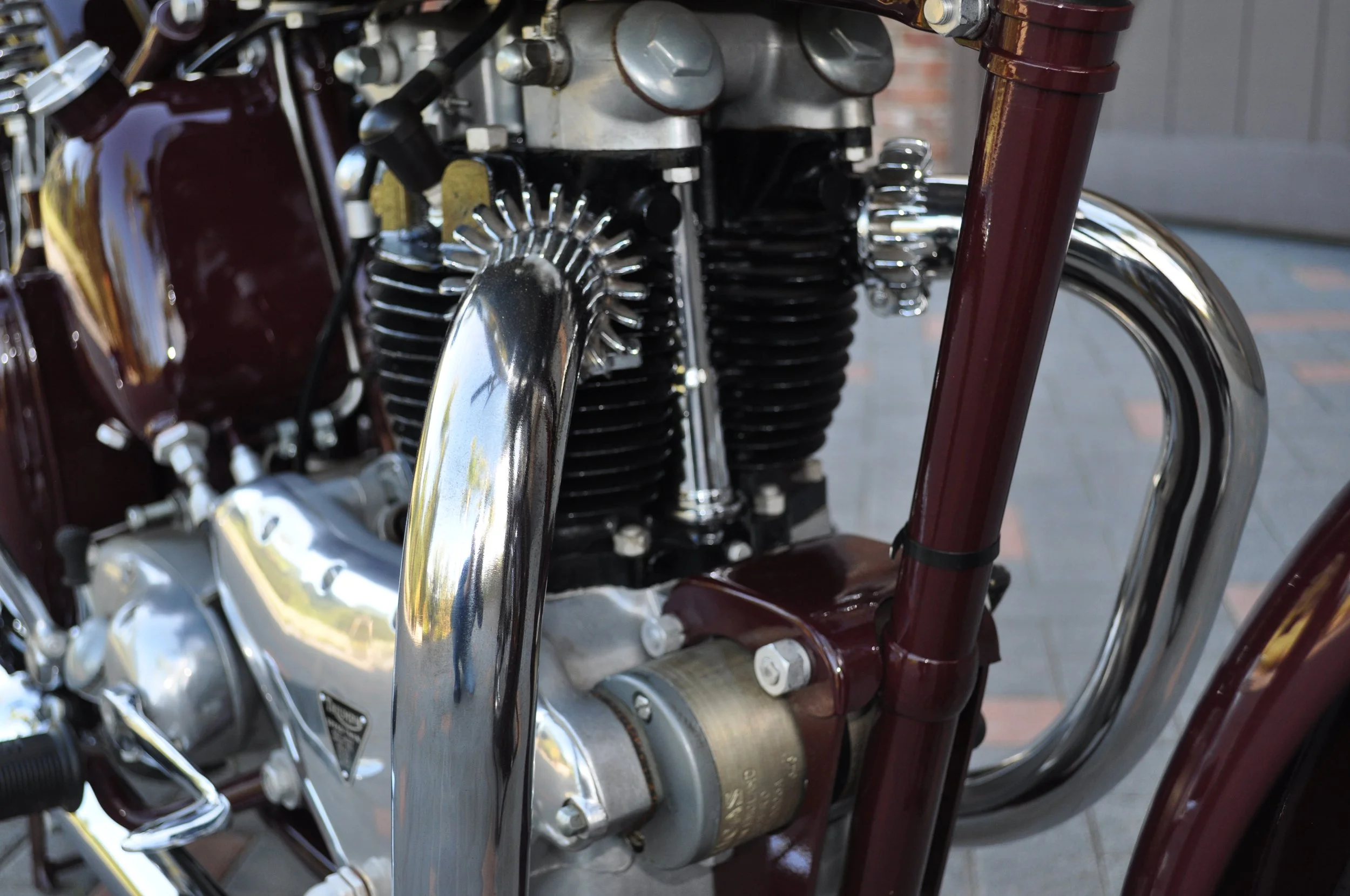
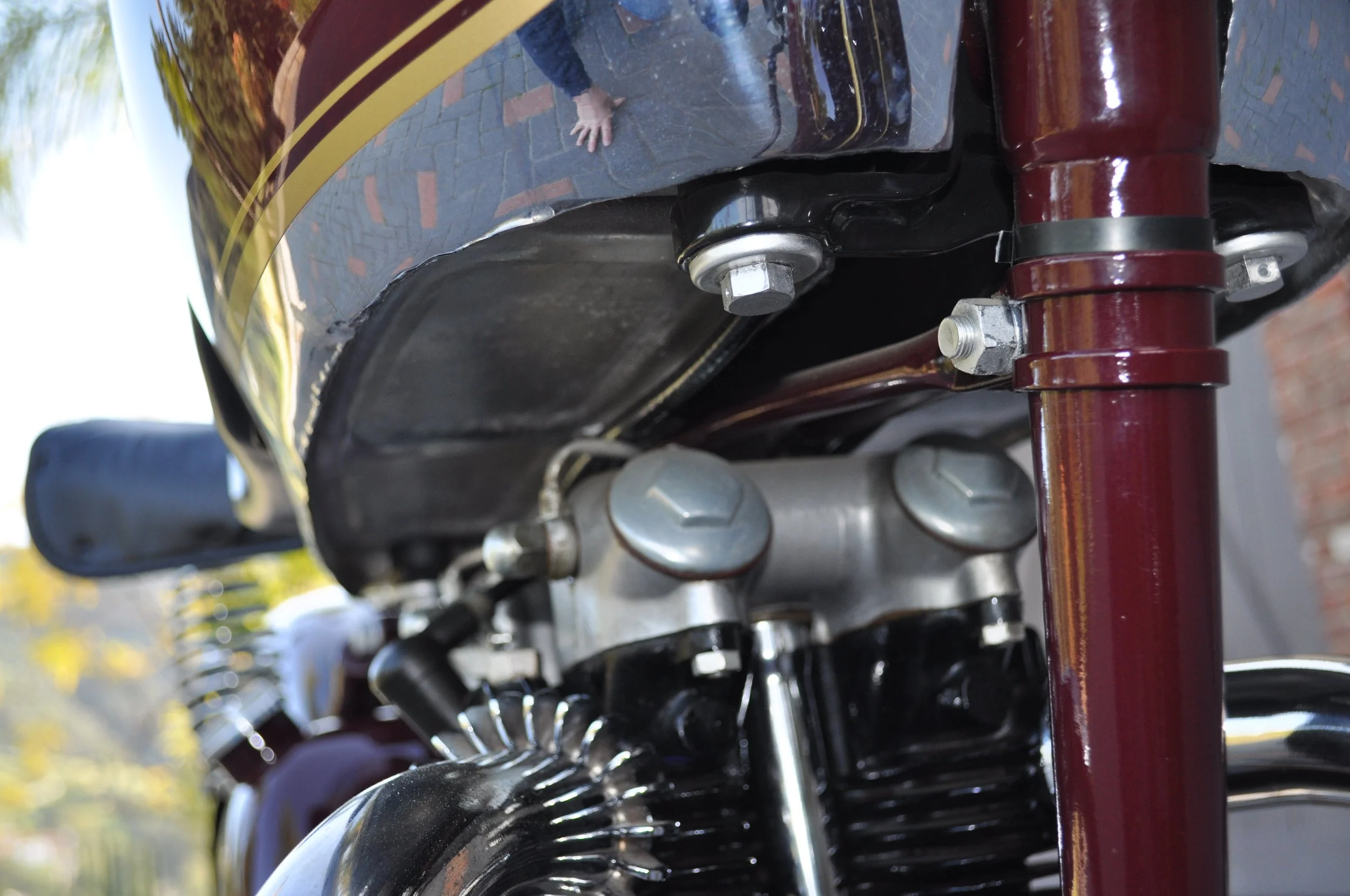
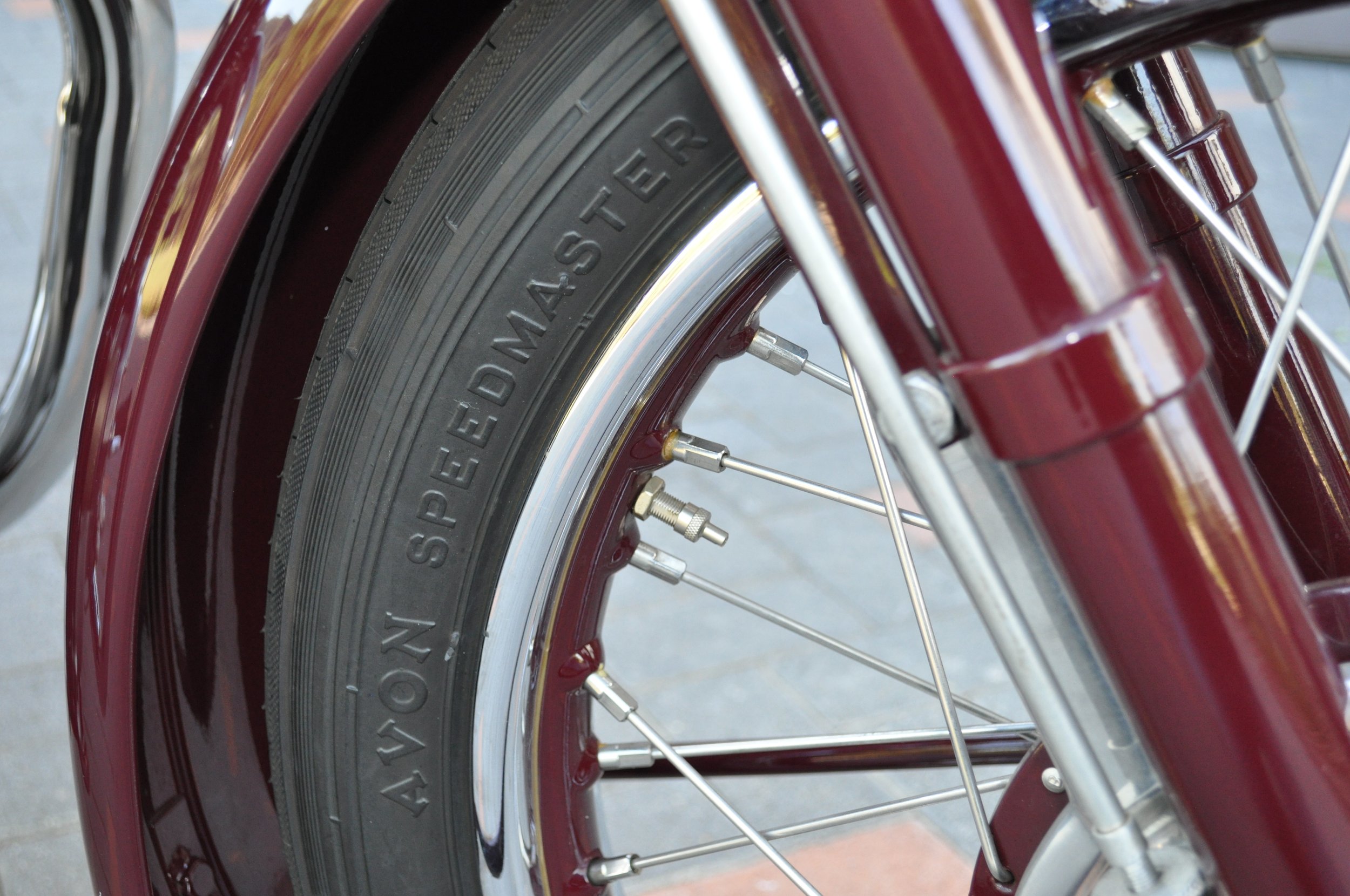
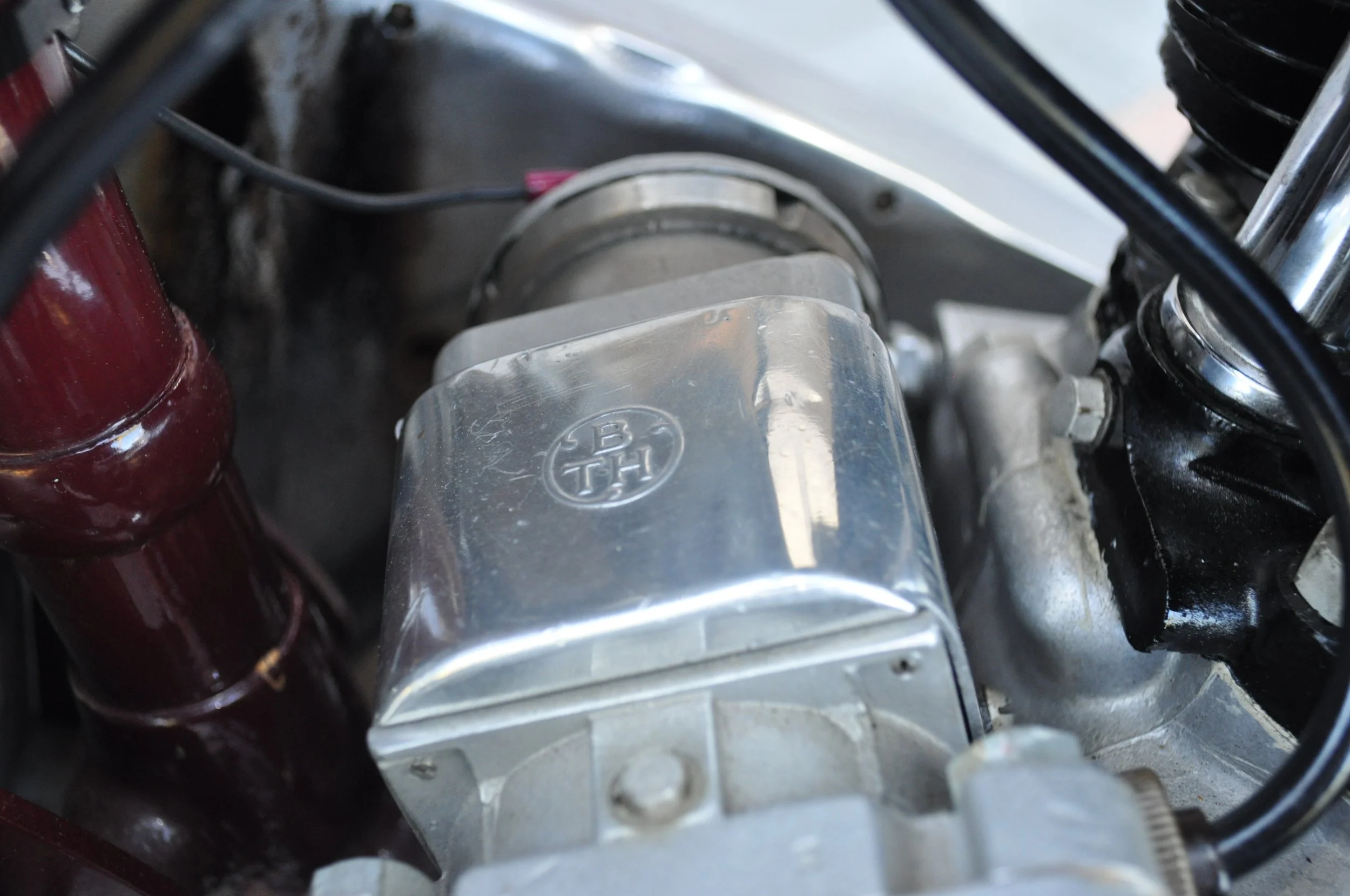
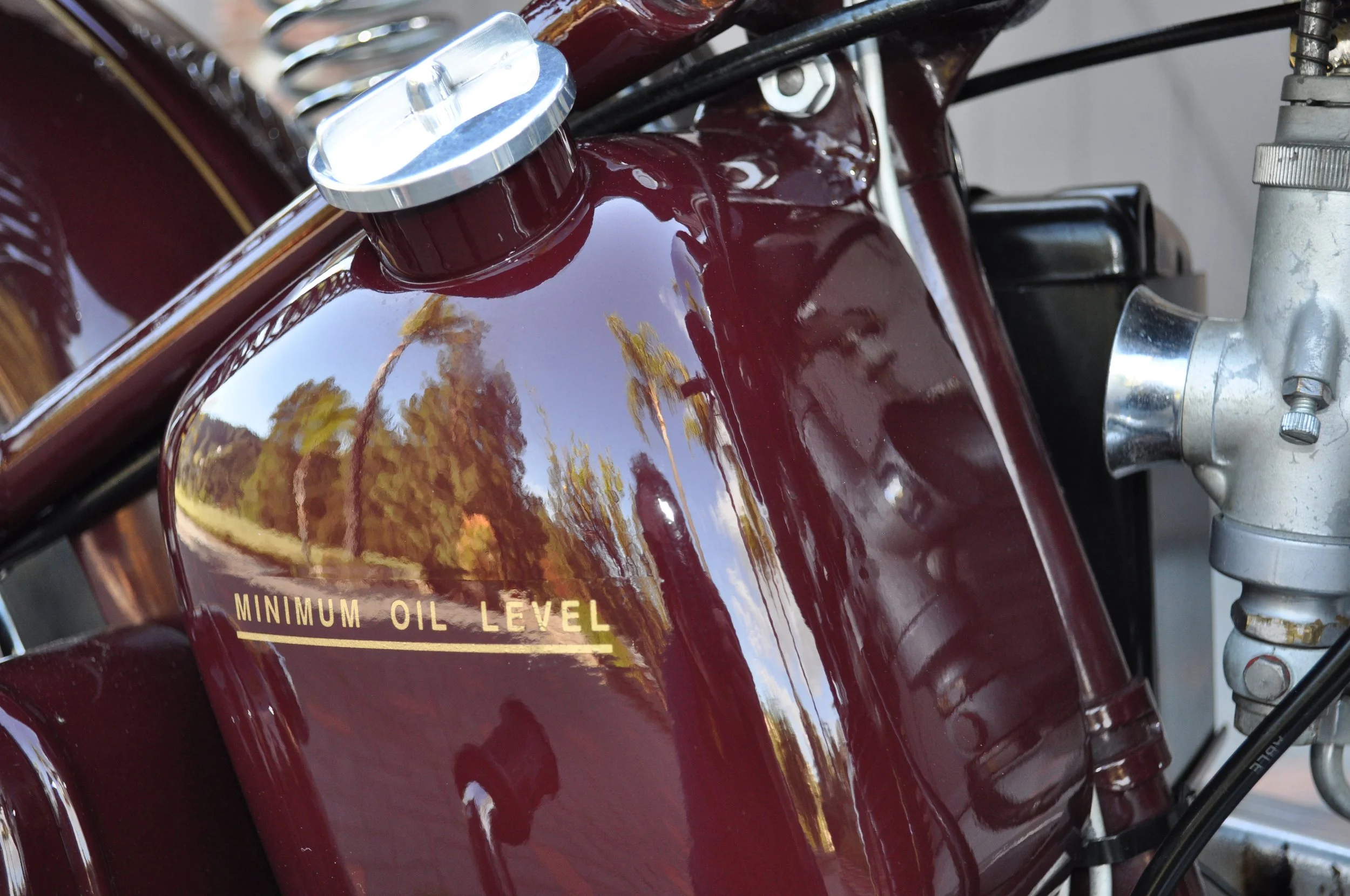
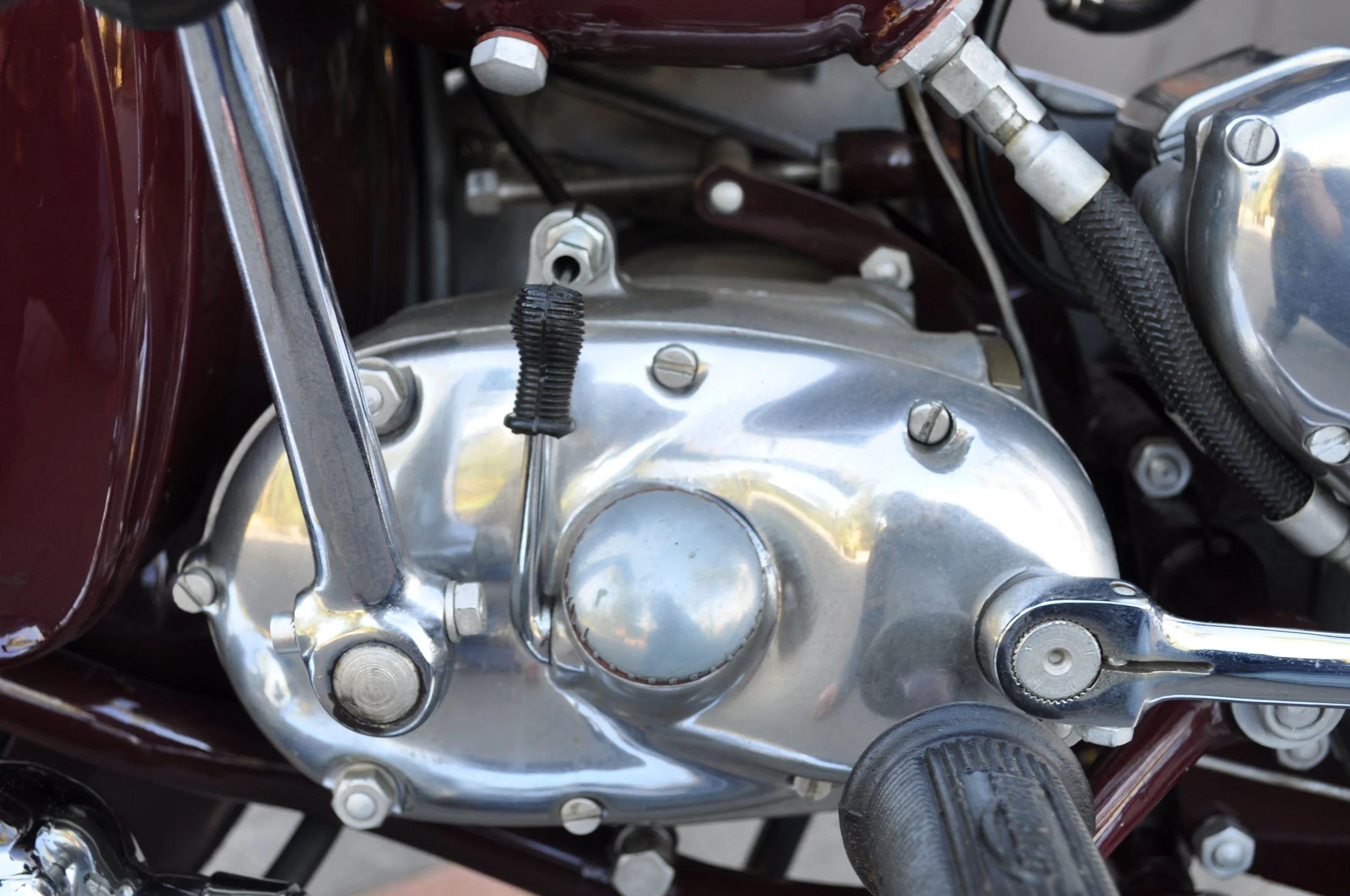
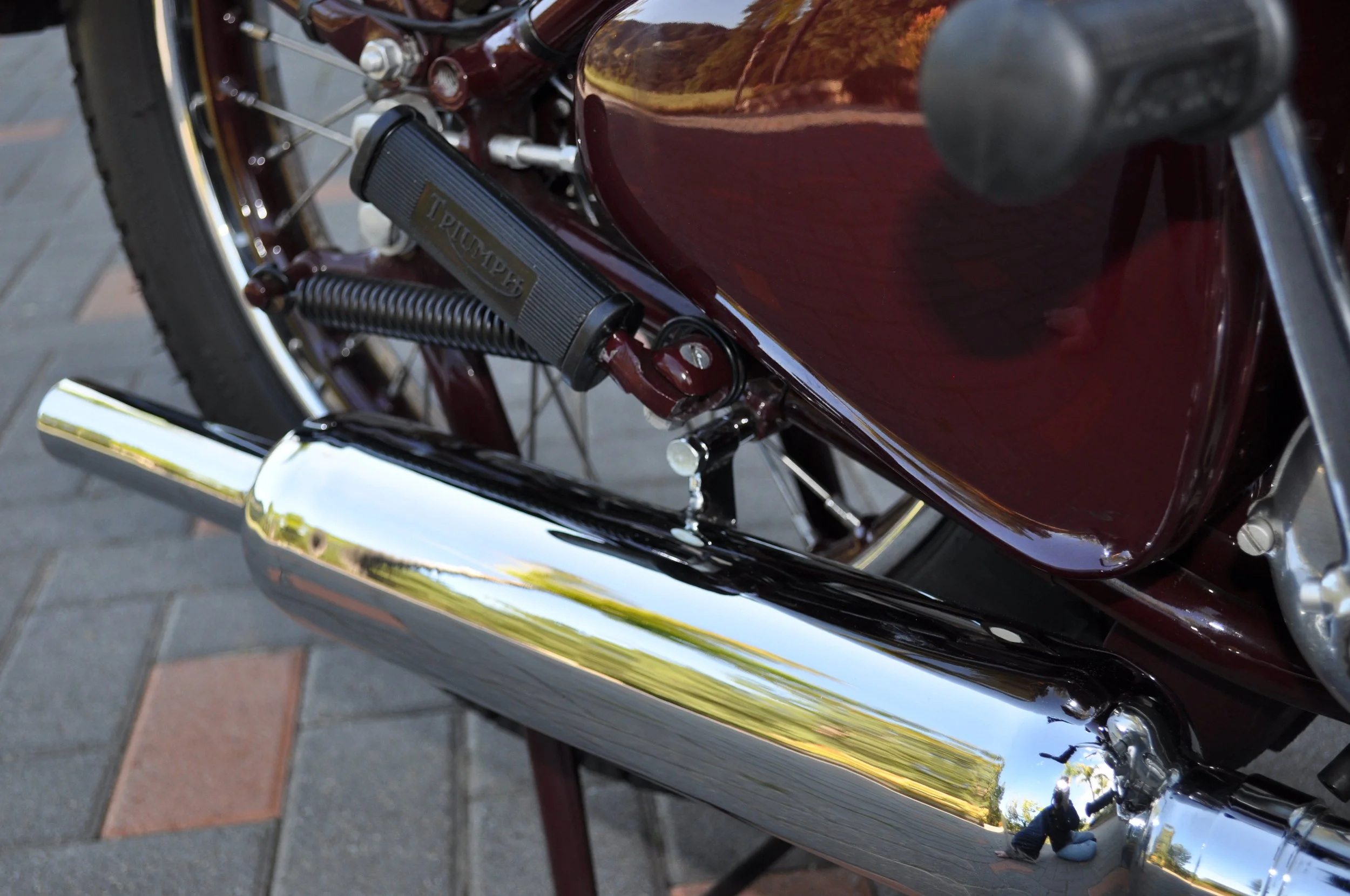
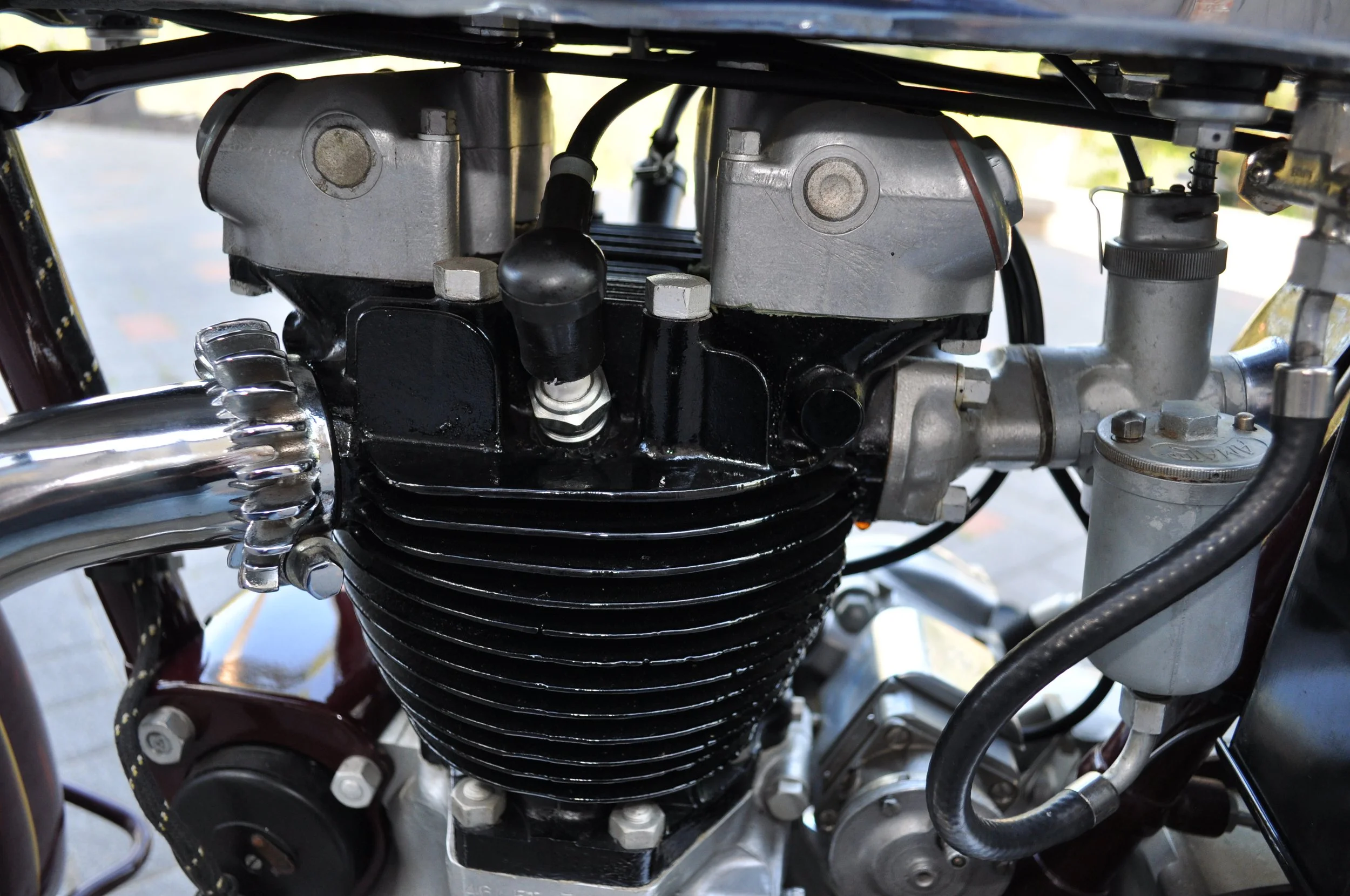
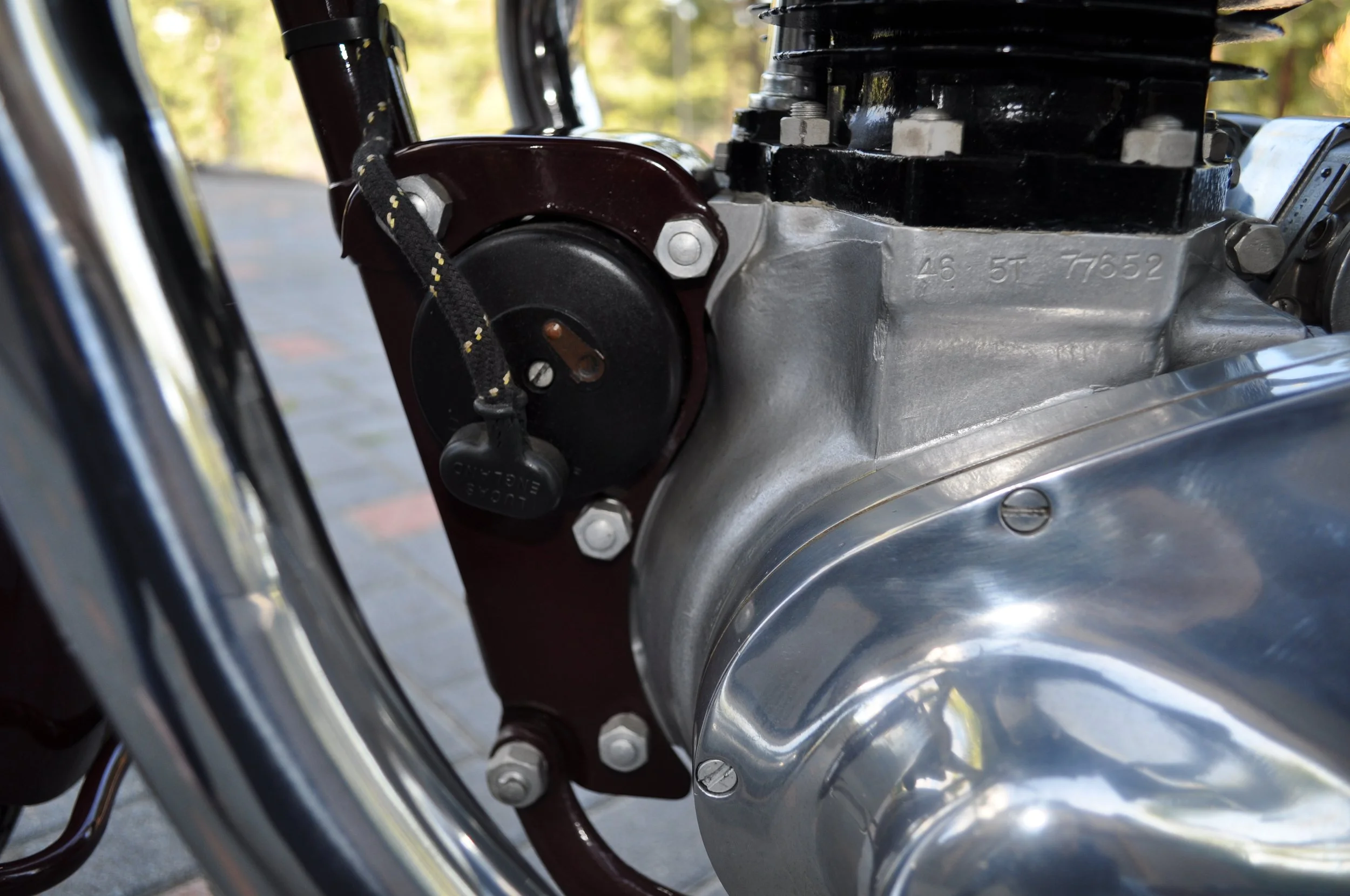
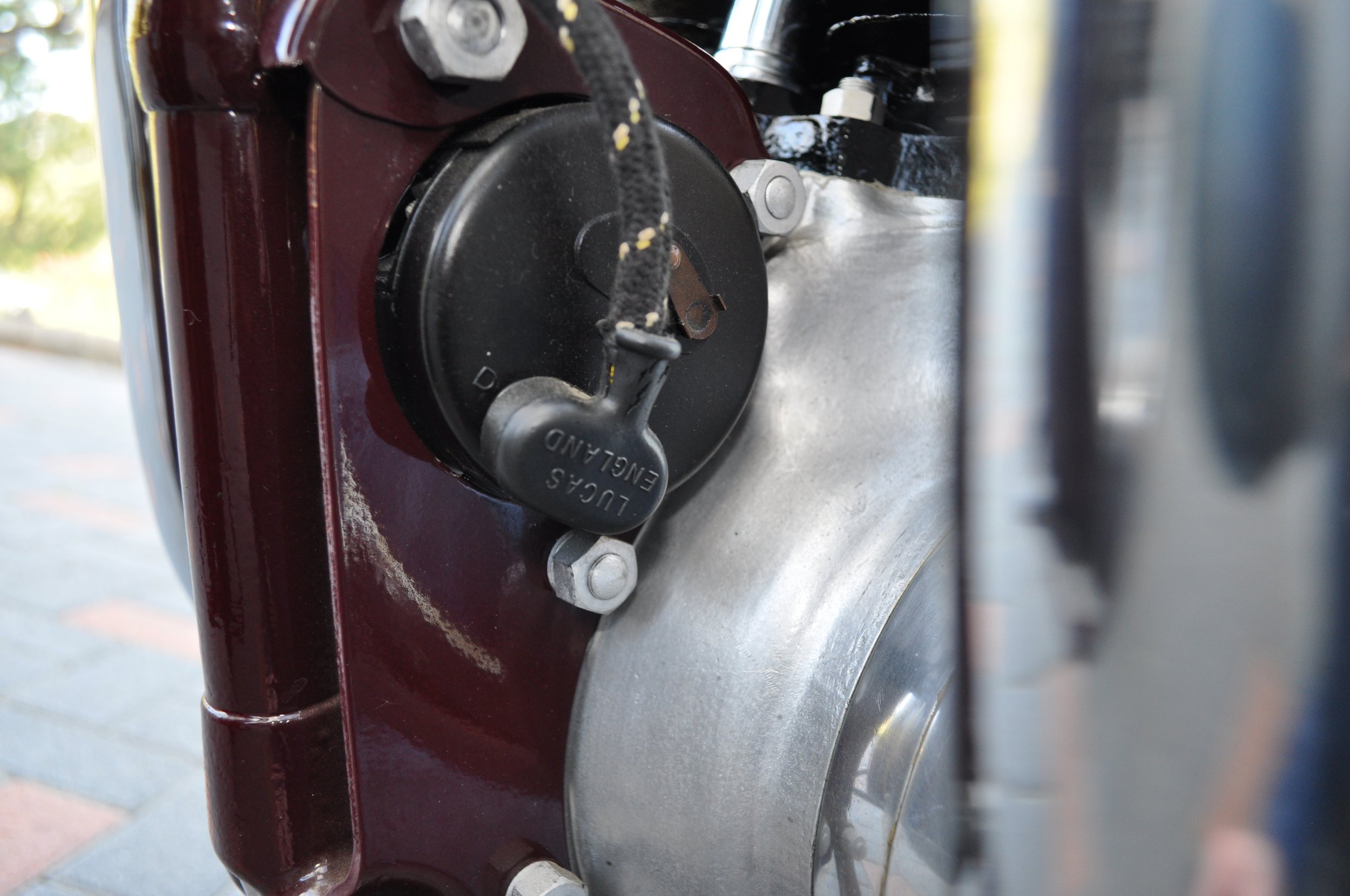
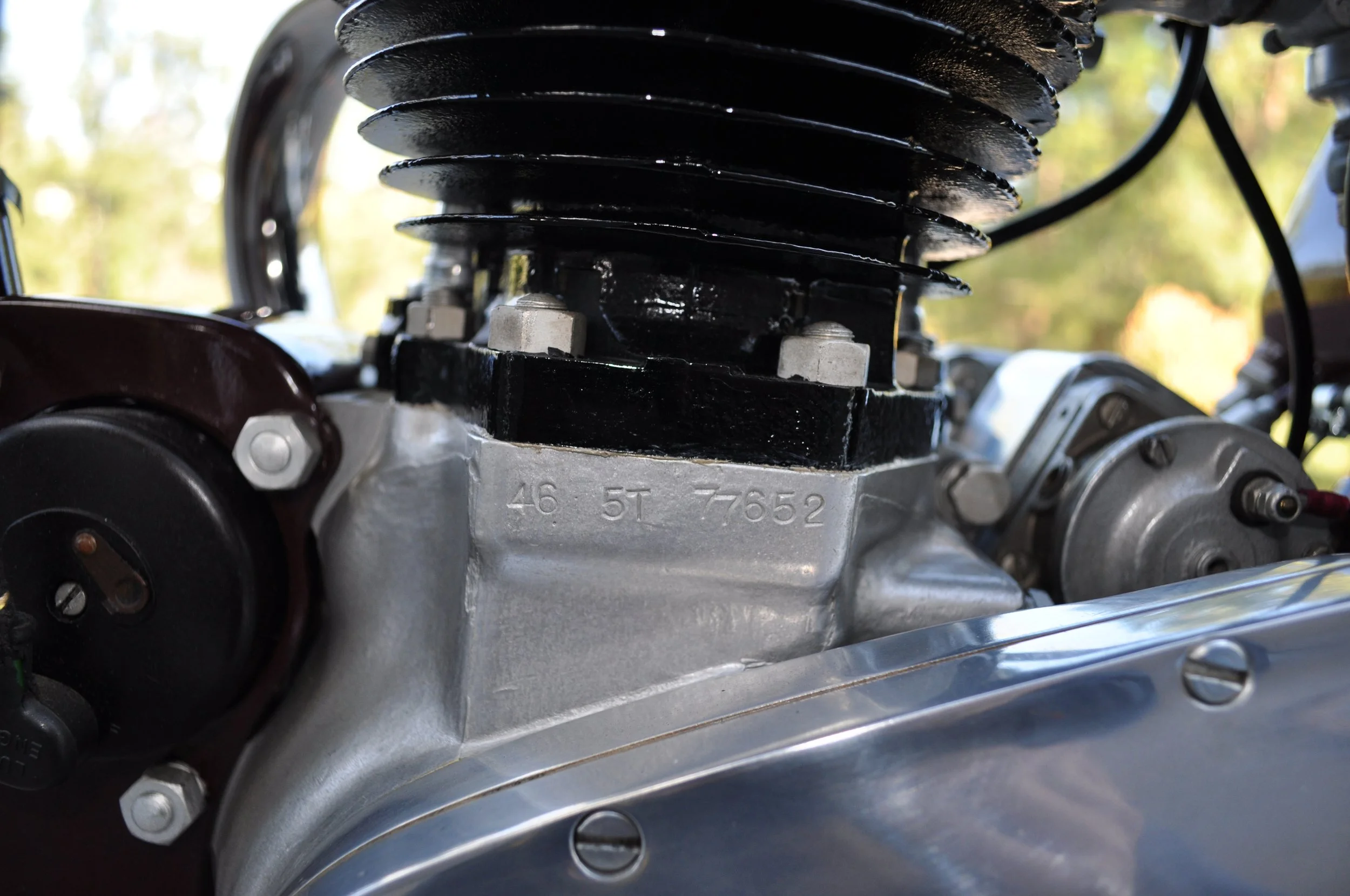
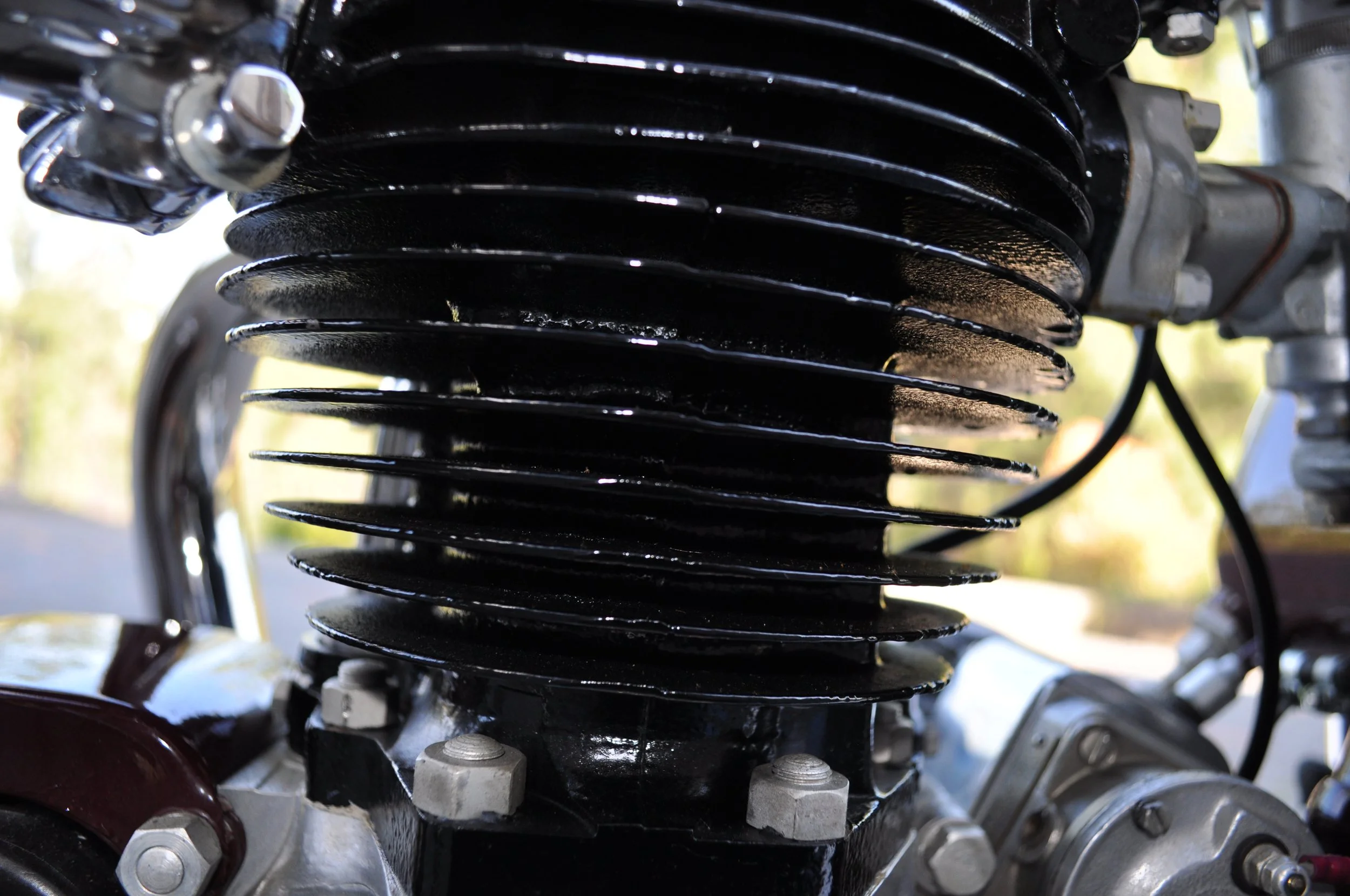
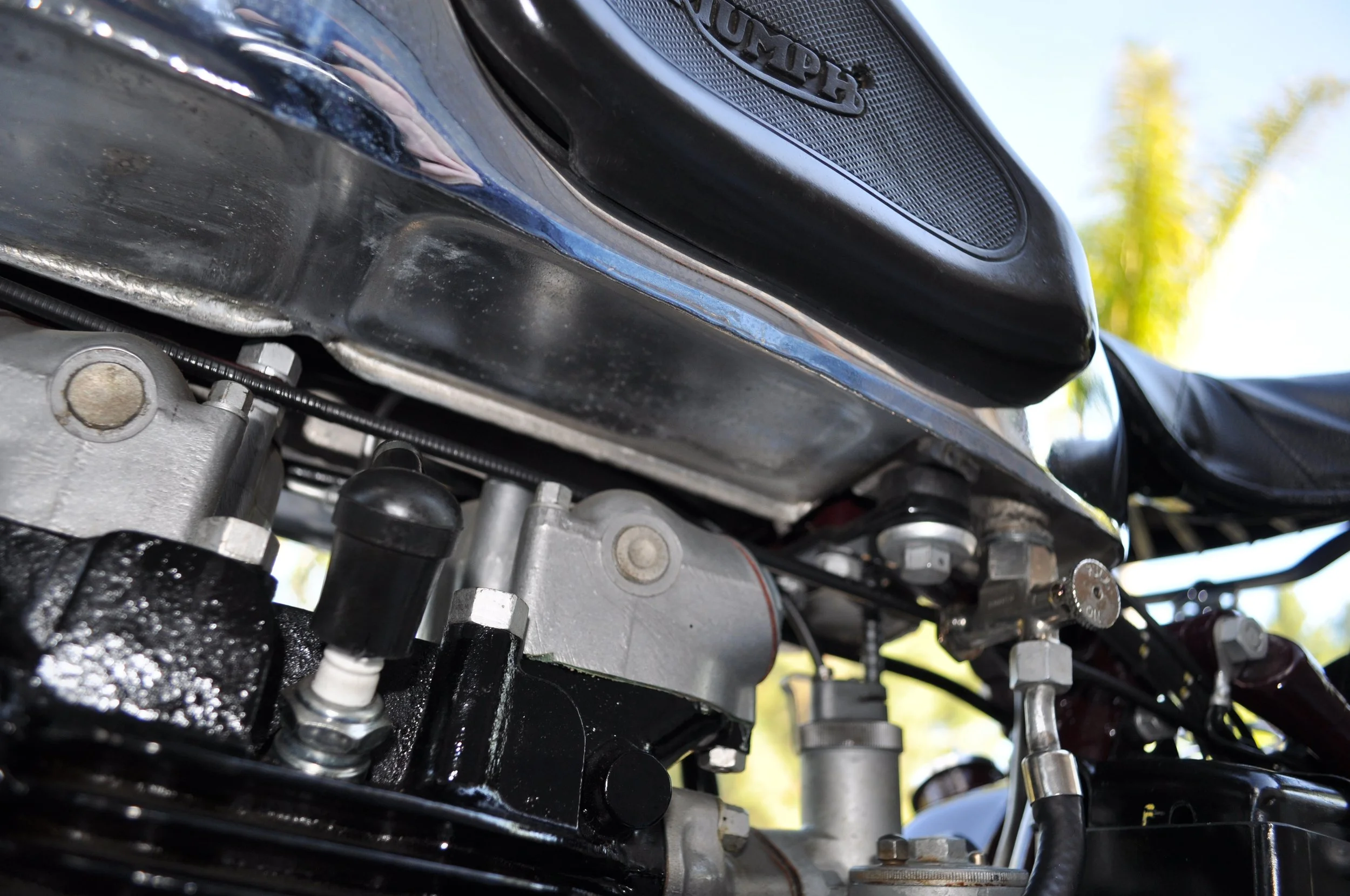
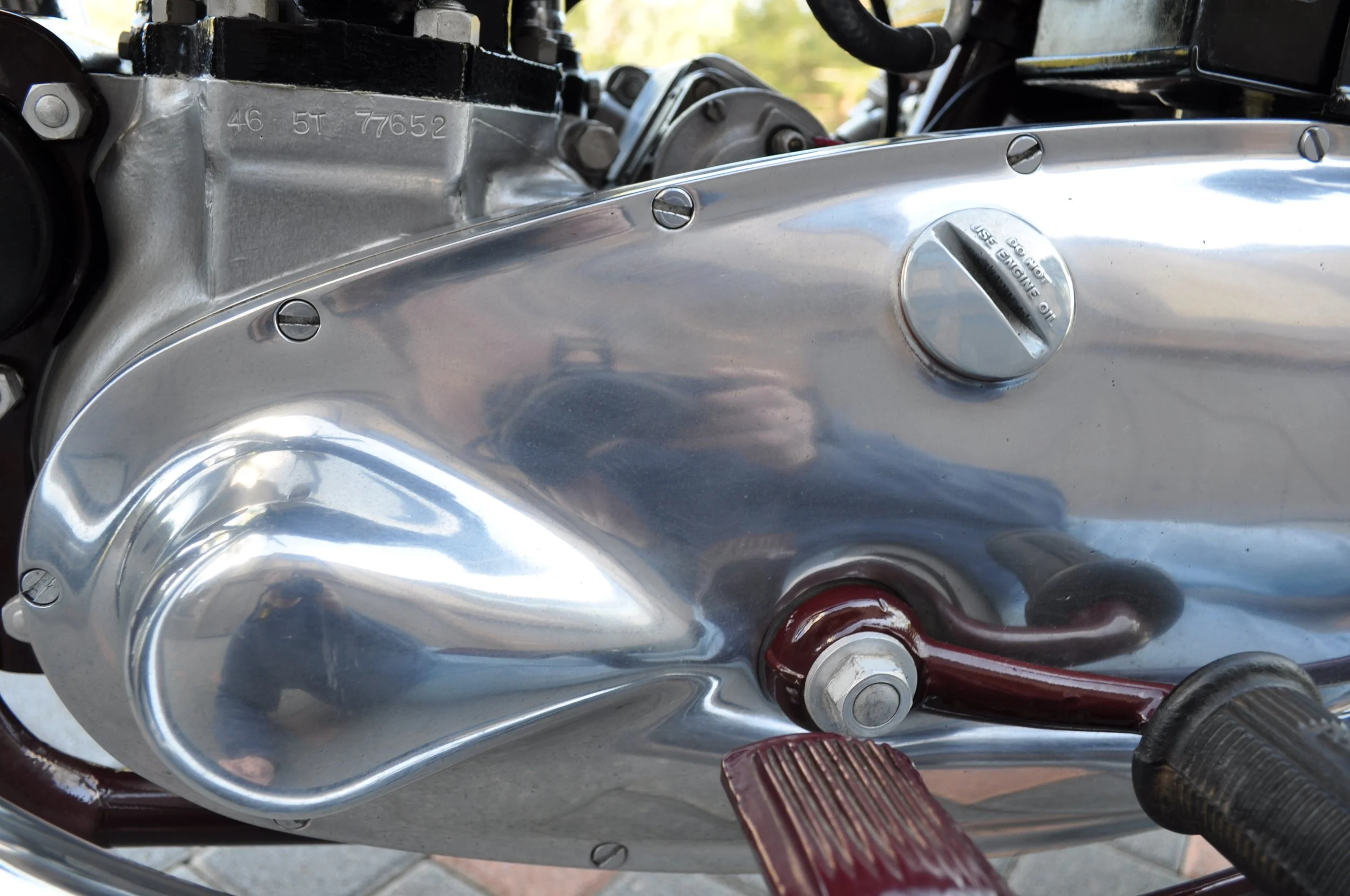
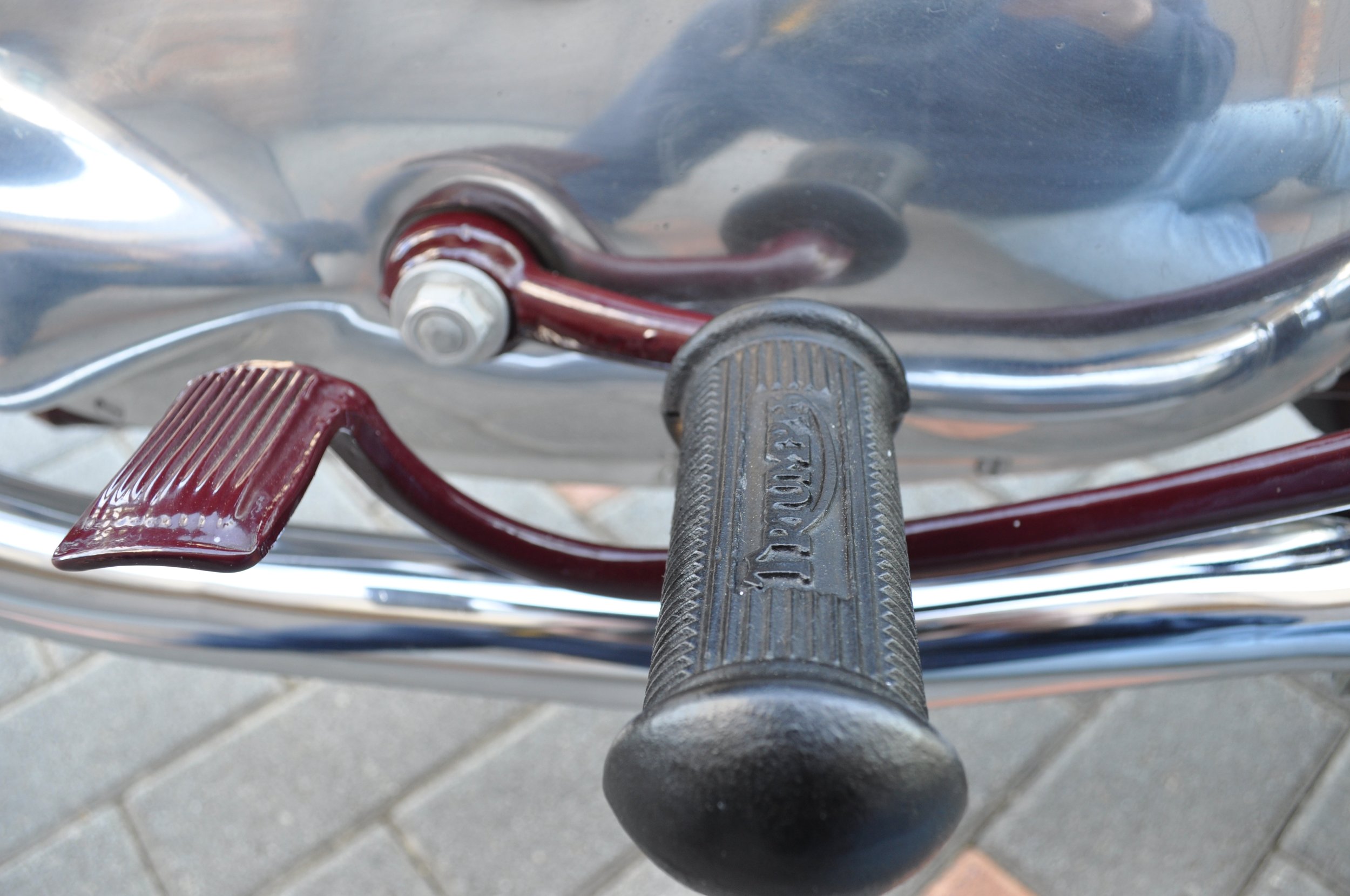
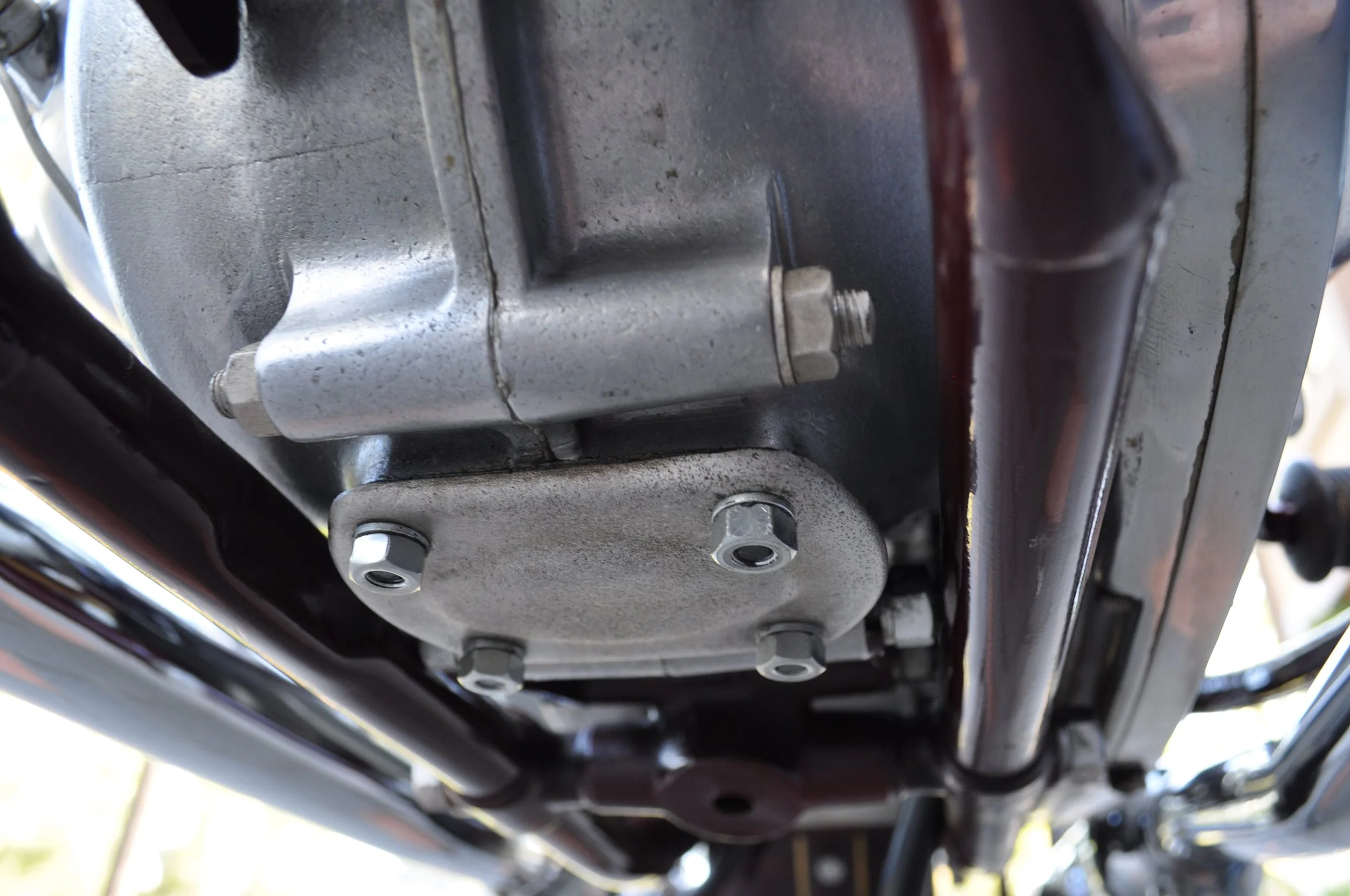
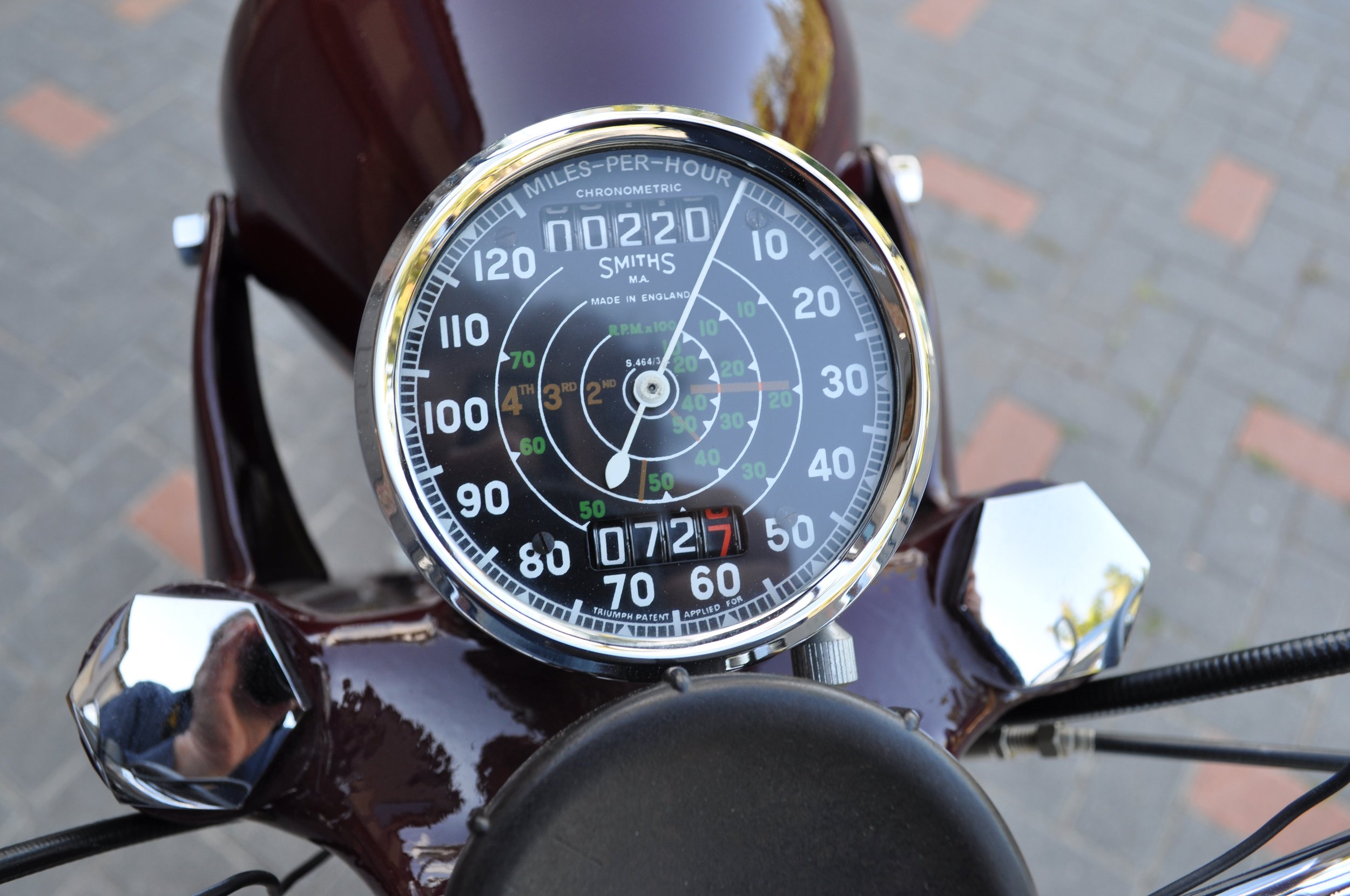
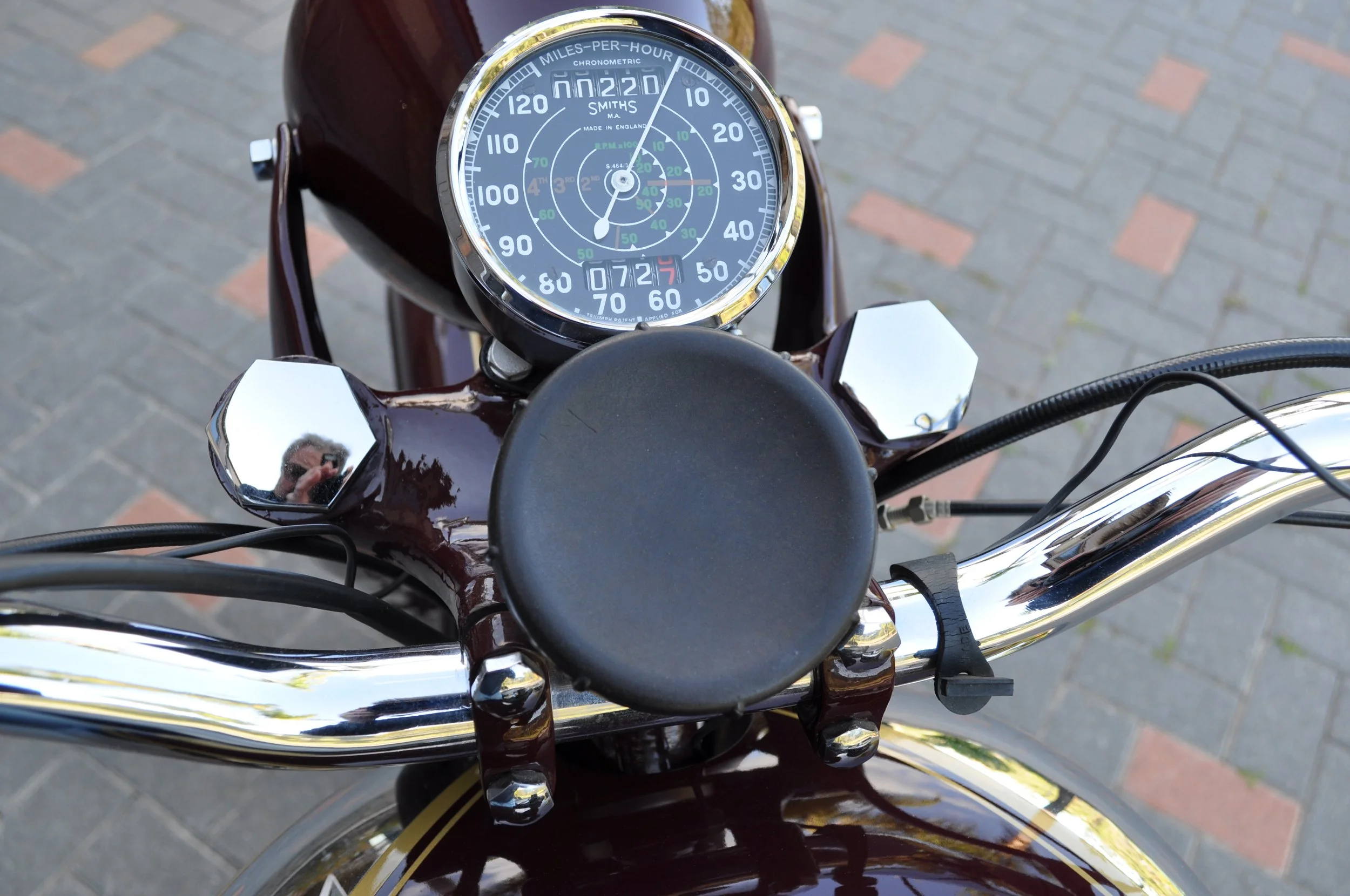
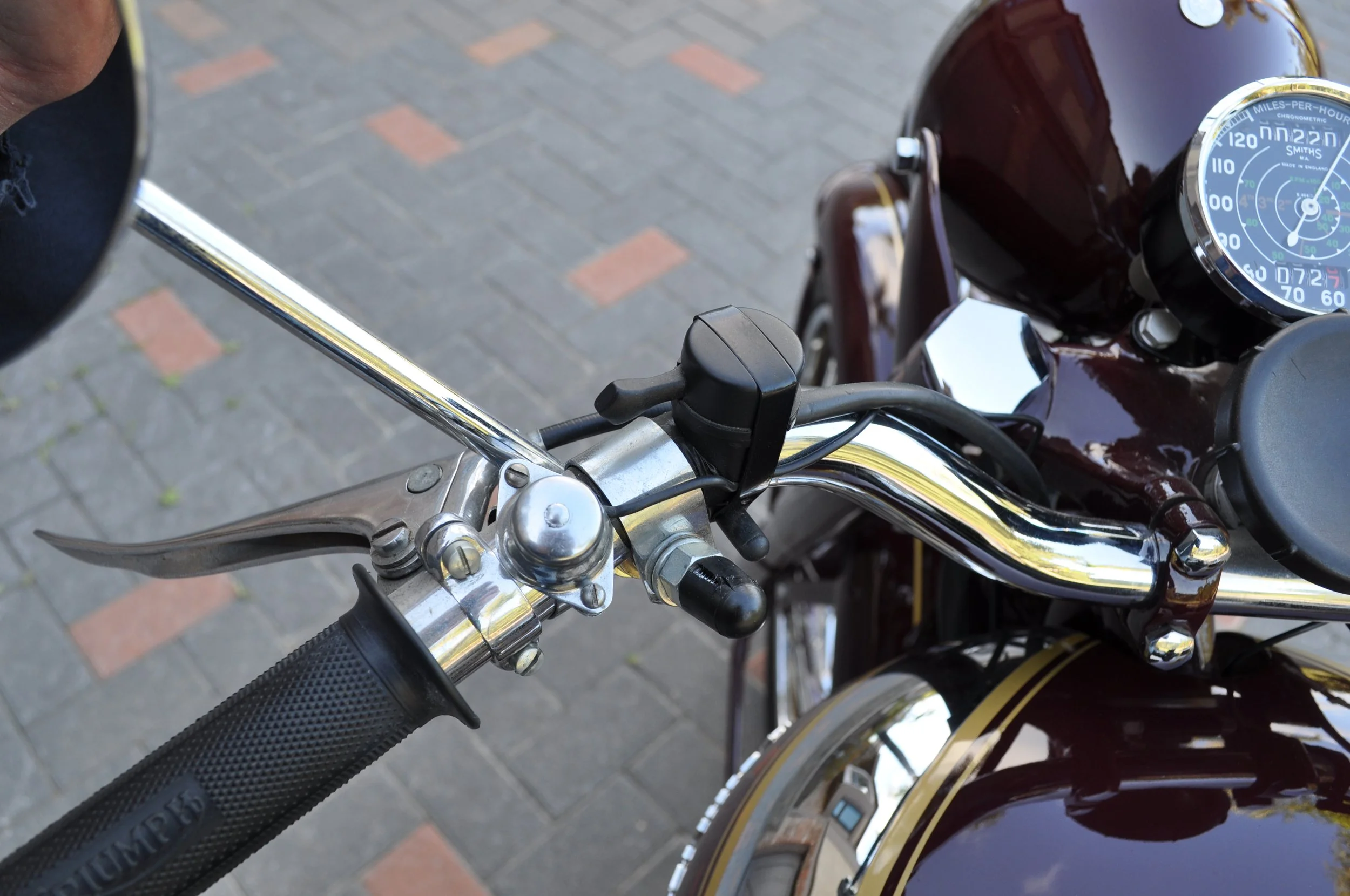
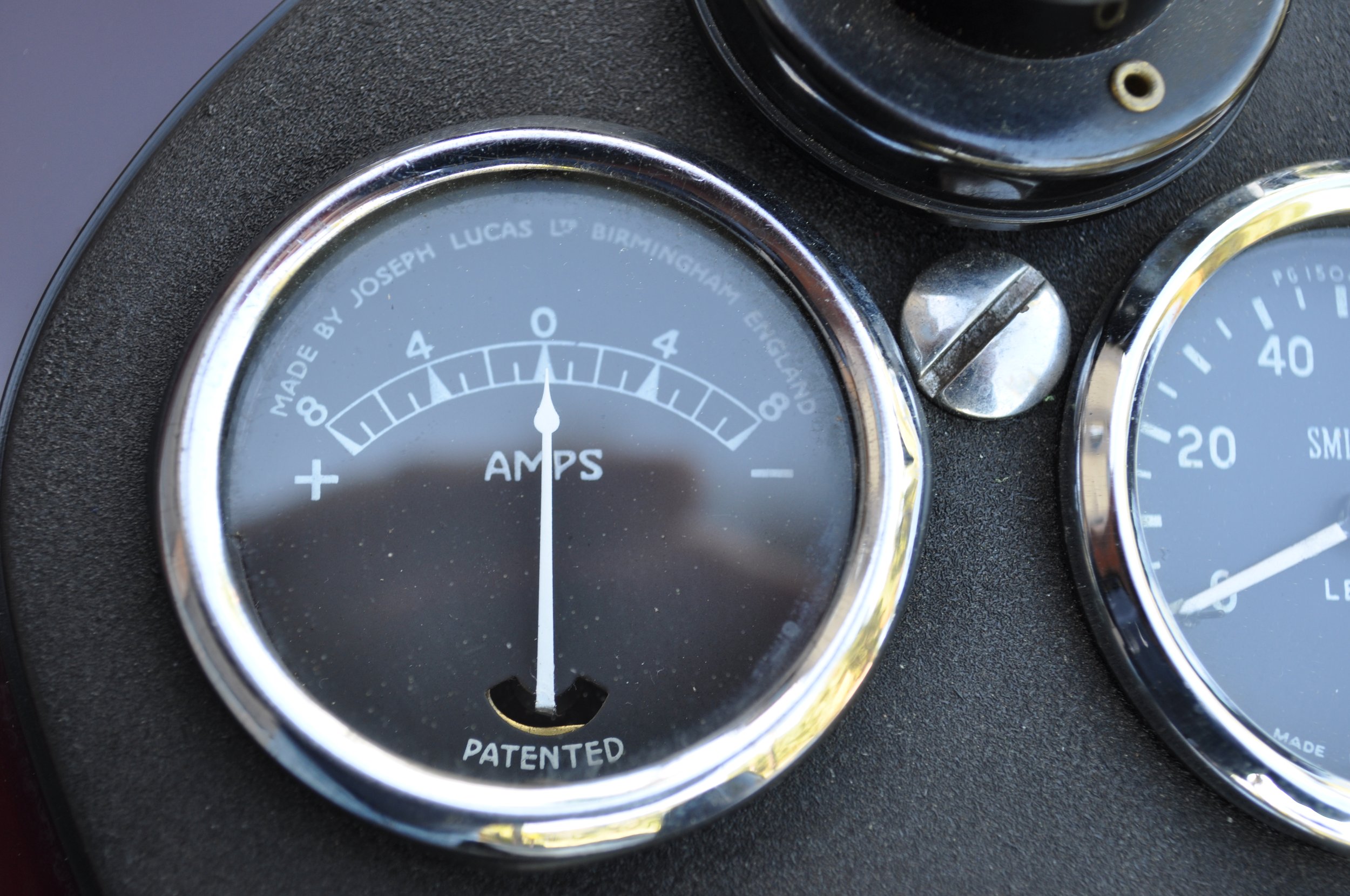
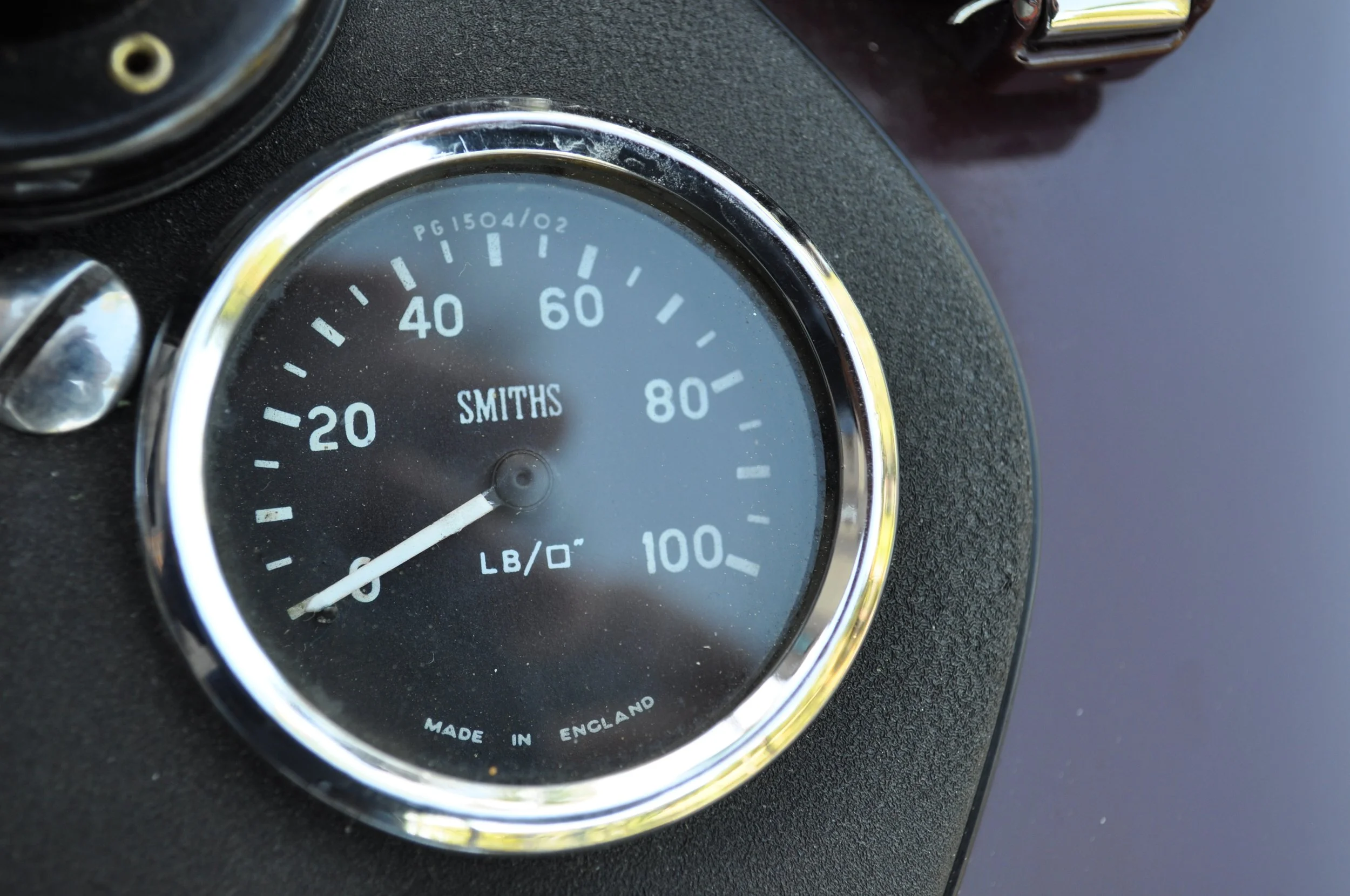
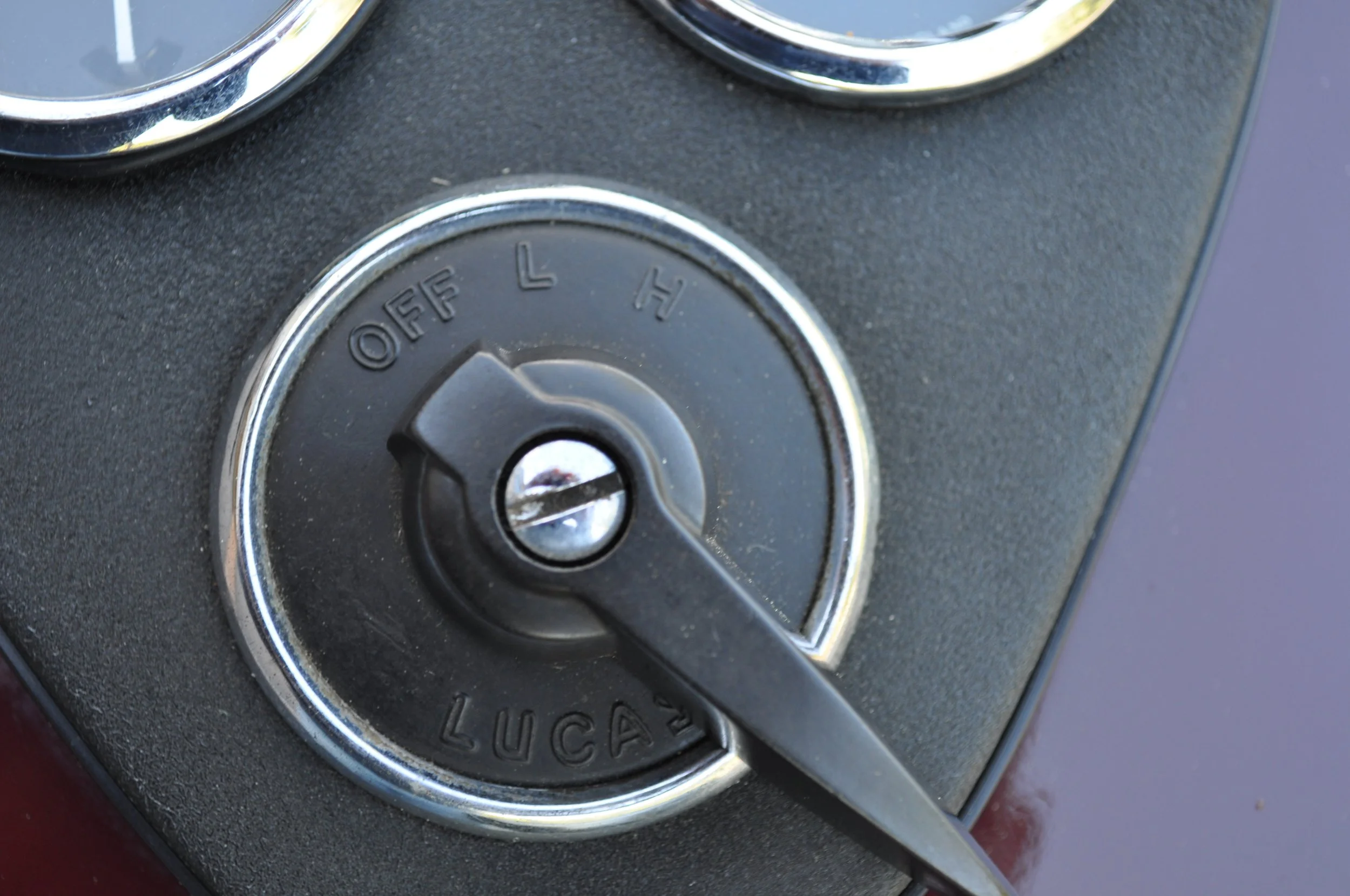
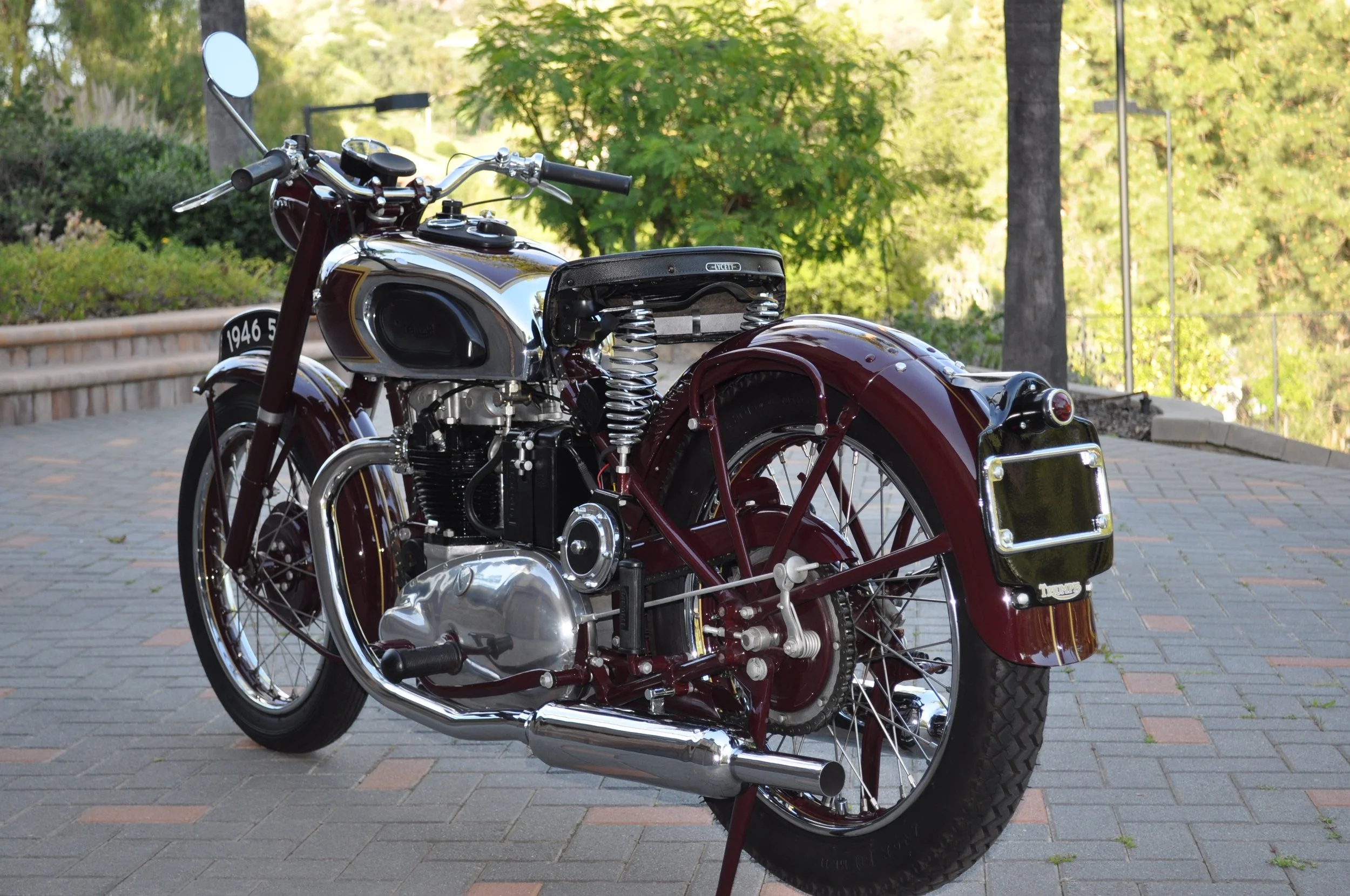
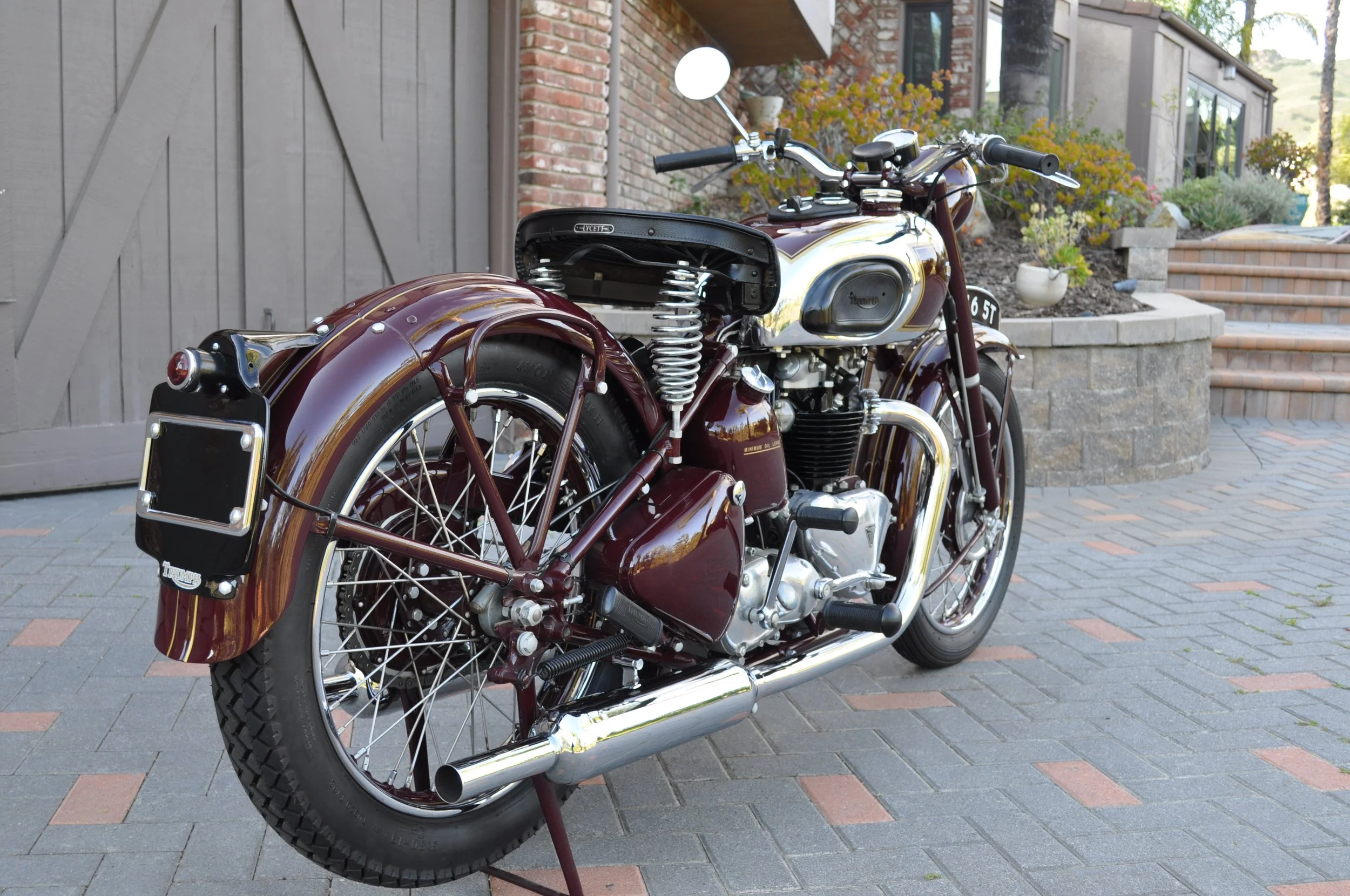
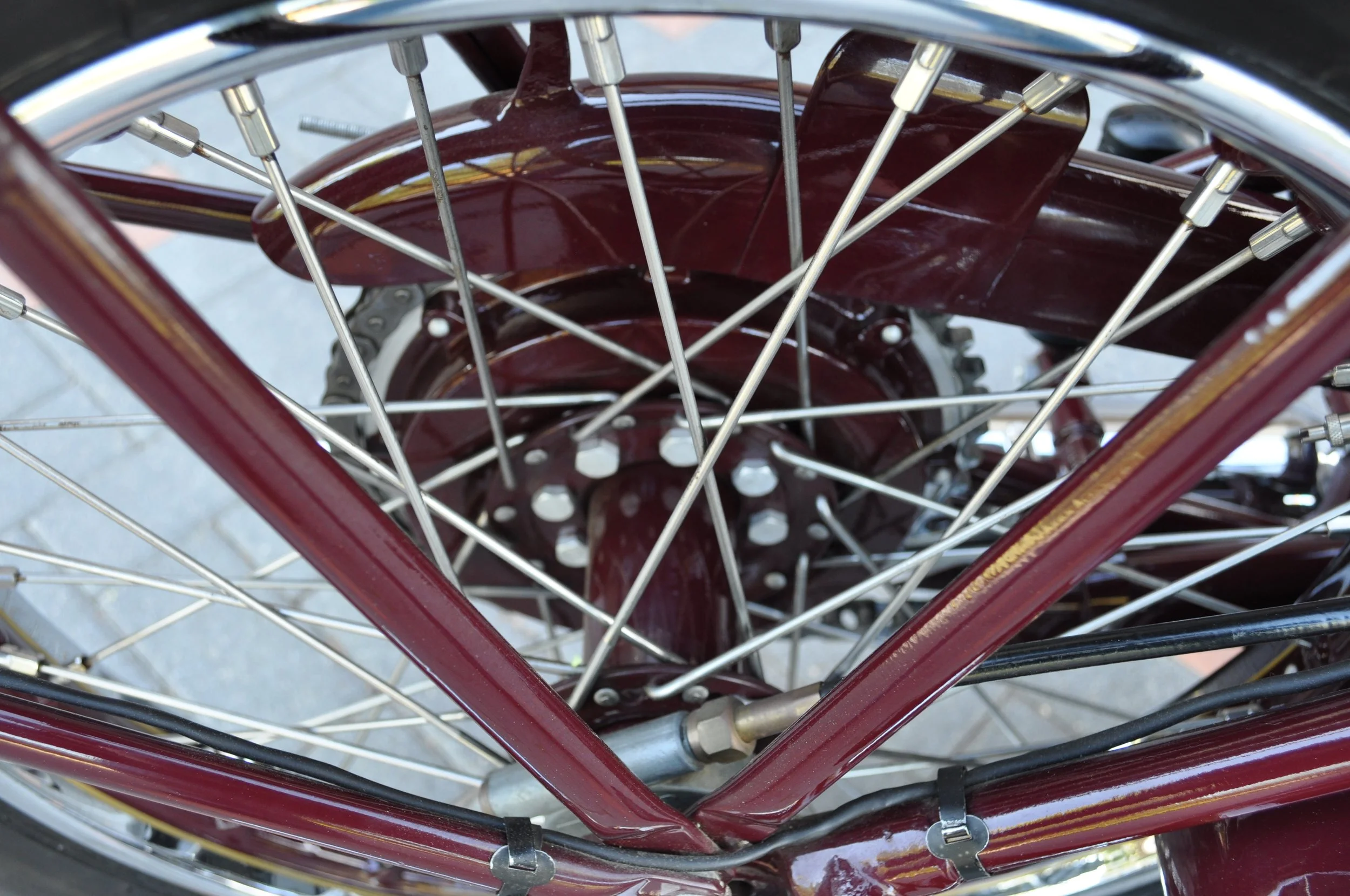
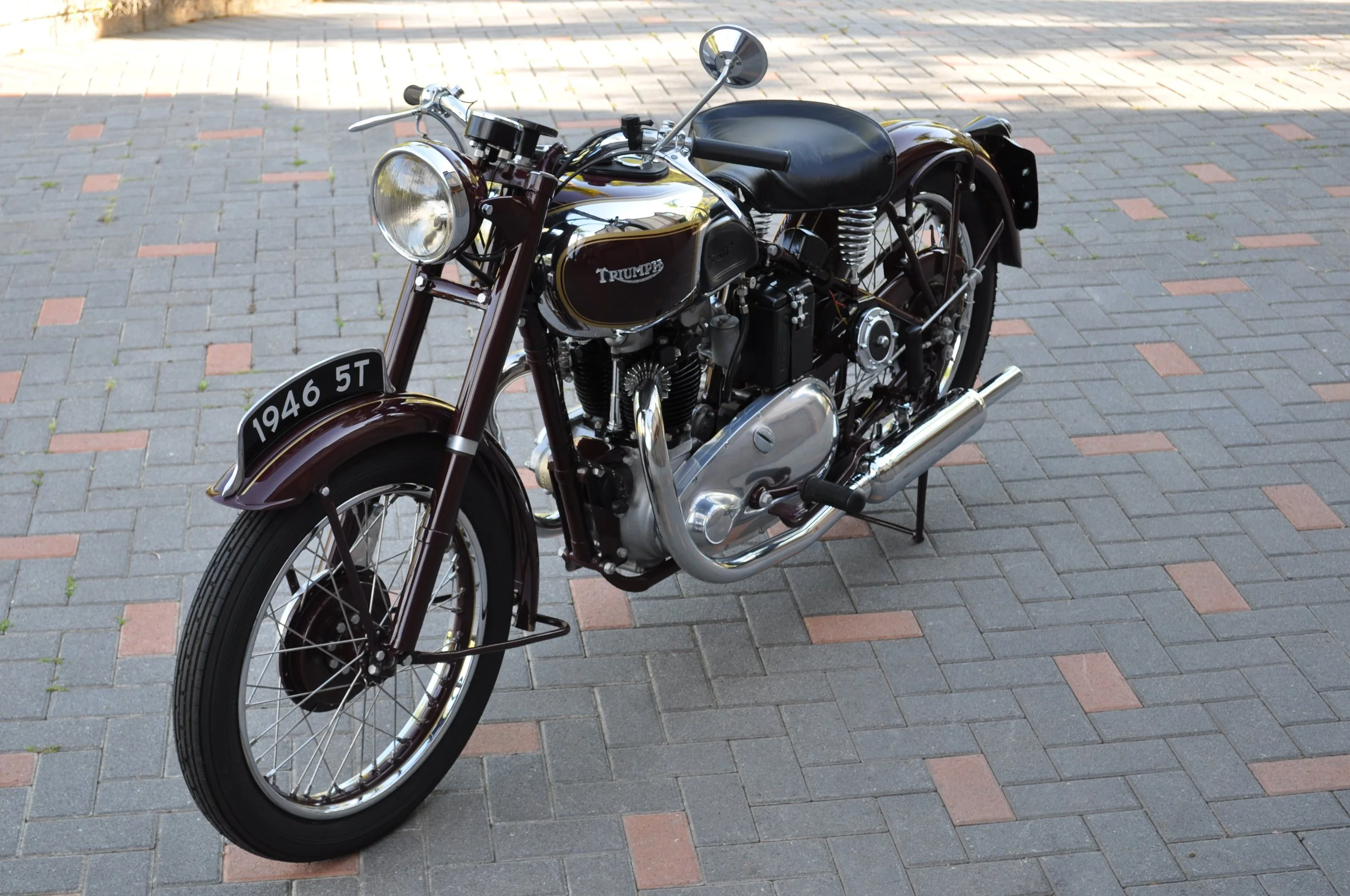
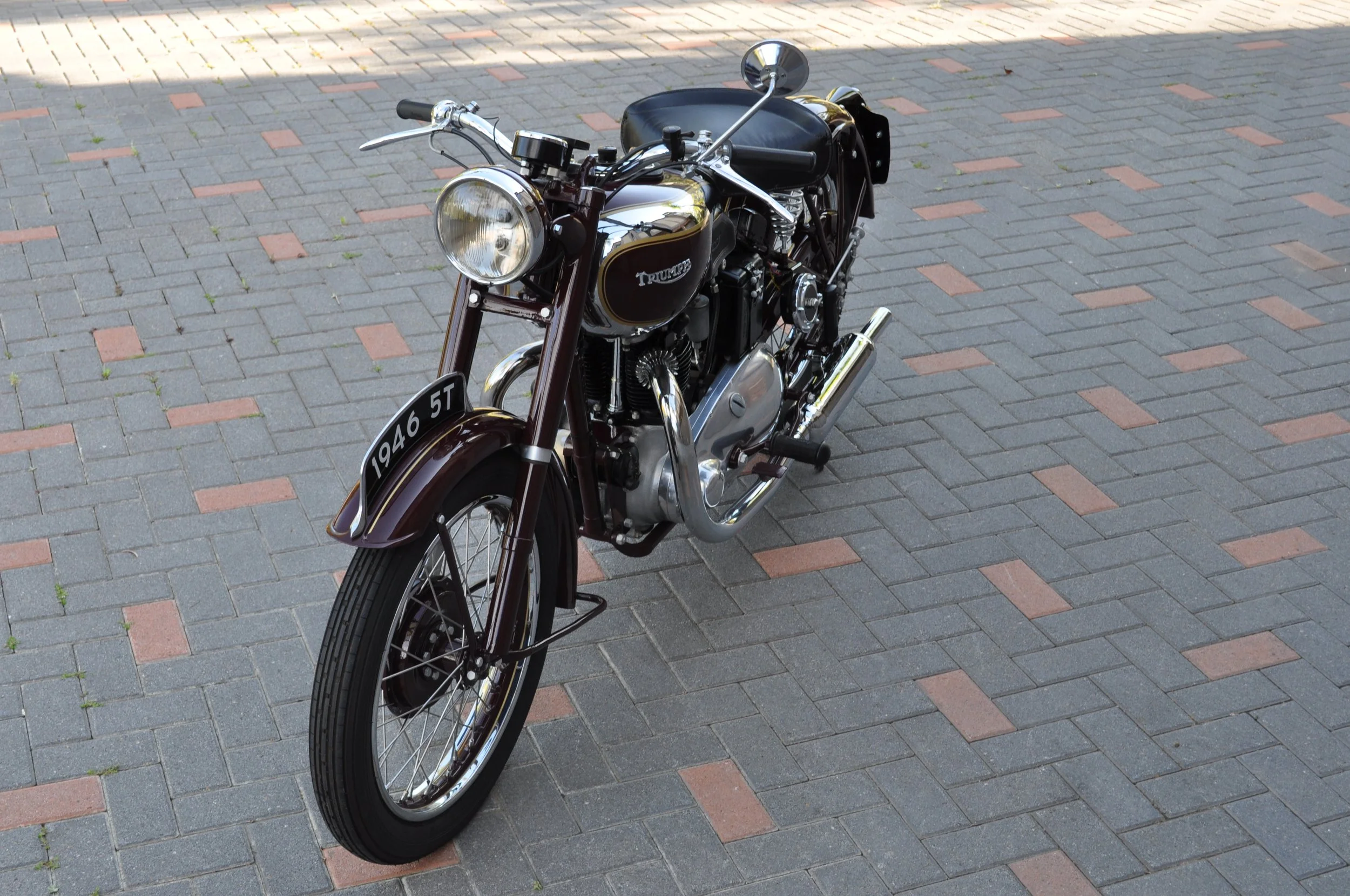
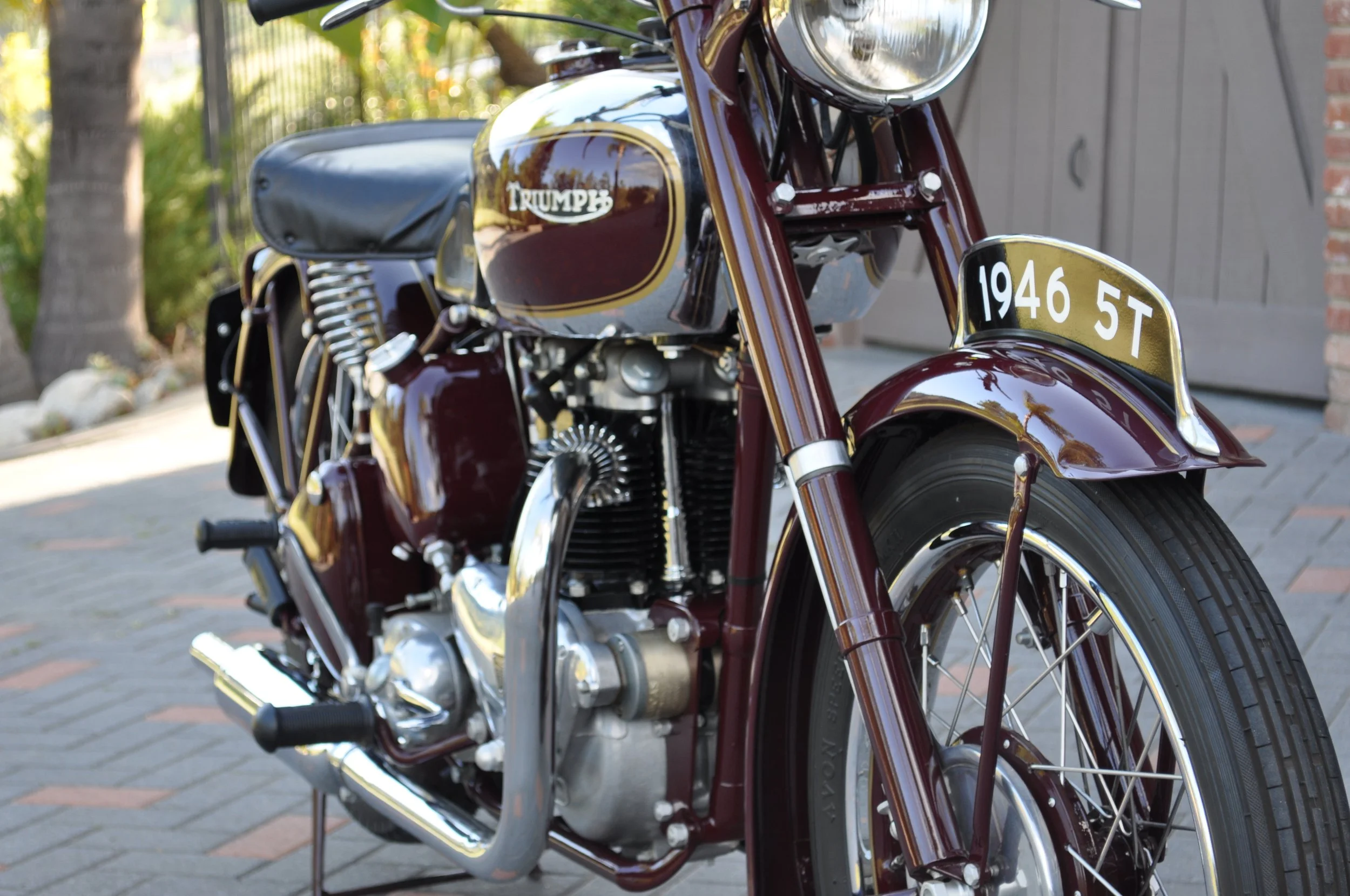
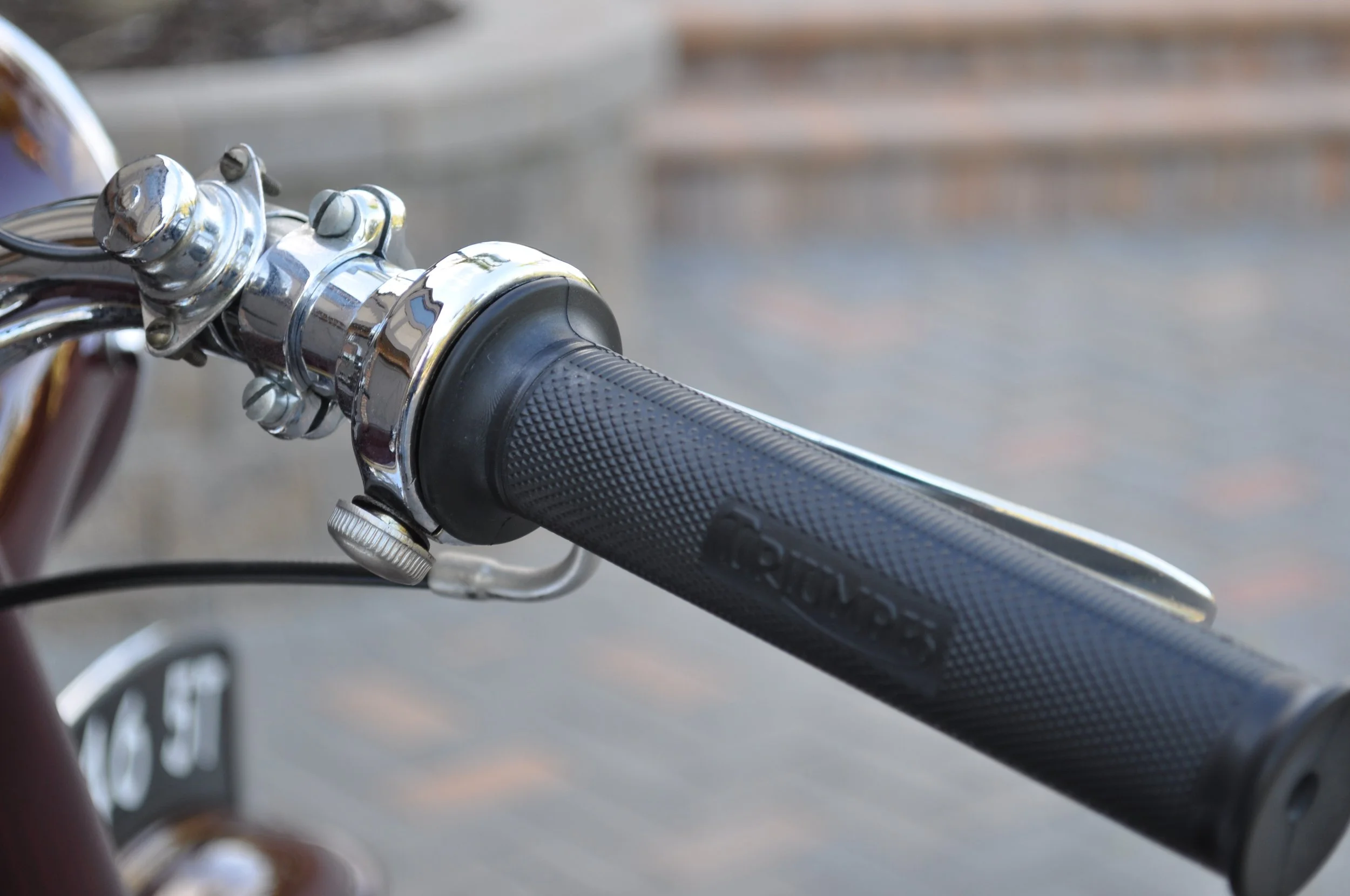
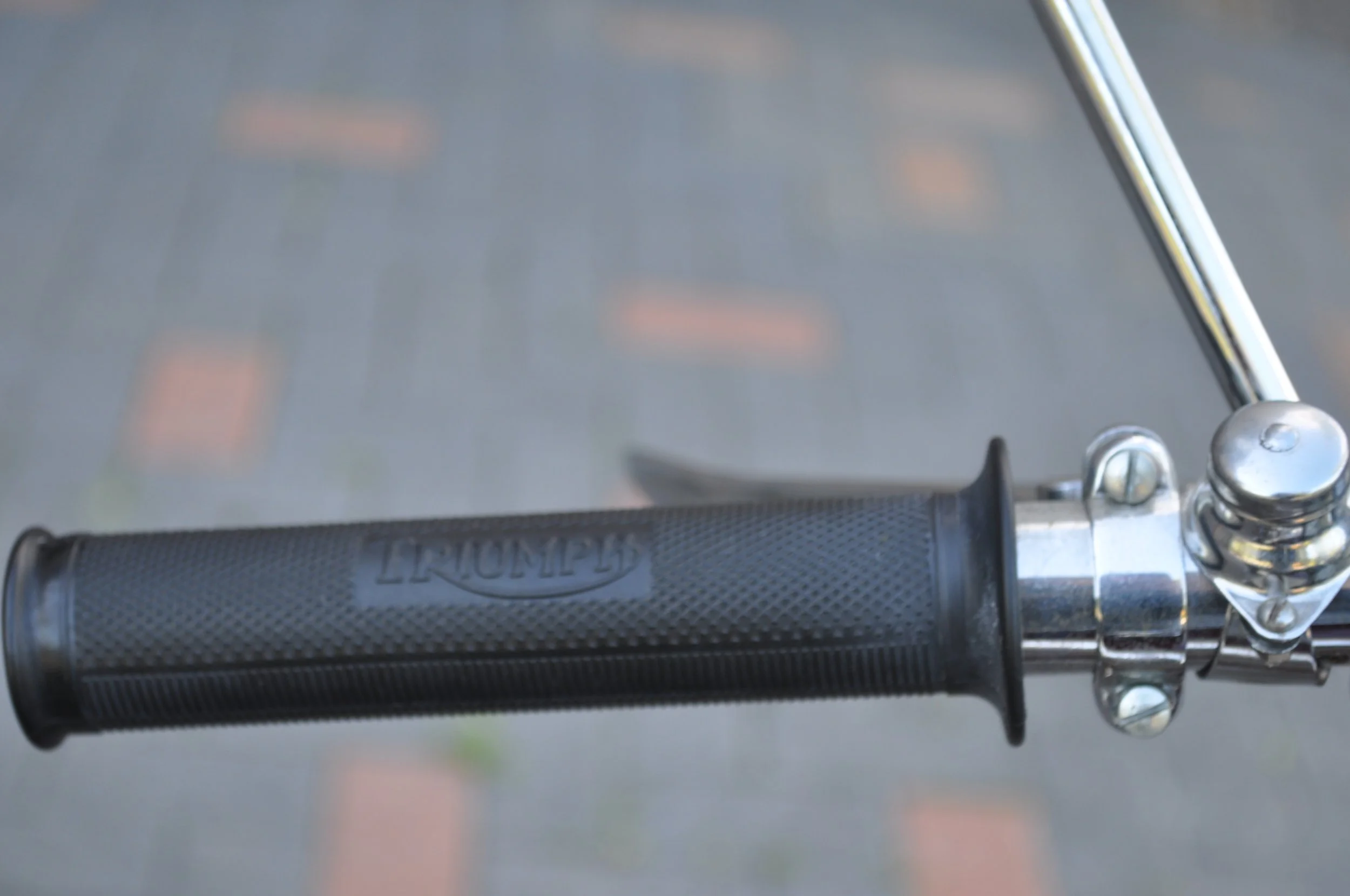
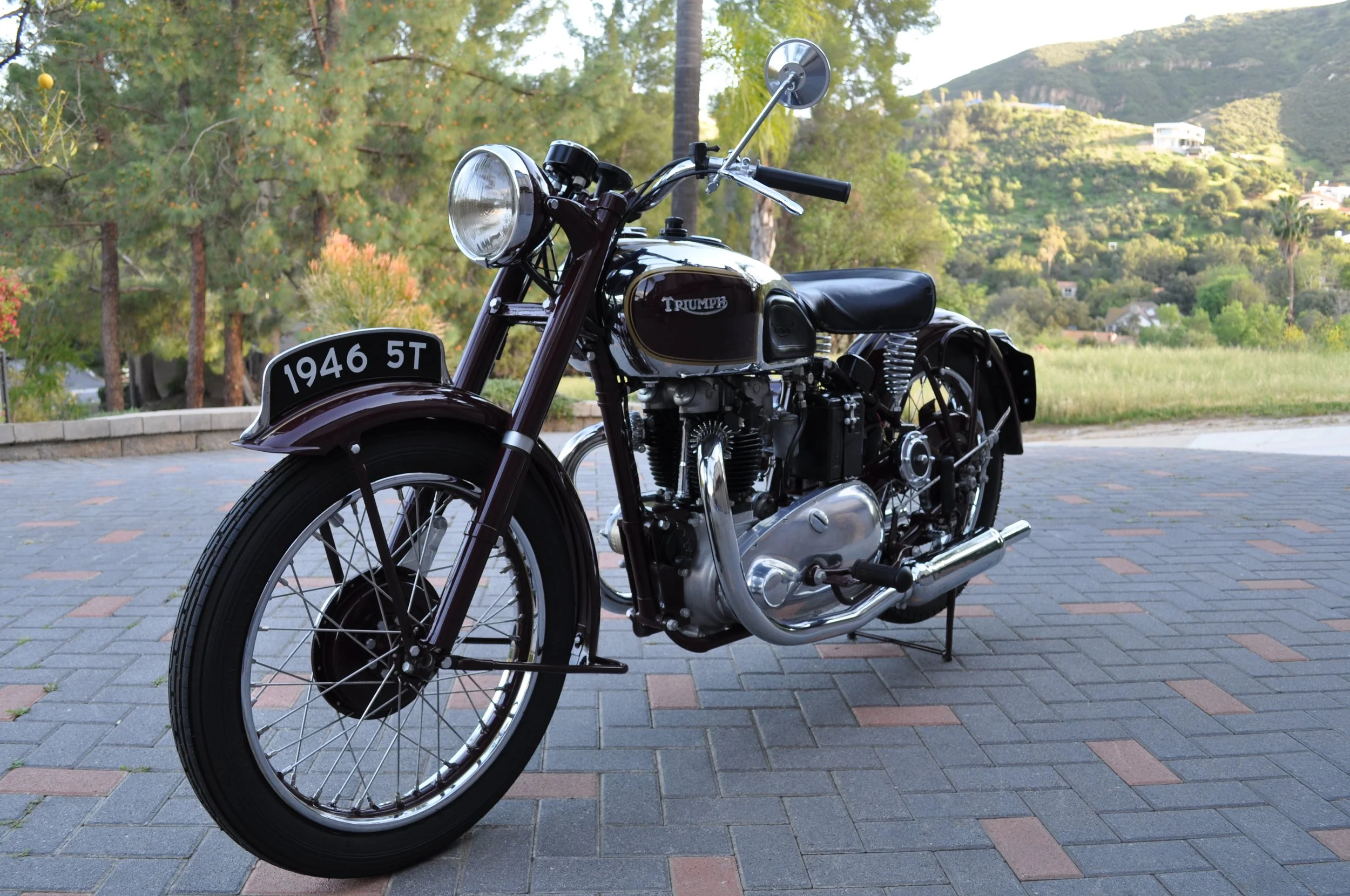
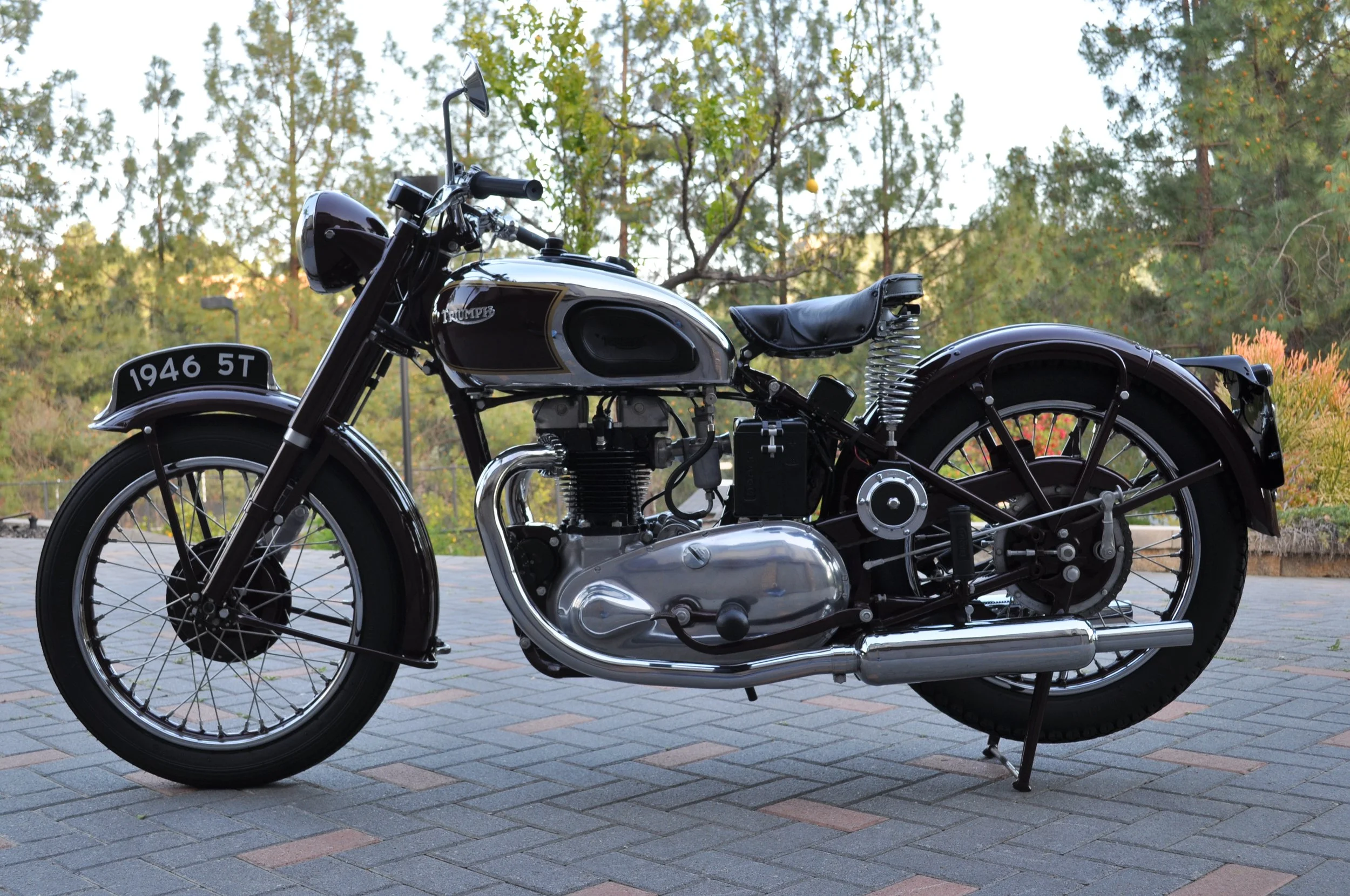
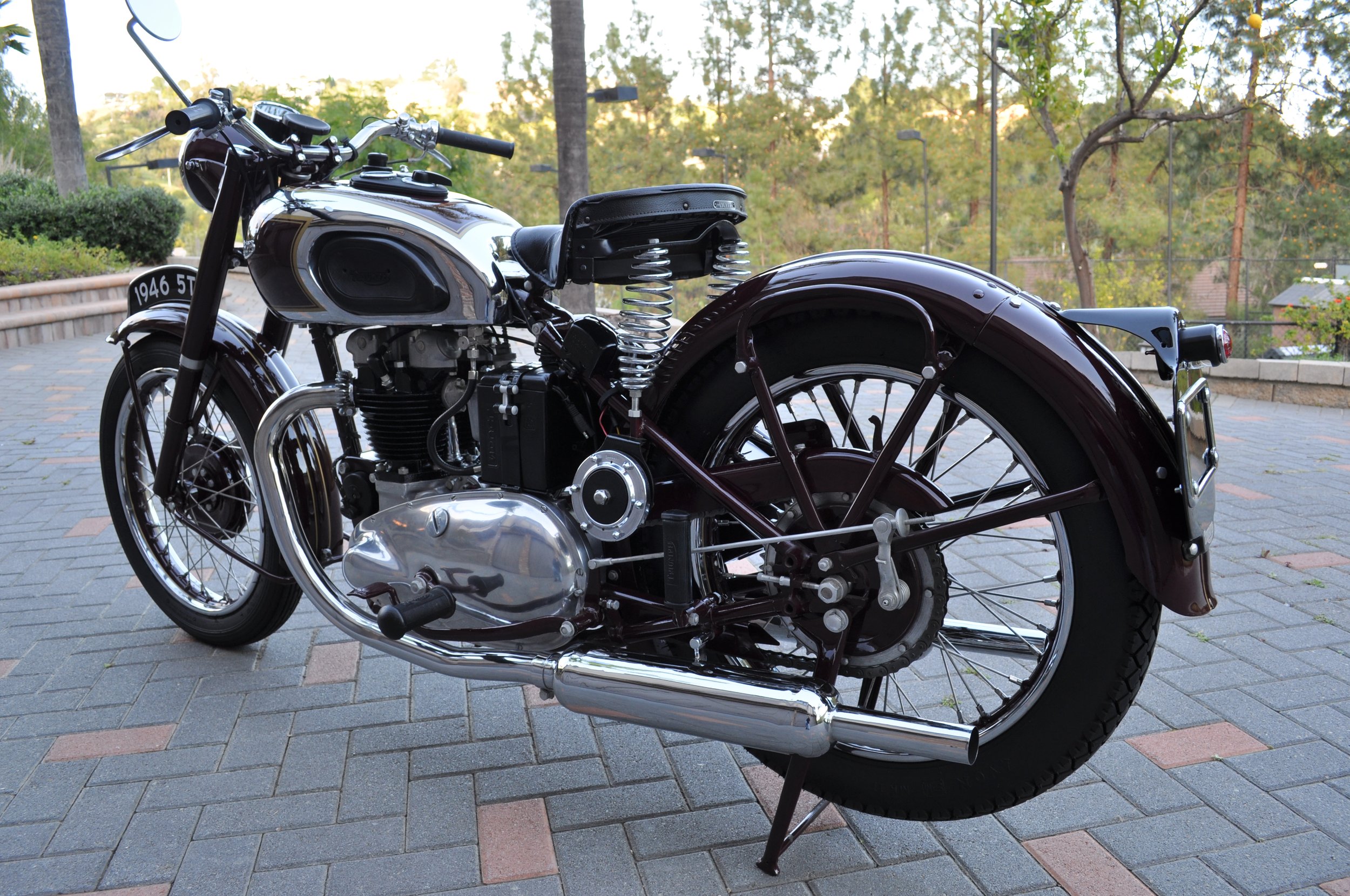
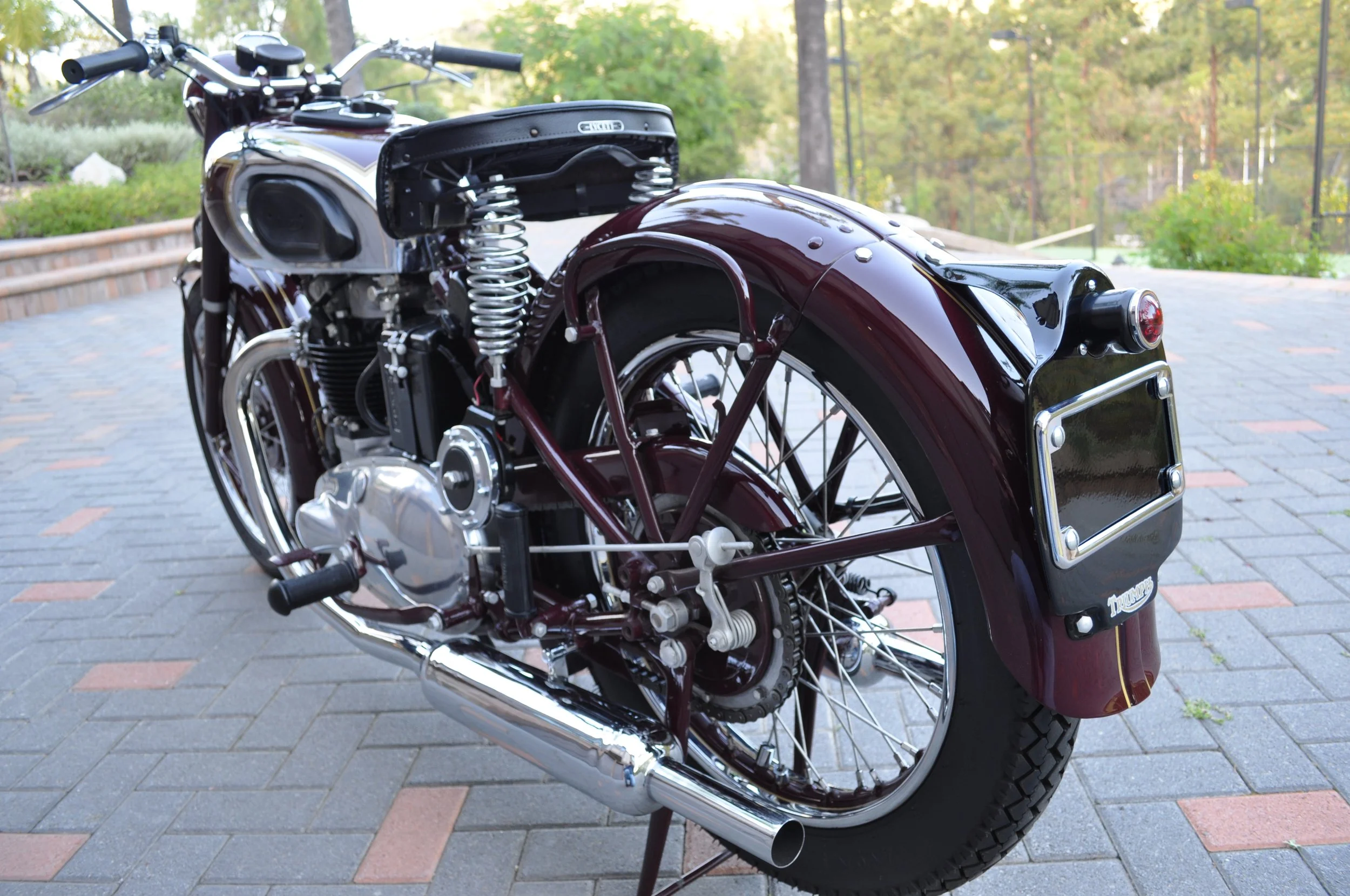
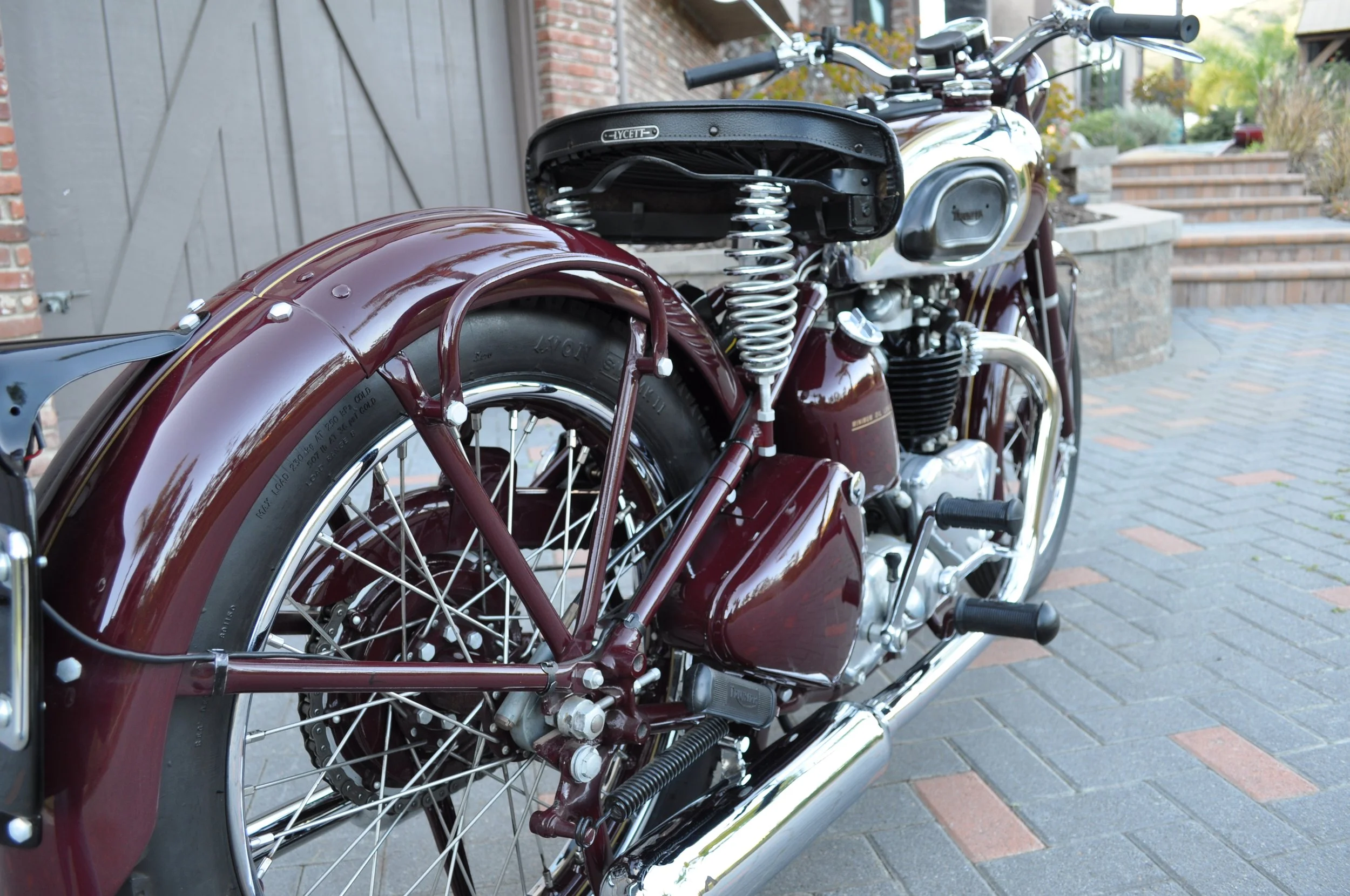
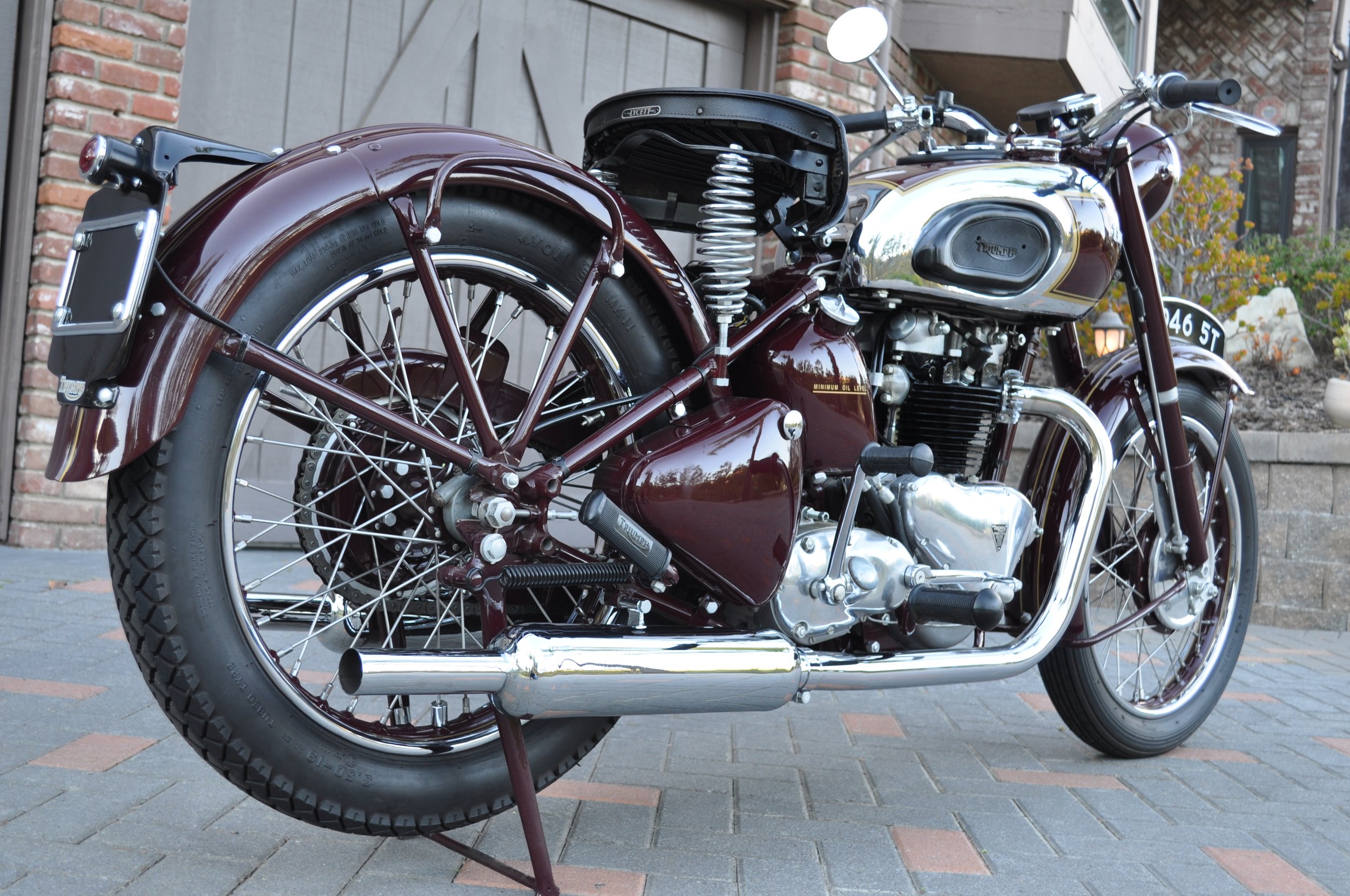
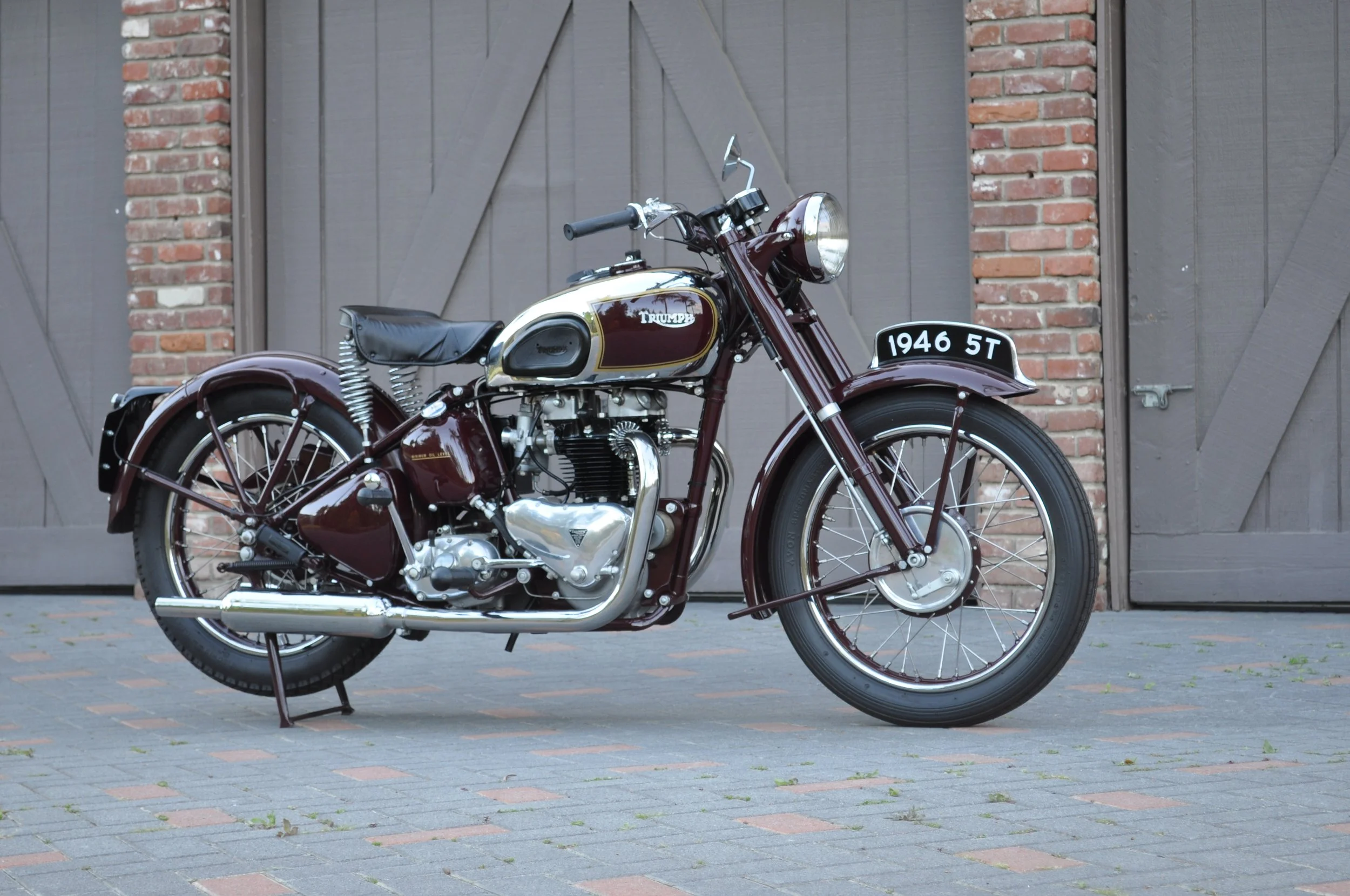
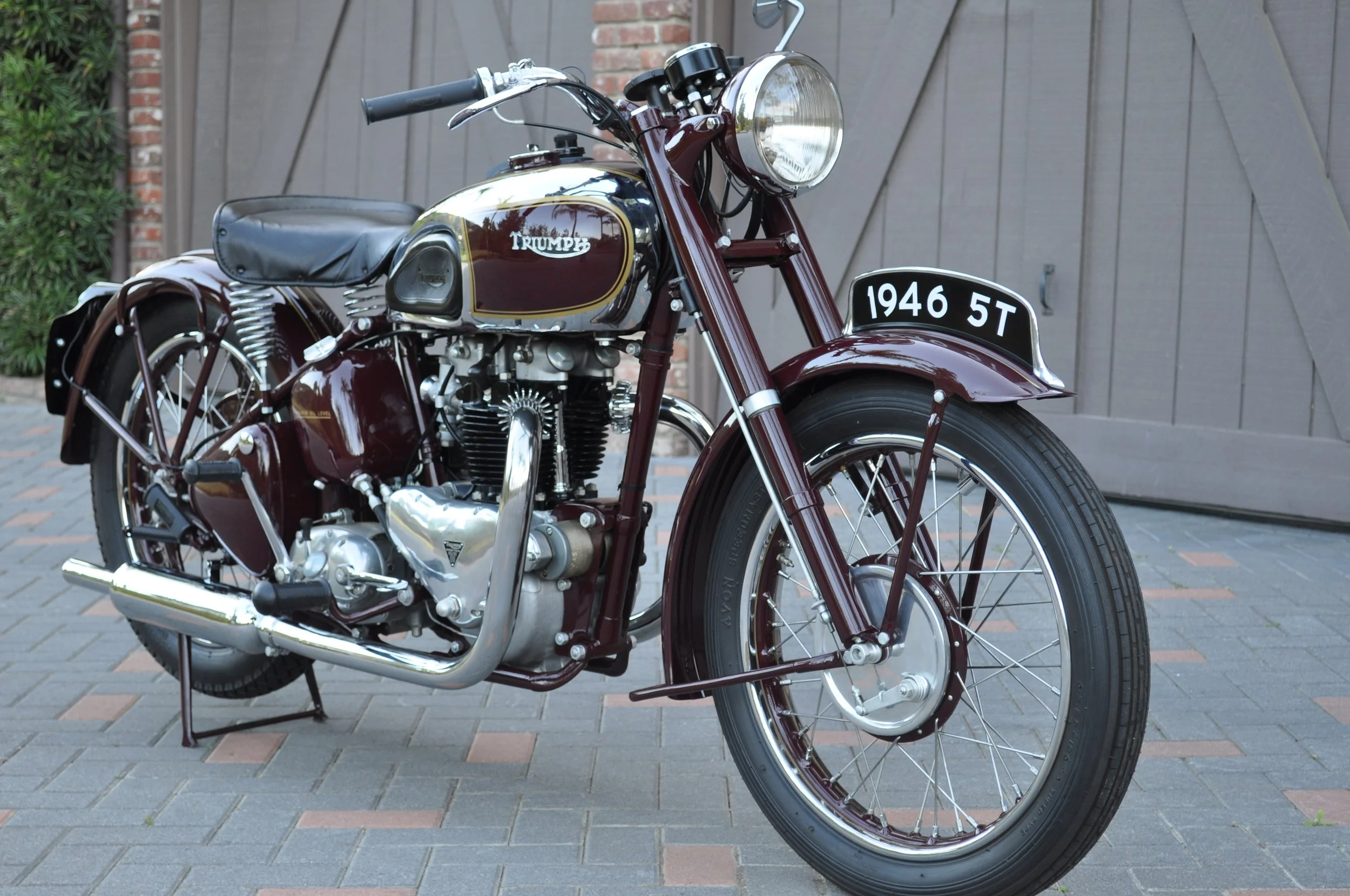
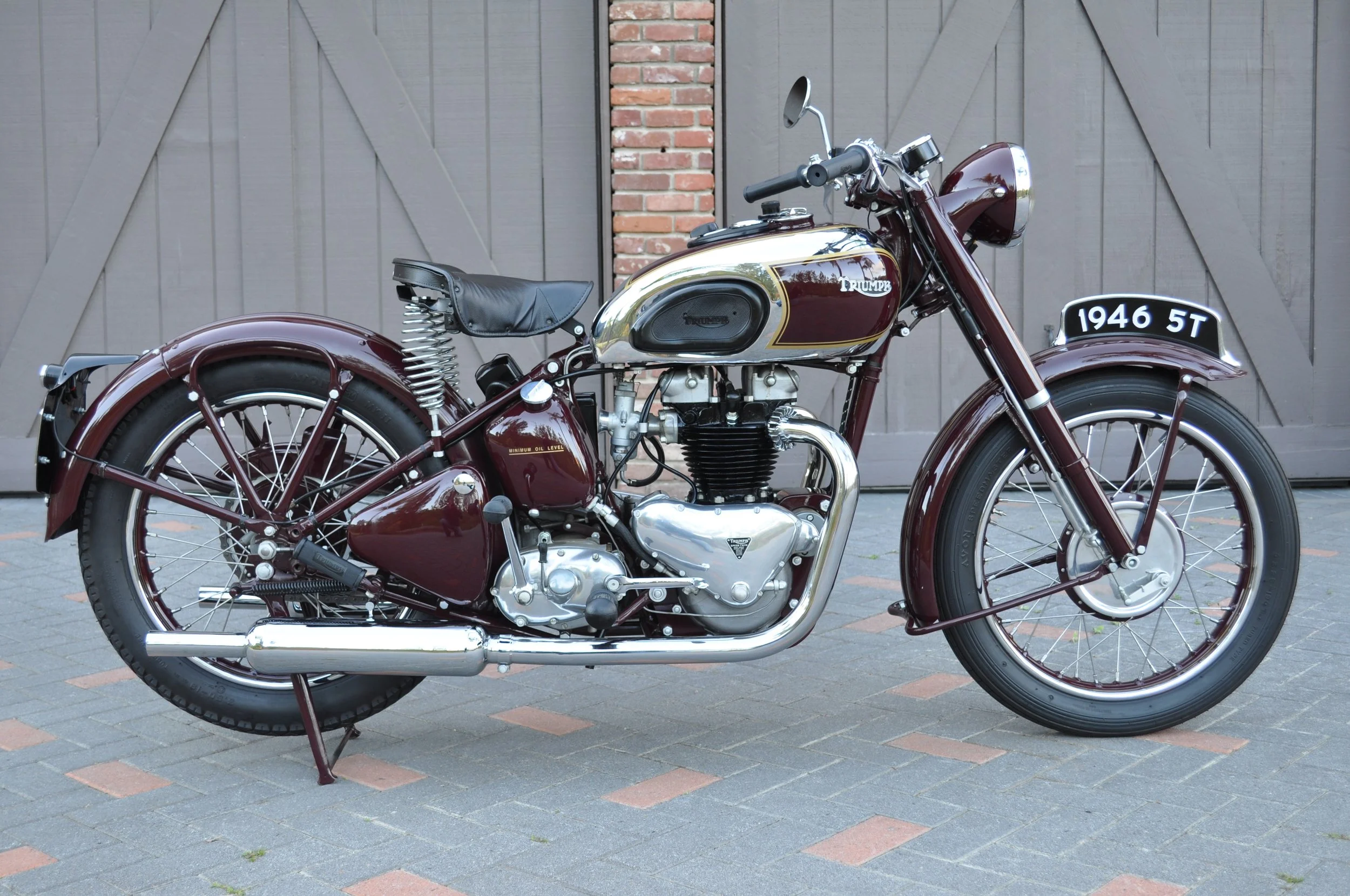
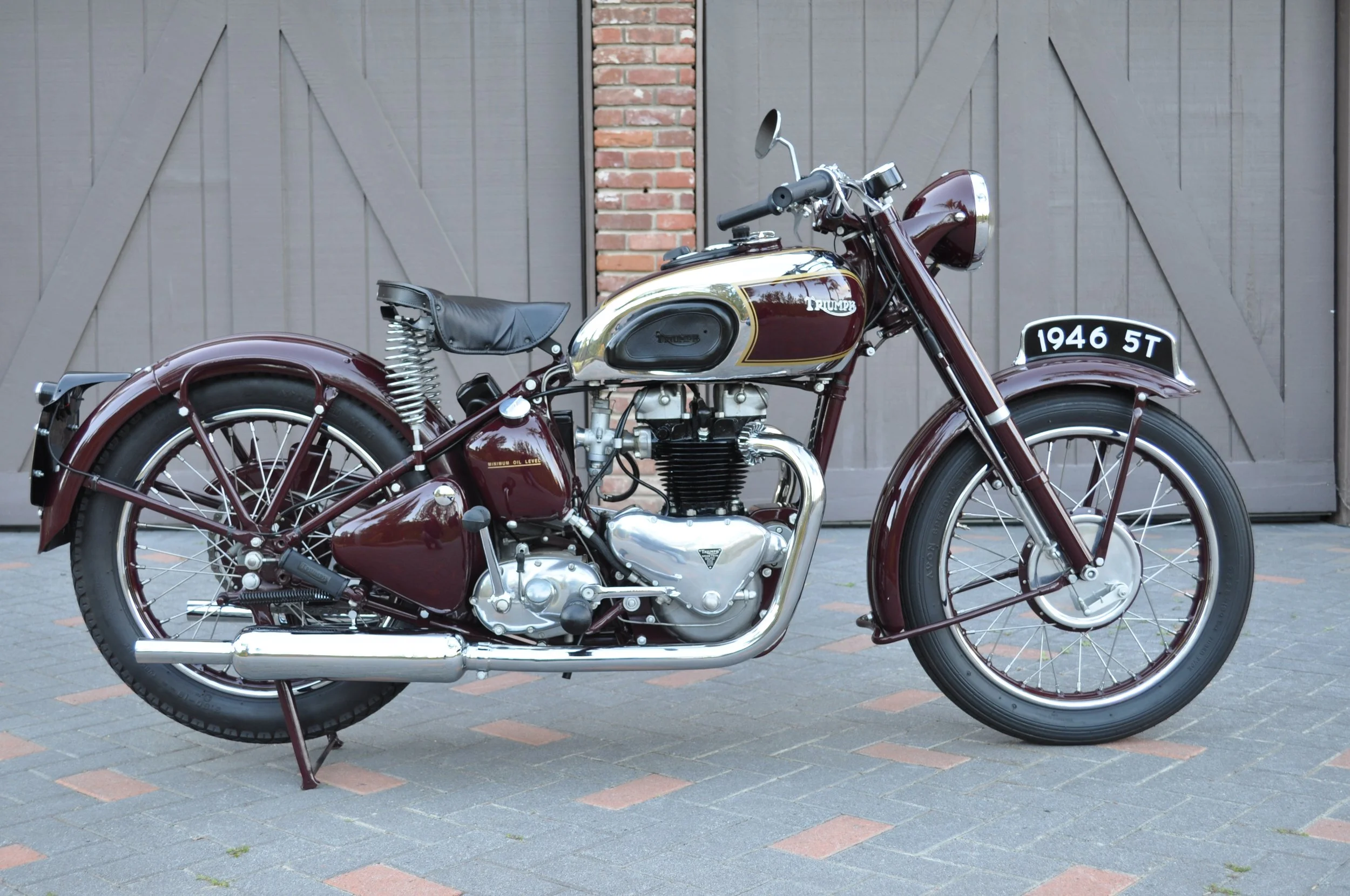
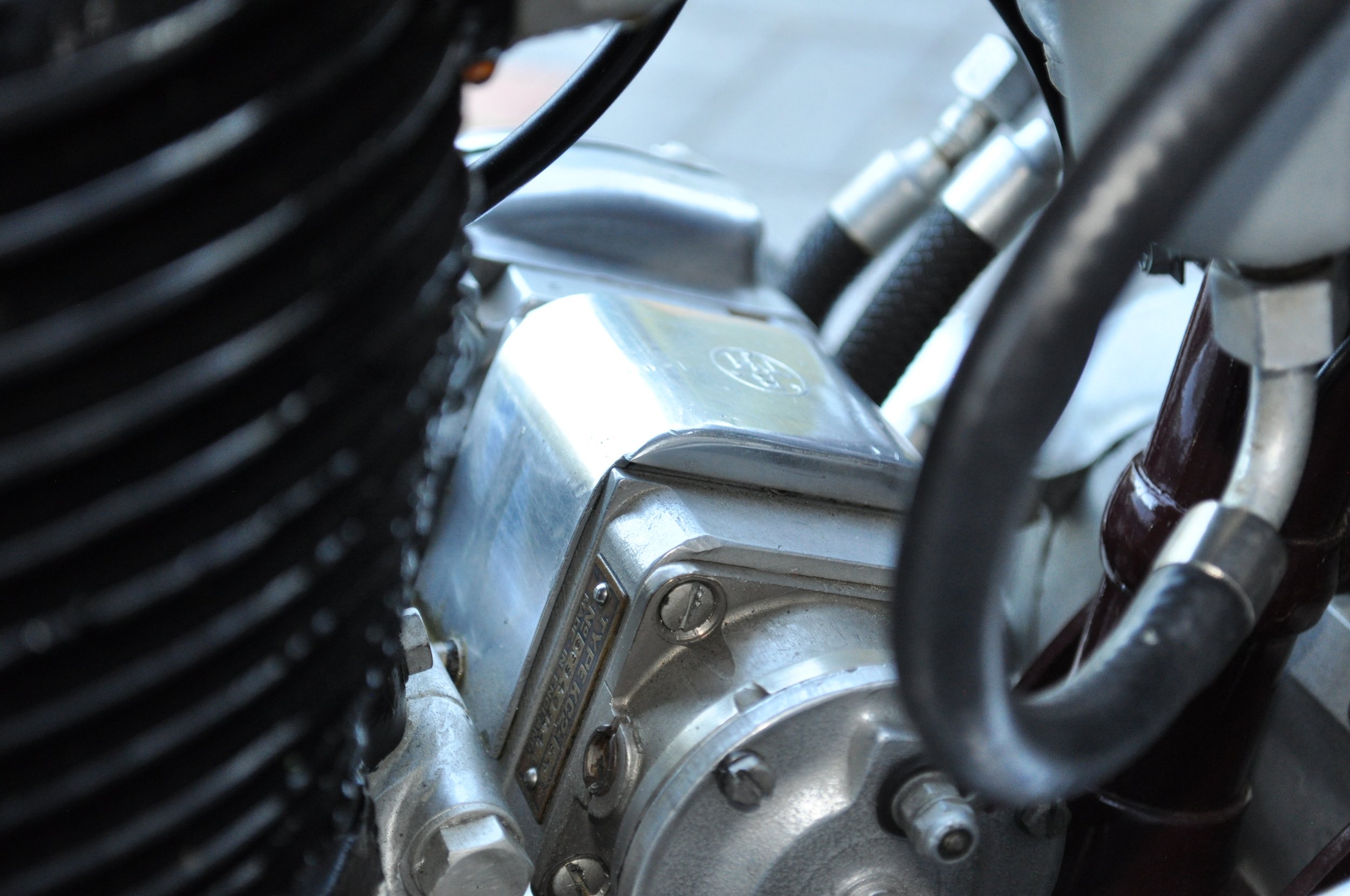
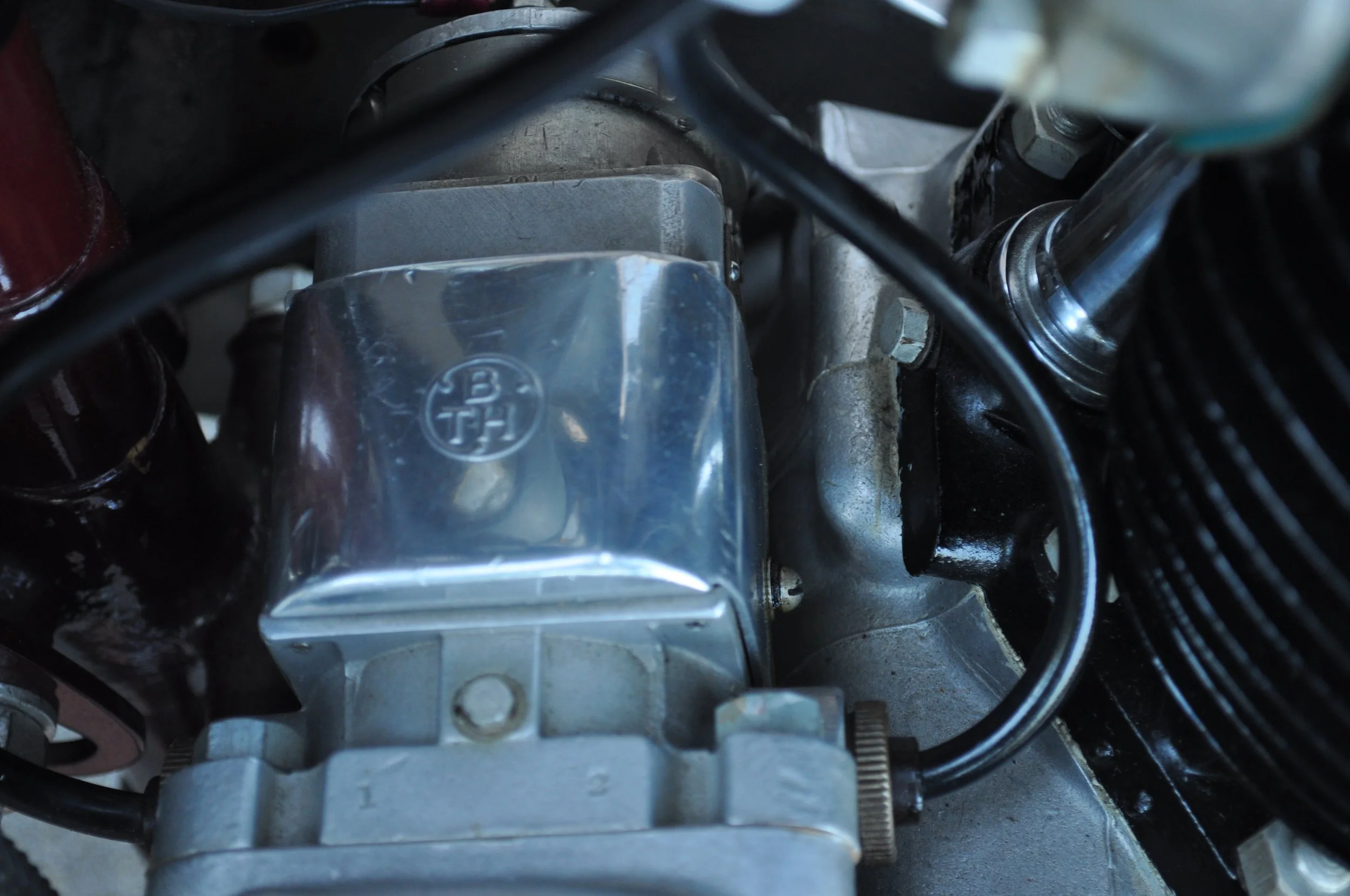
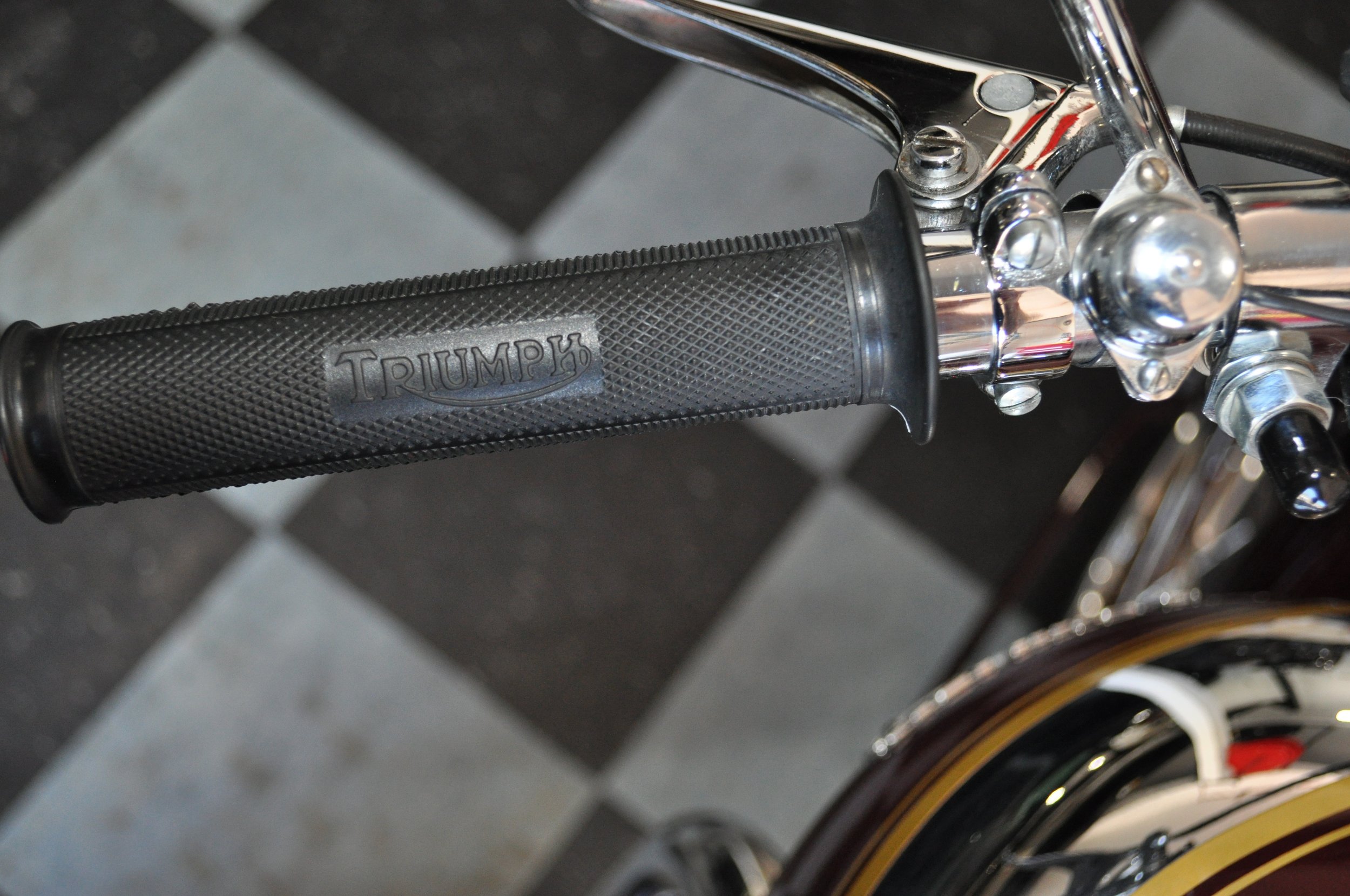
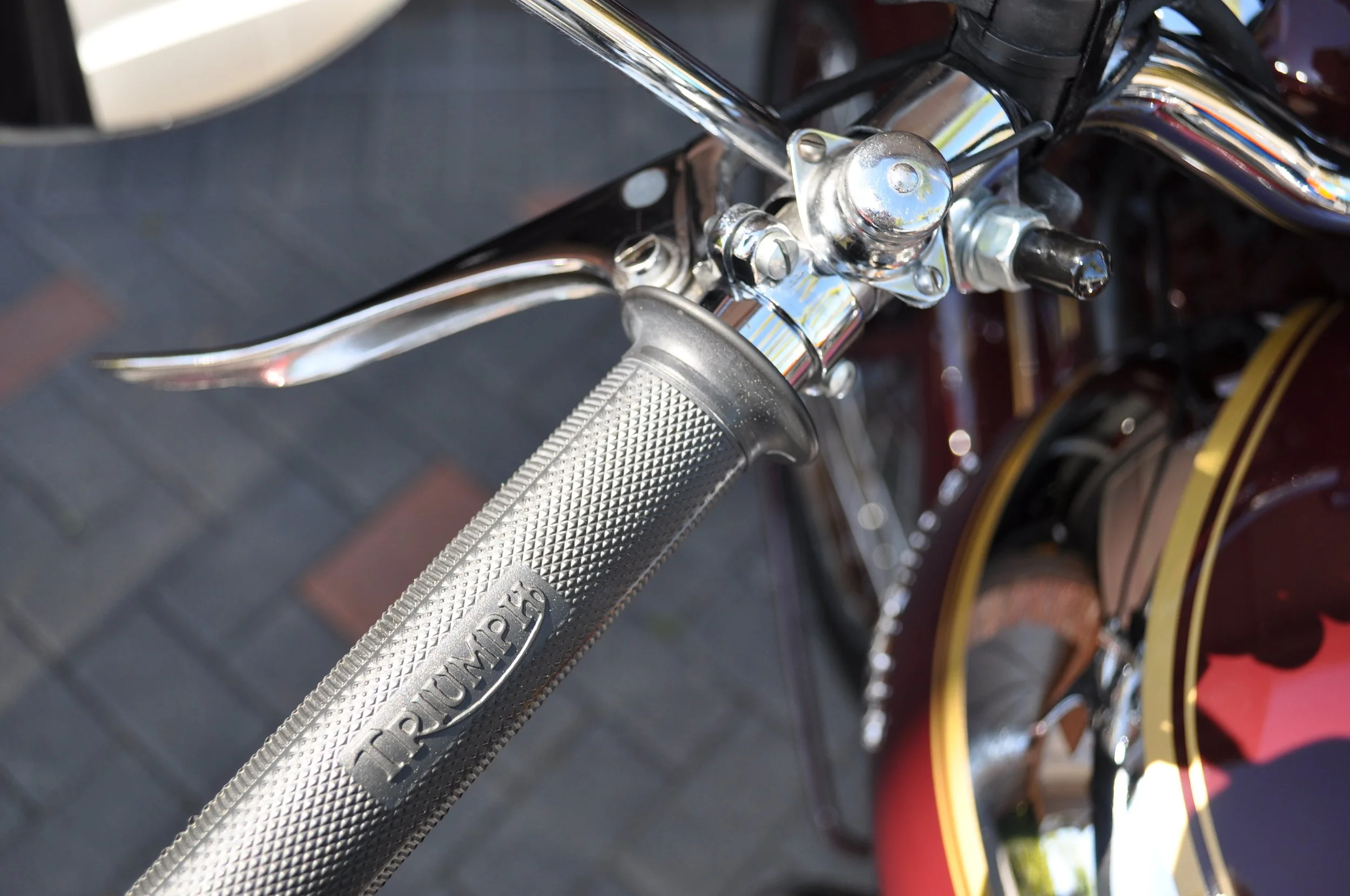
1946 Triumph 5T
The history of the 1946 Triumph 5T Speed Twin is a fascinating one - but it must be understood within the history of motorcycling itself. During the first half of the twentieth century motorcycles around the world were being produced by many companies. At the beginning of the 20th century as the industrial revolution converted the world from an agricultural economy into a manufacturing economy, the development of the internal combustion engine allowed for many possibilities for how to transport people to where they wanted to go. The possibilities for using these engines were virtually endless. Many motorcycle companies of the era began as bicycle companies that found a way to put an engine into the bicycle frame and through a variety of mechanisms drive the wheels. Between 1901 and 1903 alone, four of the most famous motorcycle companies in the United States and Britain were formed. These included Harley-Davidson and Indian motorcycles in the United States and Triumph and Norton motorcycles in Britain. Over the next 20 years approximately 500 to 600 individual motorcycle producers were estimated to have existed in both the United States and in Britain, and over 2,000 around the world.
For a short time, many of these motorcycle manufacturers did exceedingly well in providing a great individual form of transportation for both shorter and longer distances. But Henry Ford and other manufacturers of cars developed the assembly line and other efficiencies of production that progressively allowed them to sell the cars at a price very similar to that of even a mid-size motorcycle. Obviously, this had a huge impact on the viability of motorcycles as a means of general transportation.
World War One and World War Two in the first half of the 20th century also had a major impact on motorcycle manufacturing. Most of the major manufacturers mentioned above substituted machines that could be used out in the field as reconnaissance transportation, particularly in World War II. One of the strategies that was used was consolidation of the different manufacturers, with one of the manufacturers purchasing the assets and the engineering capabilities of other companies. This is exactly what happened with two British companies, Triumph and Aerial. In 1936 the Triumph company was struggling financially because it was making cars, motorcycles, and bicycles. They split the divisions and sold the Triumph motorcycle division to the Aerial Company and its owner Jack Sangster. Sangster then transferred one of his key young engineers, Edward Turner, to head the Triumph Division. Turner's charge at Triumph was to develop a motorcycle that would transcend the performance limitations of the single-cylinder-engine bikes. In addition the new motorcycle also needed to develop a new era of style and have a beautiful and integrated design that was at the leading edge of modern aesthetics.
Turner did all of the above and developed a design that achieved not only a significant improvement in performance as well as a stunning and modern visual design. This design is essentially still being used in 2026 models today, 90 years later. Indeed, the design has evolved and the technology has been markedly improved, but the essential look of the bike can be recognized instantly, as being from the same Triumph motorcycle family as models that succeeded it over the next 90 years.
Turner sat down at the drawing board in approximately 1936. Initially, he was not allowed to design a comprehensively new machine. Remember that the motorcycle industry was in a great deal of flux and financial insecurity. Therefore he needed to use as many existing parts as possible from what was already on the shelves and used the jigs and casting dies that were available. With this in mind he used the existing frame from the Triumph Tiger 80/90 (250cc/350cc) single cylinder frame. He considered a telescopic front fork but had concerns about the continuing R&D that was necessary to eliminate stiction and flex that were still a problem in the mid-1930s. For this reason he decided on continuing the use of the girder front end. The telescopic front end would be one of his first design priority next steps.
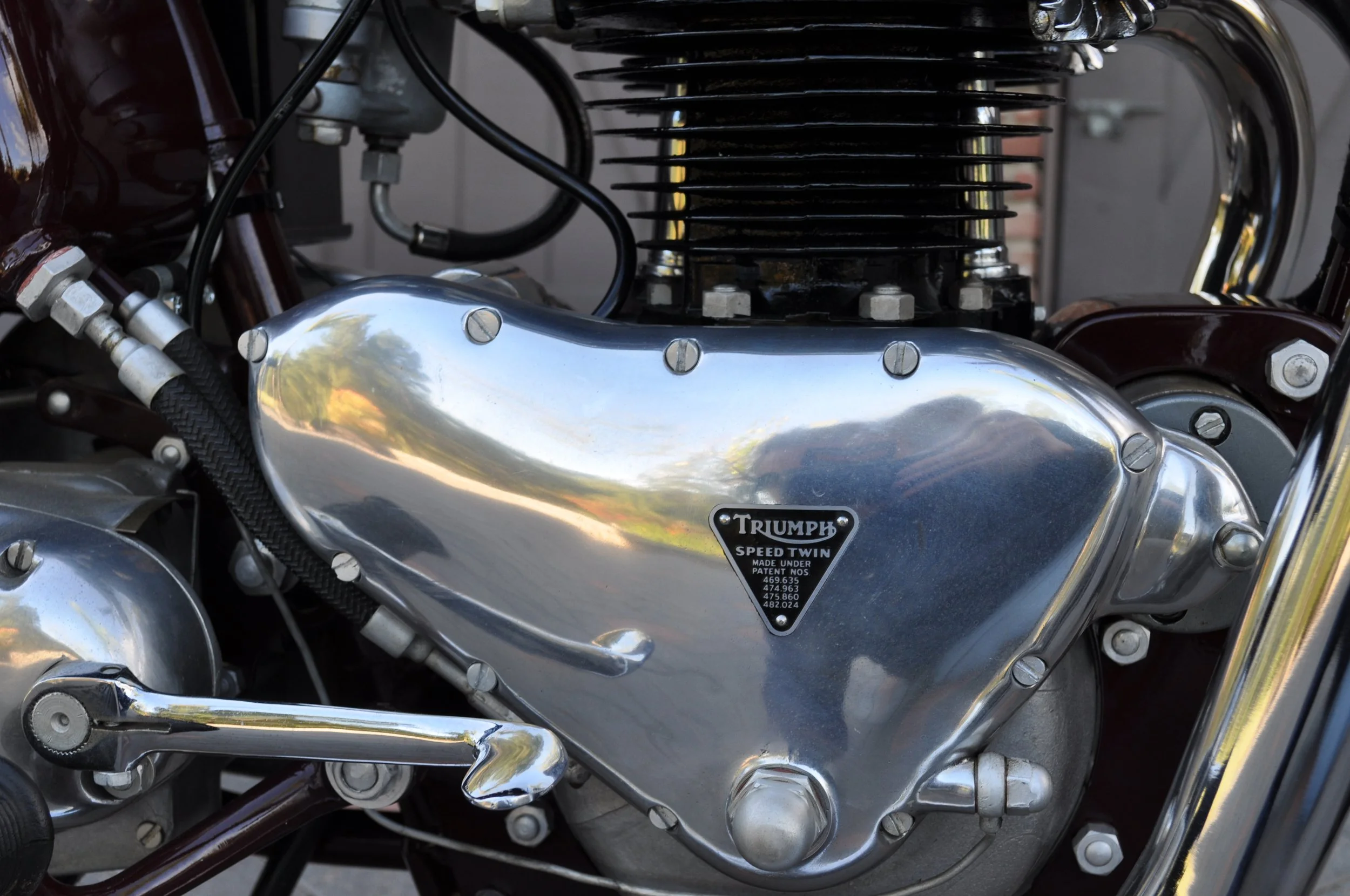
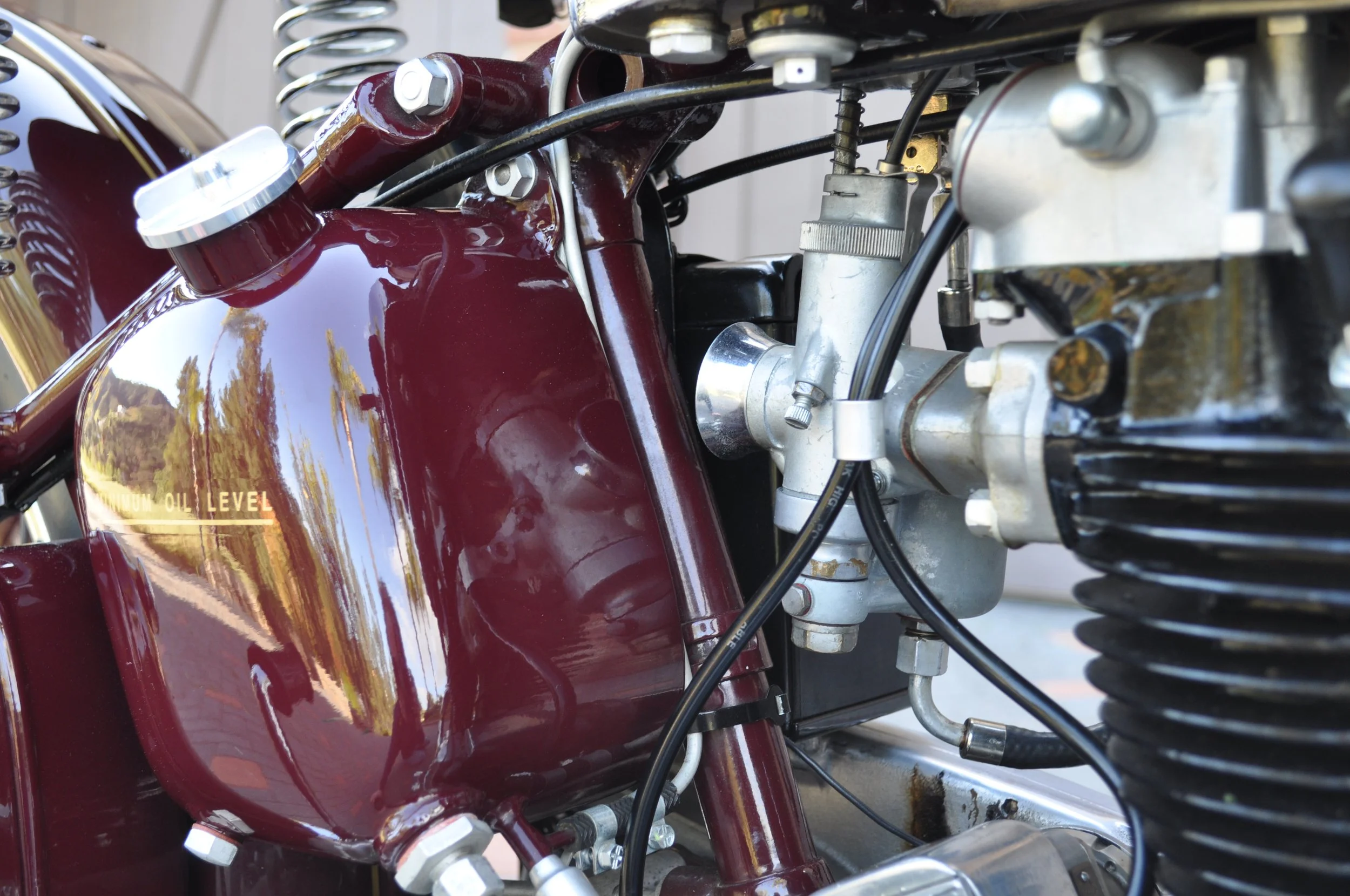
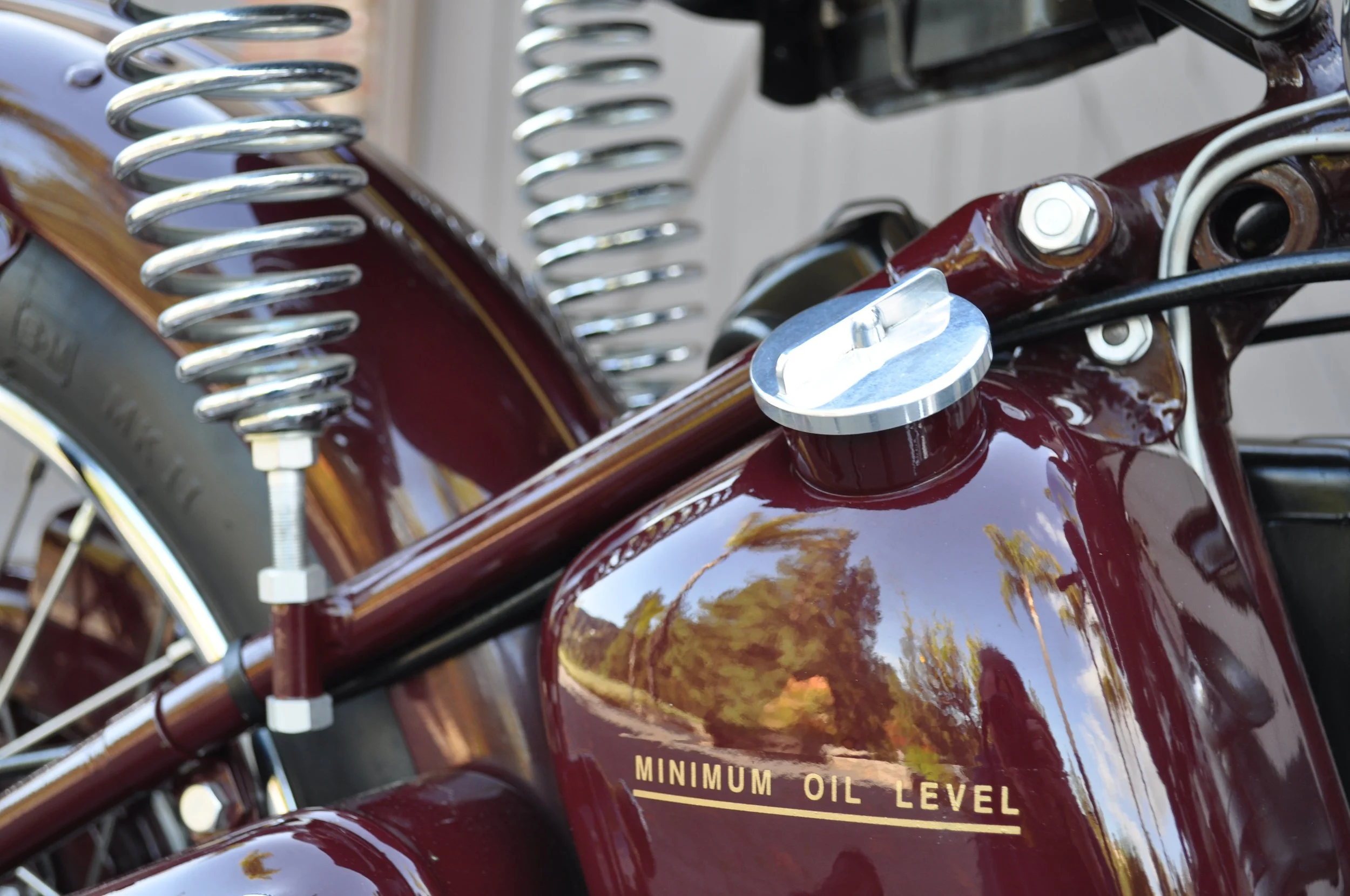
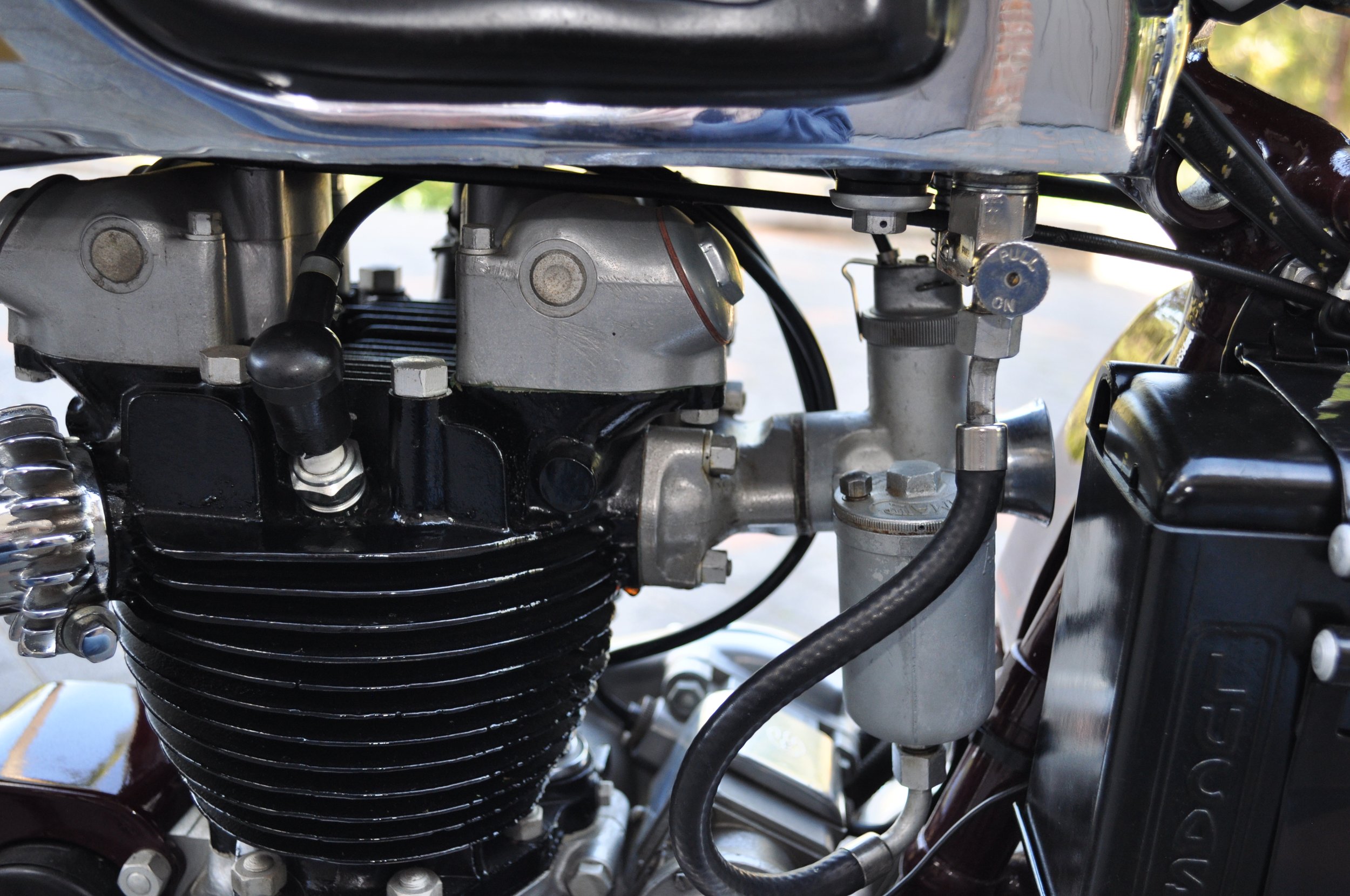
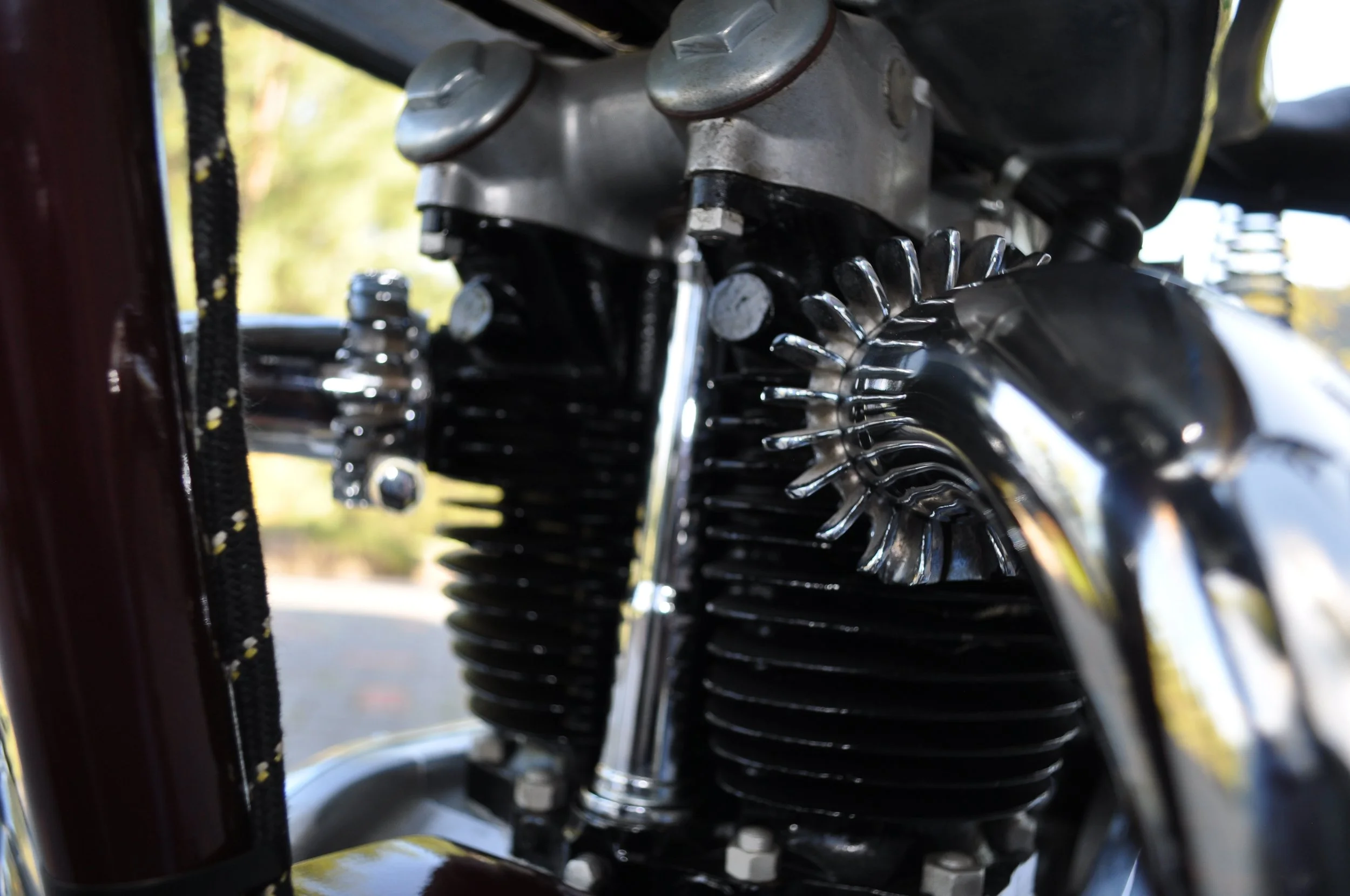
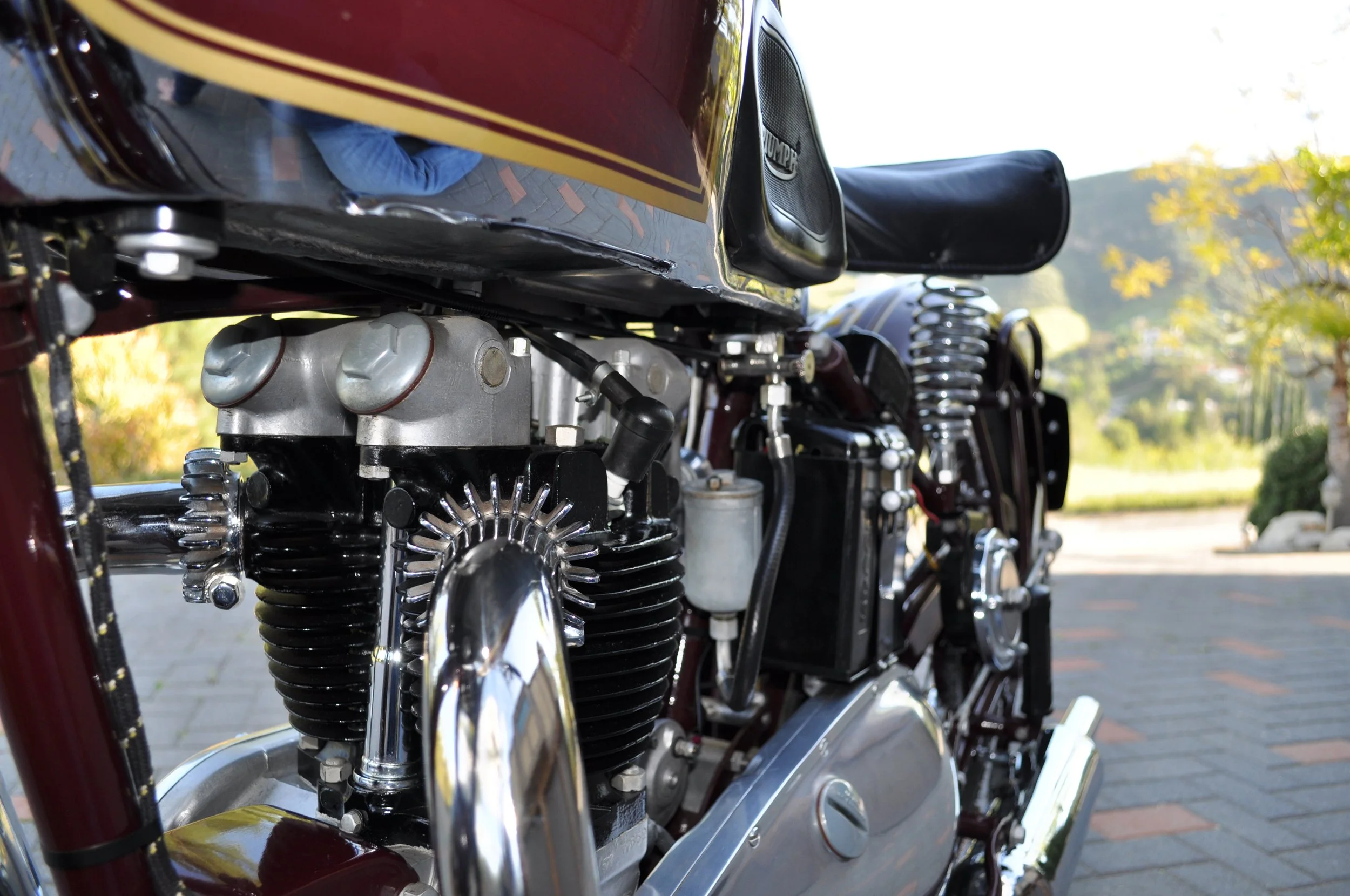
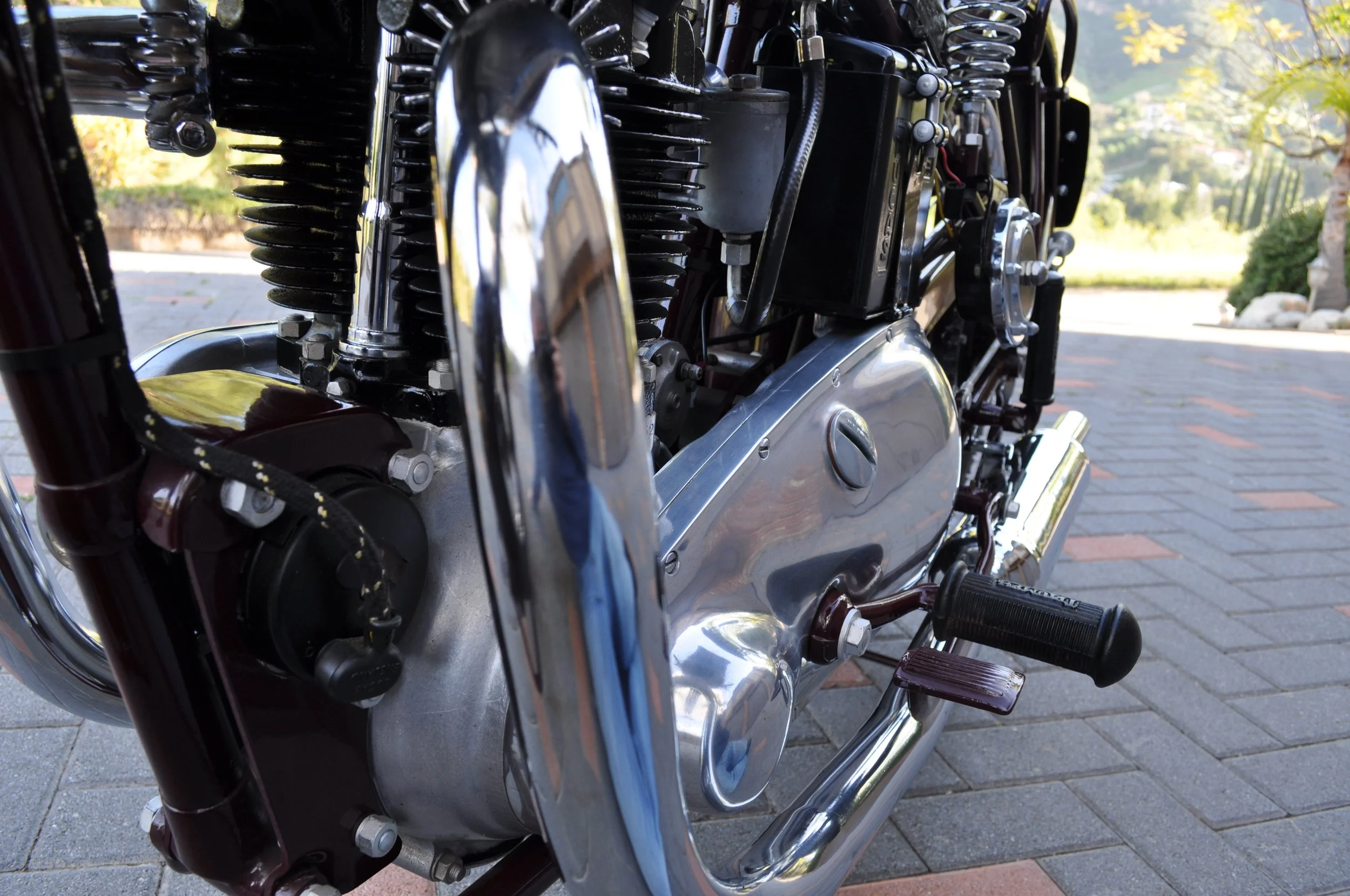
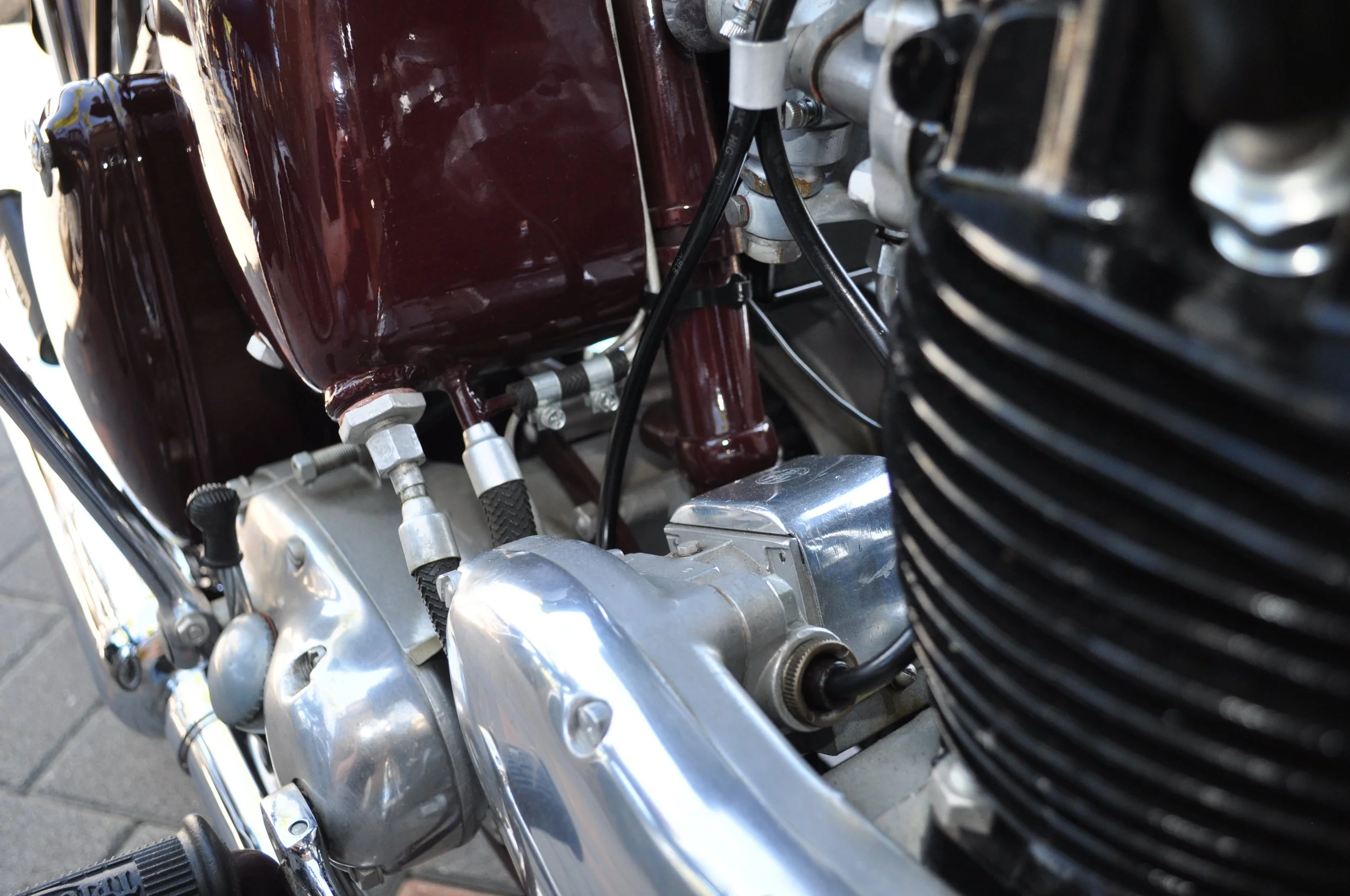
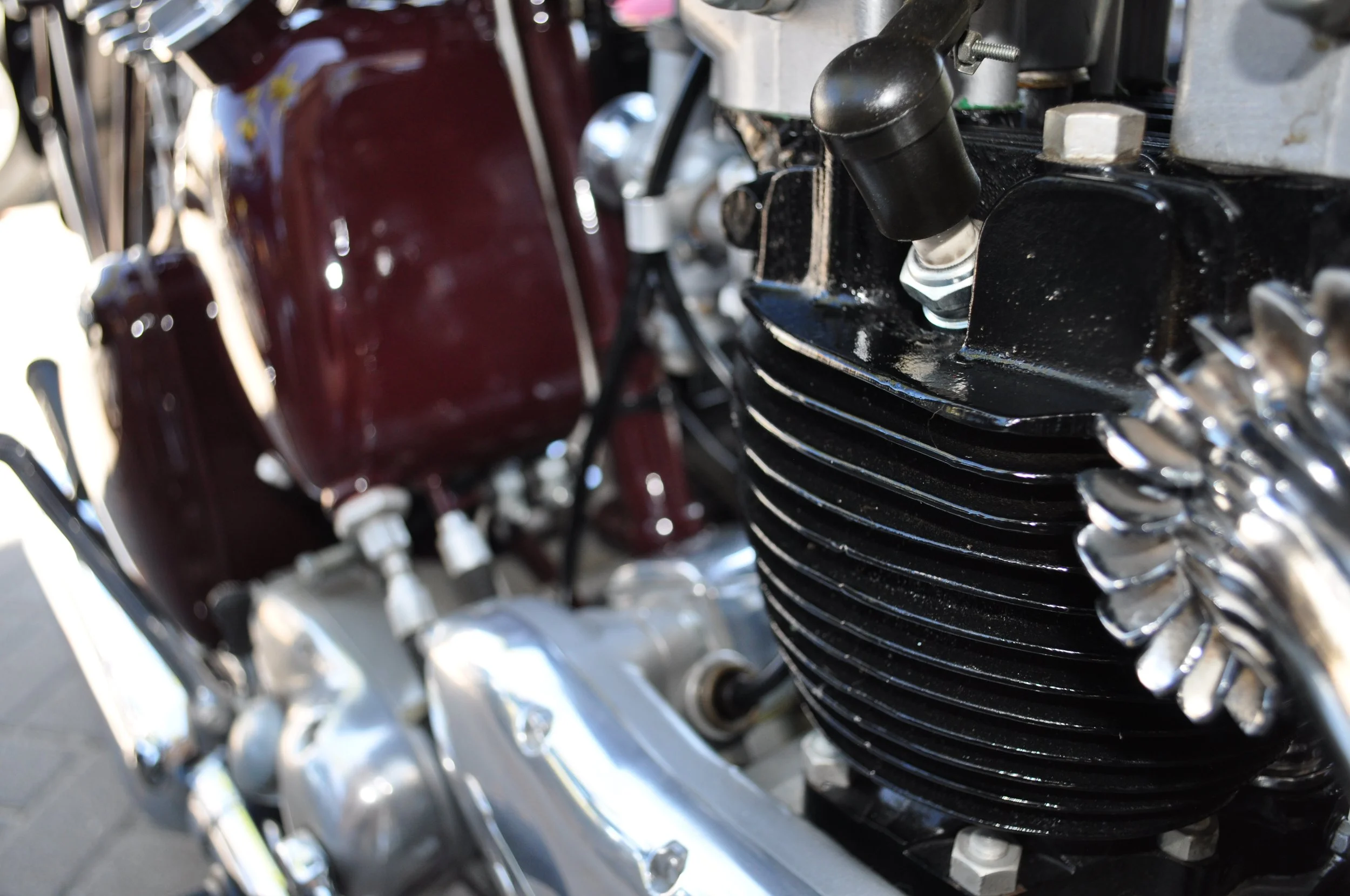
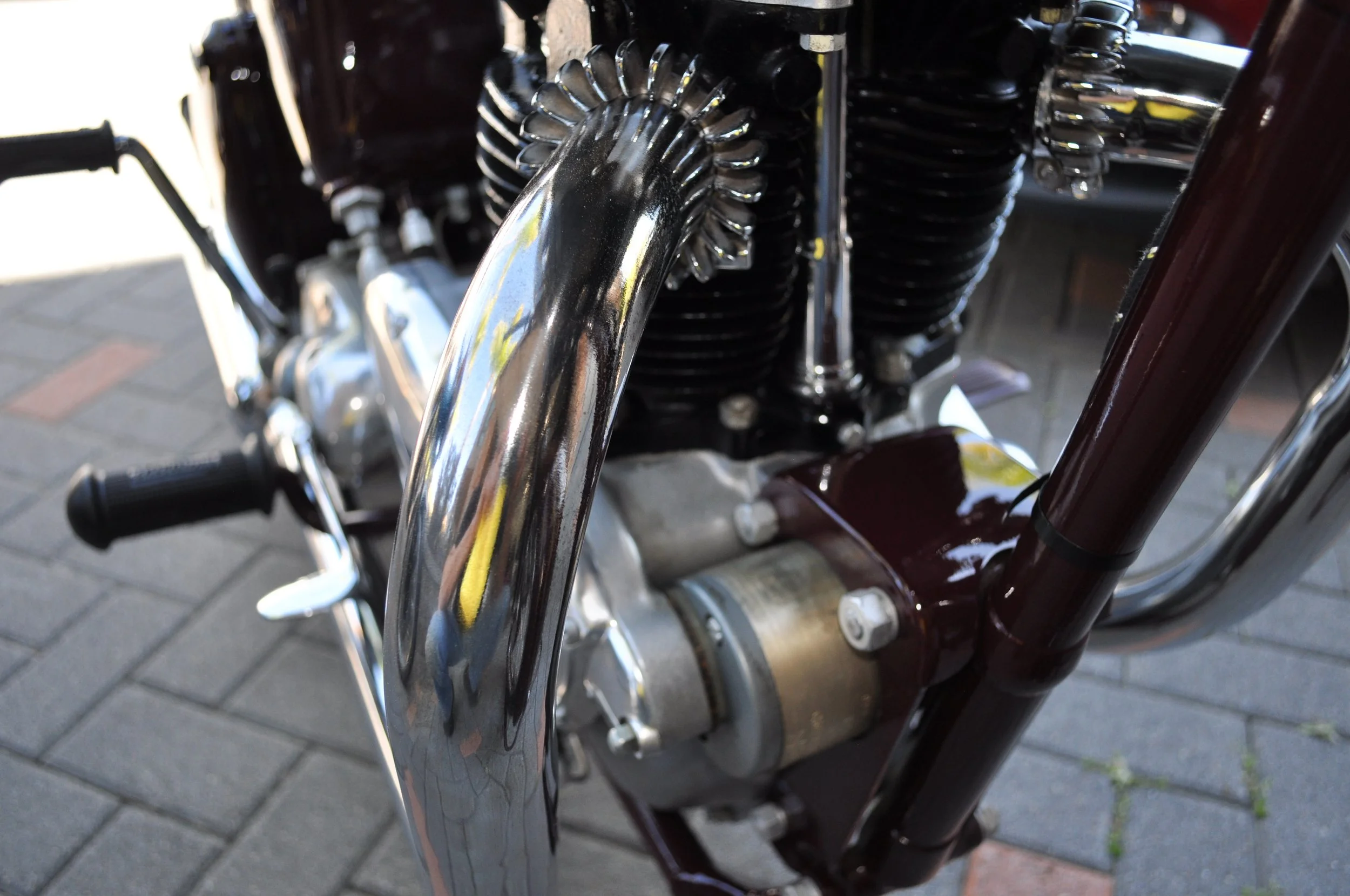
The big engineering feat in 1936 was to develop the new engine to be used with the old frame and front end suspension. The first decision was made when he was limited to having to use the old frame from a Tiger 90- 500 cc single. This essentially forced Turner to decide on a vertical twin engine configuration with an overhead valve design. He utilized one camshaft in the front for exhaust and one camshaft in the rear for intake with short pushrods and rocker setups to activate the valves from an overhead position. The engine cases were aluminum for lighter weight and a dry sump lubrication with an oil tank underneath the seat to the rear providing lubrication. This design was approximately the same weight as the single-cylinder engines and was able to fit perfectly into the existing frame.
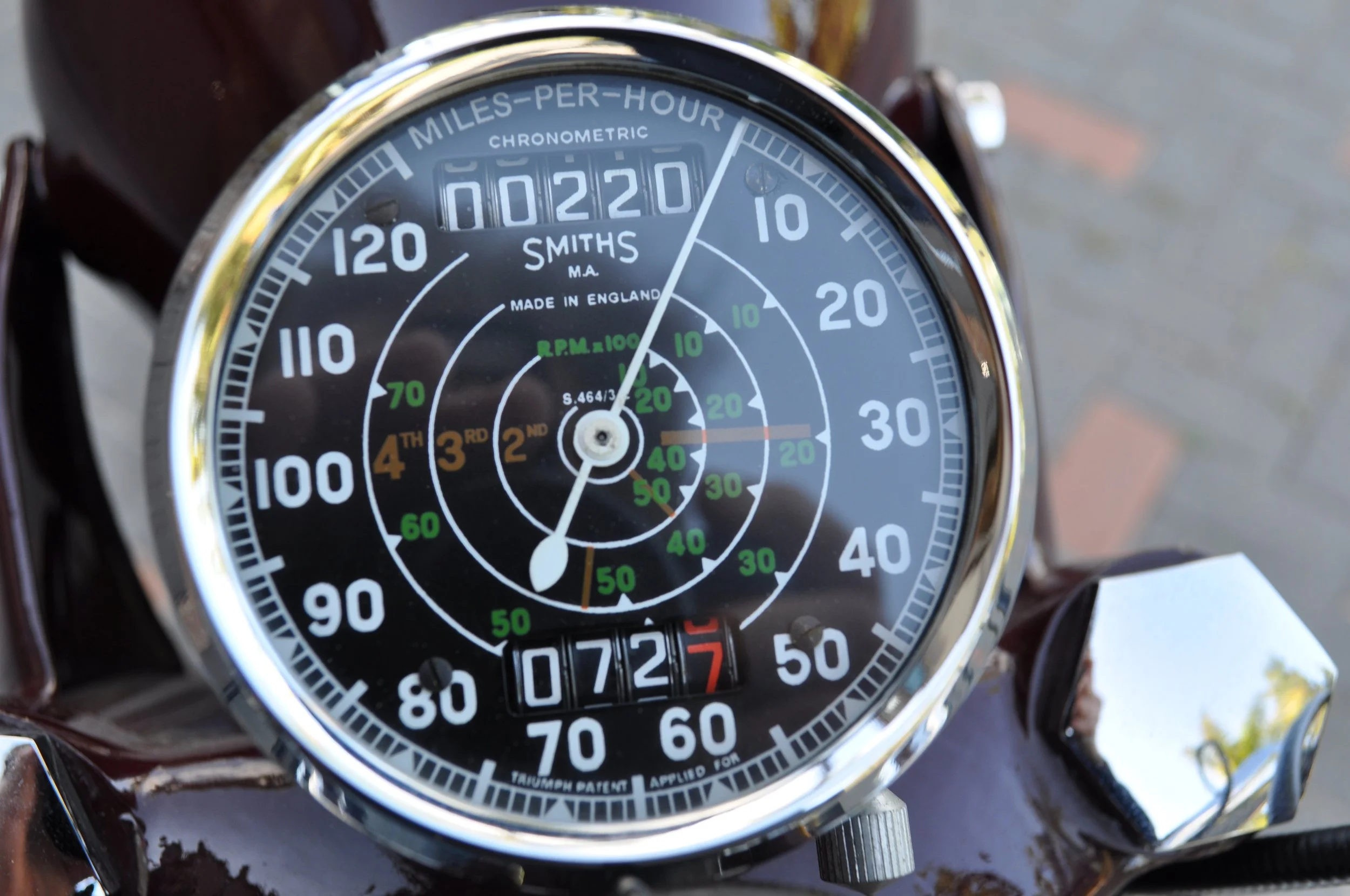
The big difference was in horsepower, with the new engine developing approximately 28 horsepower in the initial iteration versus 18 to 22 horsepower in the smaller and larger single-cylinder engines. These “Speed Twin” engines would rev faster and higher due to the overhead valve (OHV) design. Performance-wise the motorcycle was powerful enough to move the machine past ninety miles per hour, which was beyond anything that Triumph had previously built. It even was respectable relative to the super bikes of the era- The Vincent Rapide that had just been produced that year for the first time and the Brough Superior SS100, both of which were capable of 100 to 110 mph top speed performance- and those motorcycles were both in near 1,000 cc in displacement.
Turner's engine design, which is said to be basically one half of the Aerial Square Four engine that he also designed, had significant practical characteristics. It could have had even more horsepower and torque but he insisted on a relatively low compression ratio of 6:1. It had good mid-range torque that allowed the motorcycle to cruise between 65 and 75 miles an hour with relatively low effort. The engine would achieve significant improvements in rideability and reliability because of the overall design.
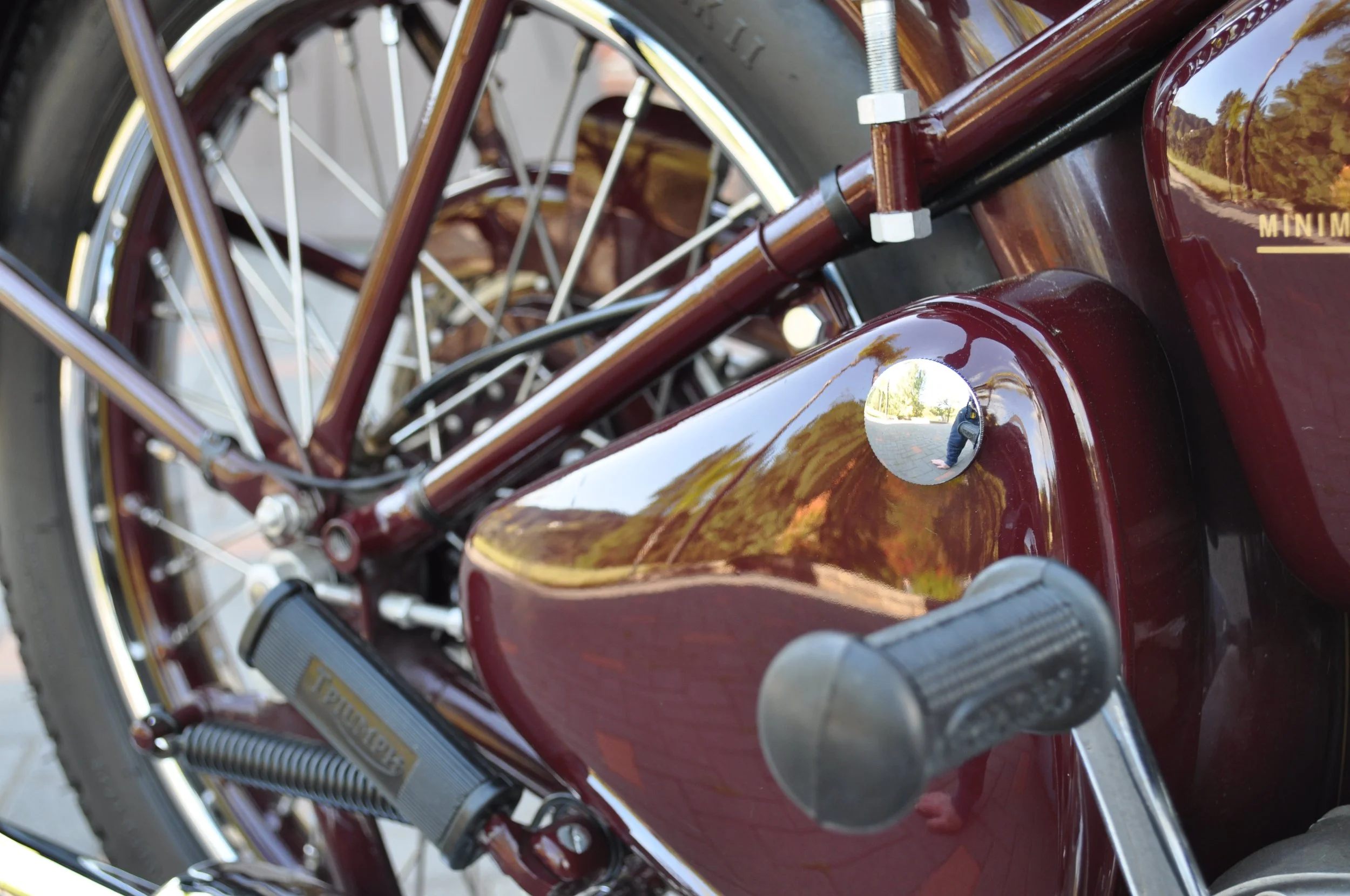
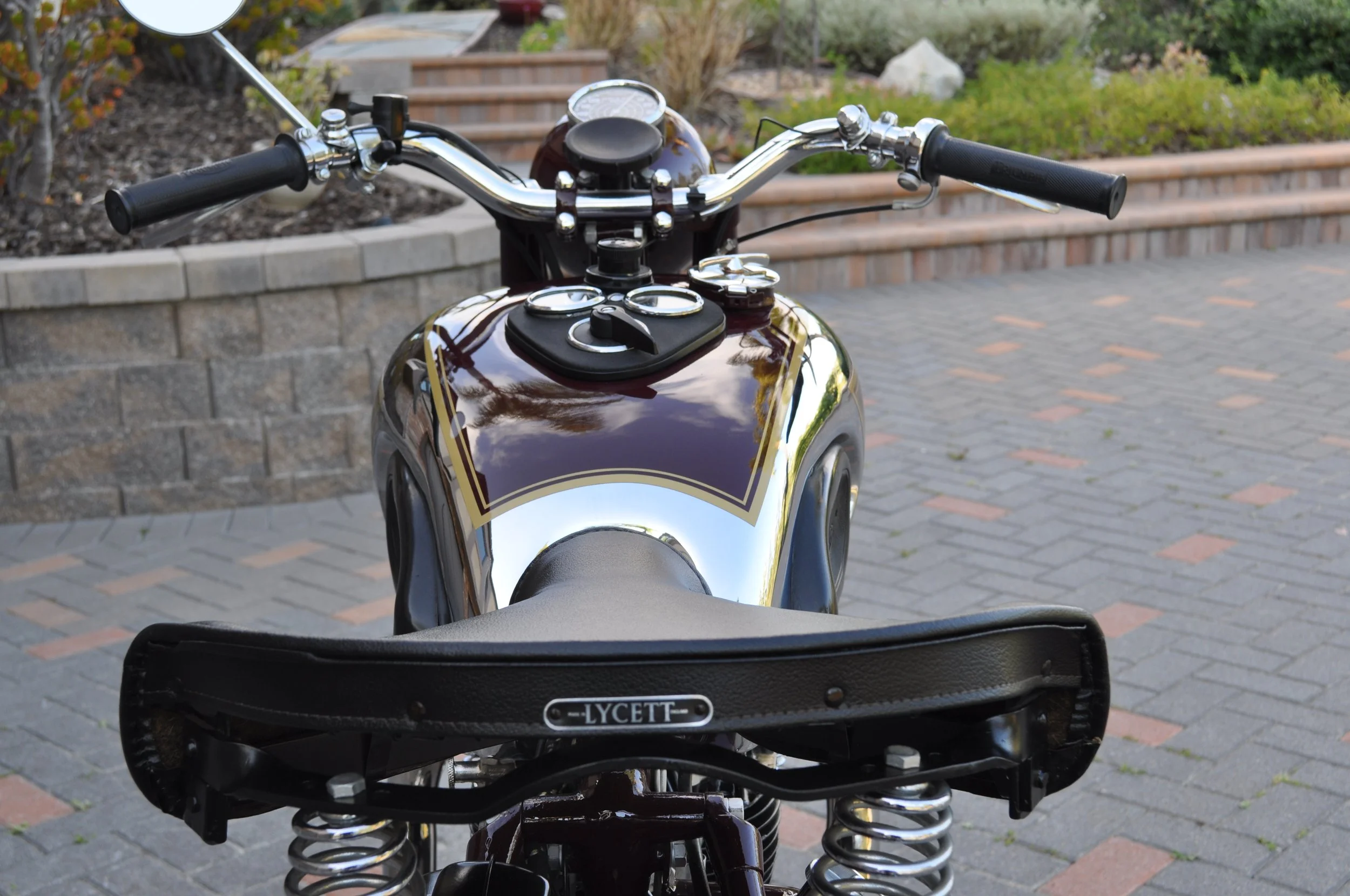
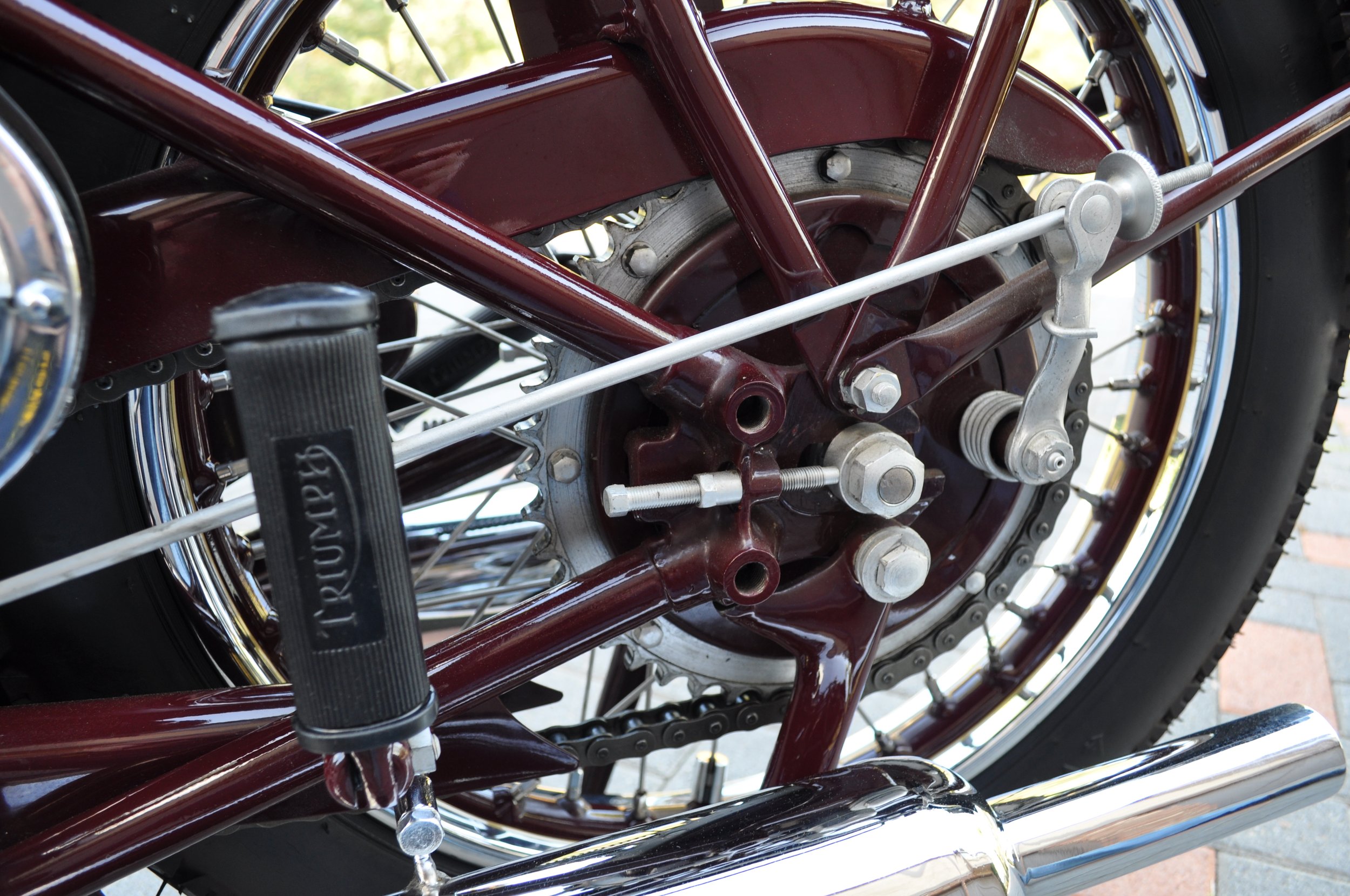
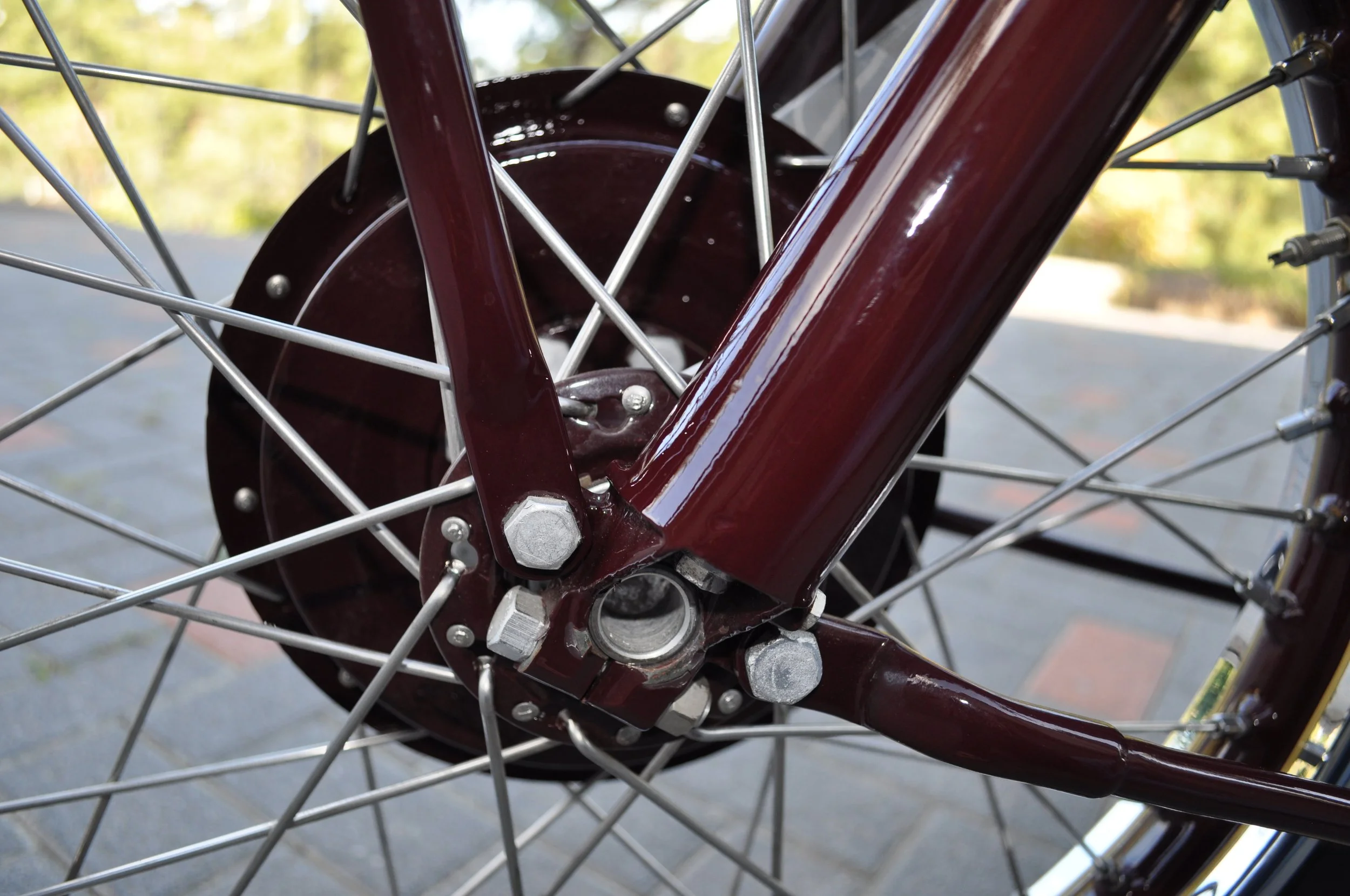
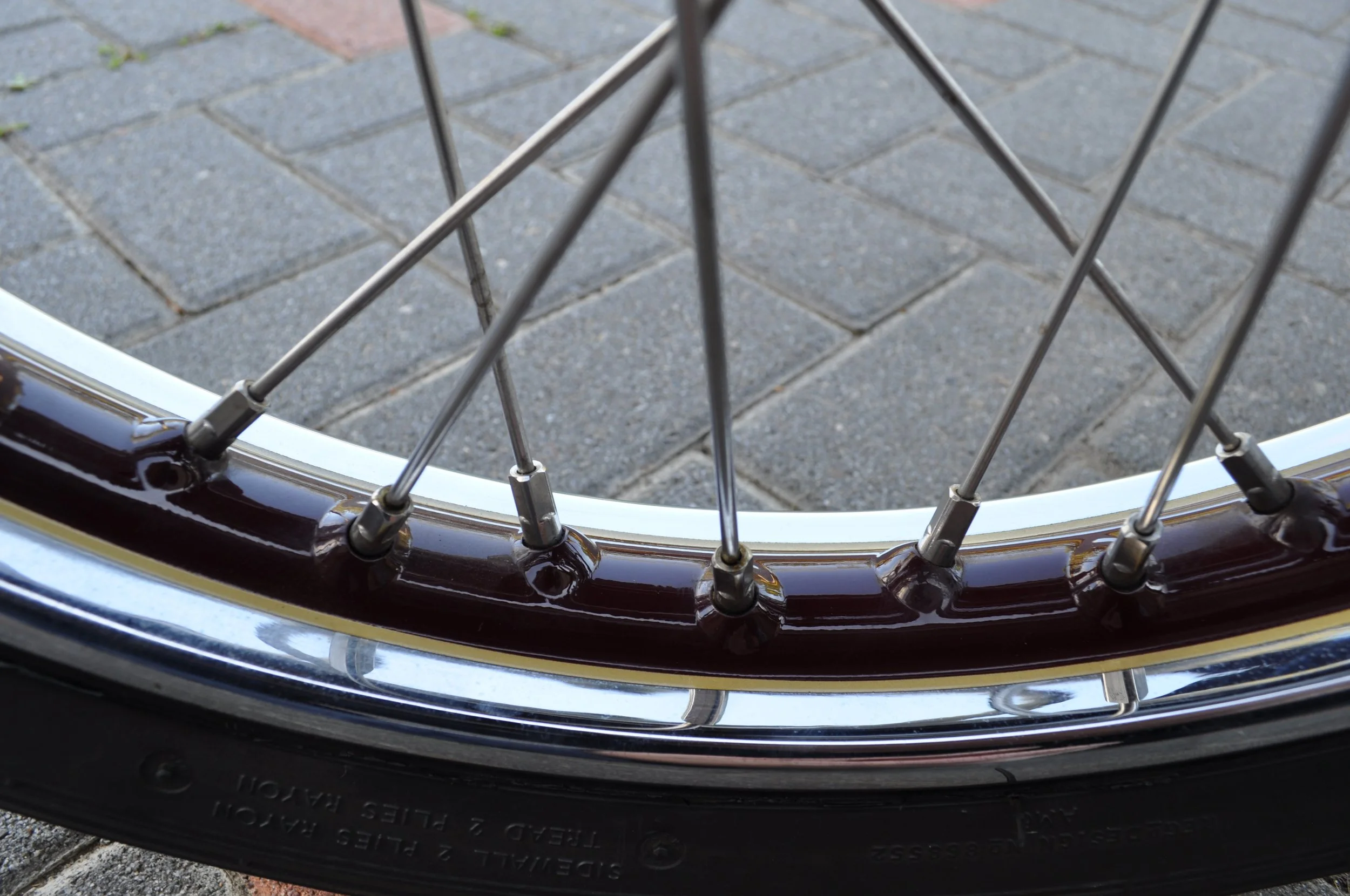
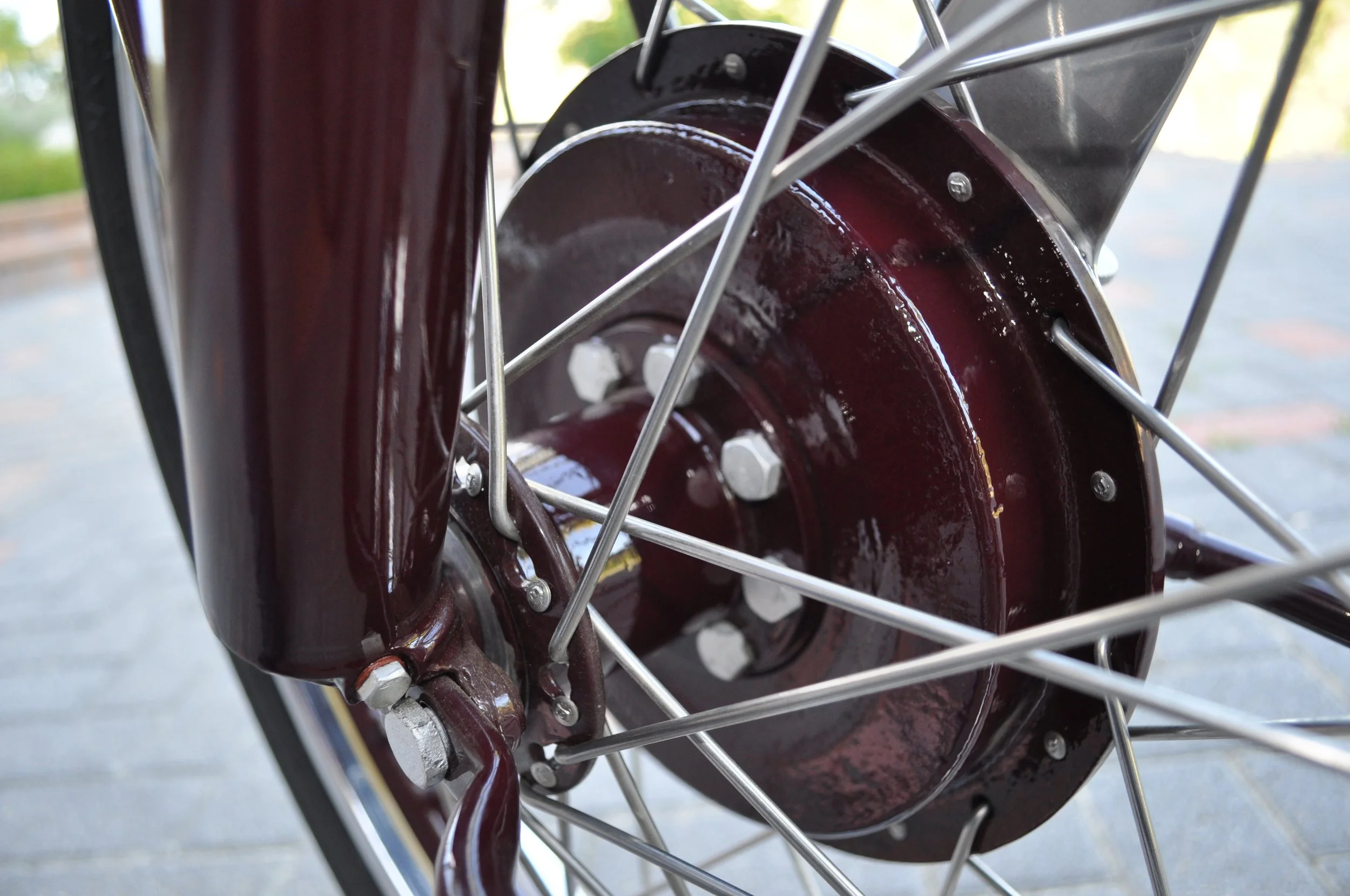
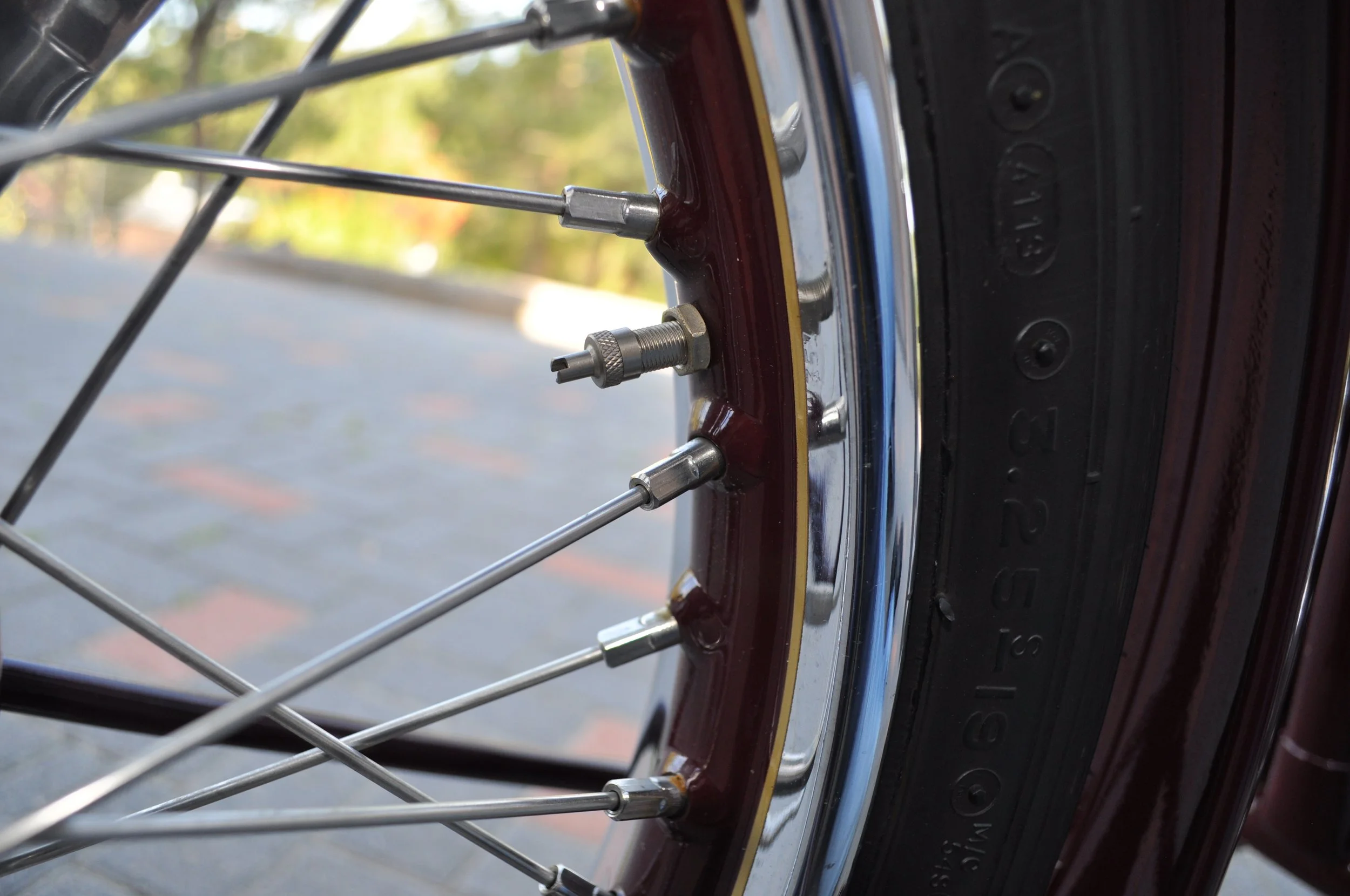
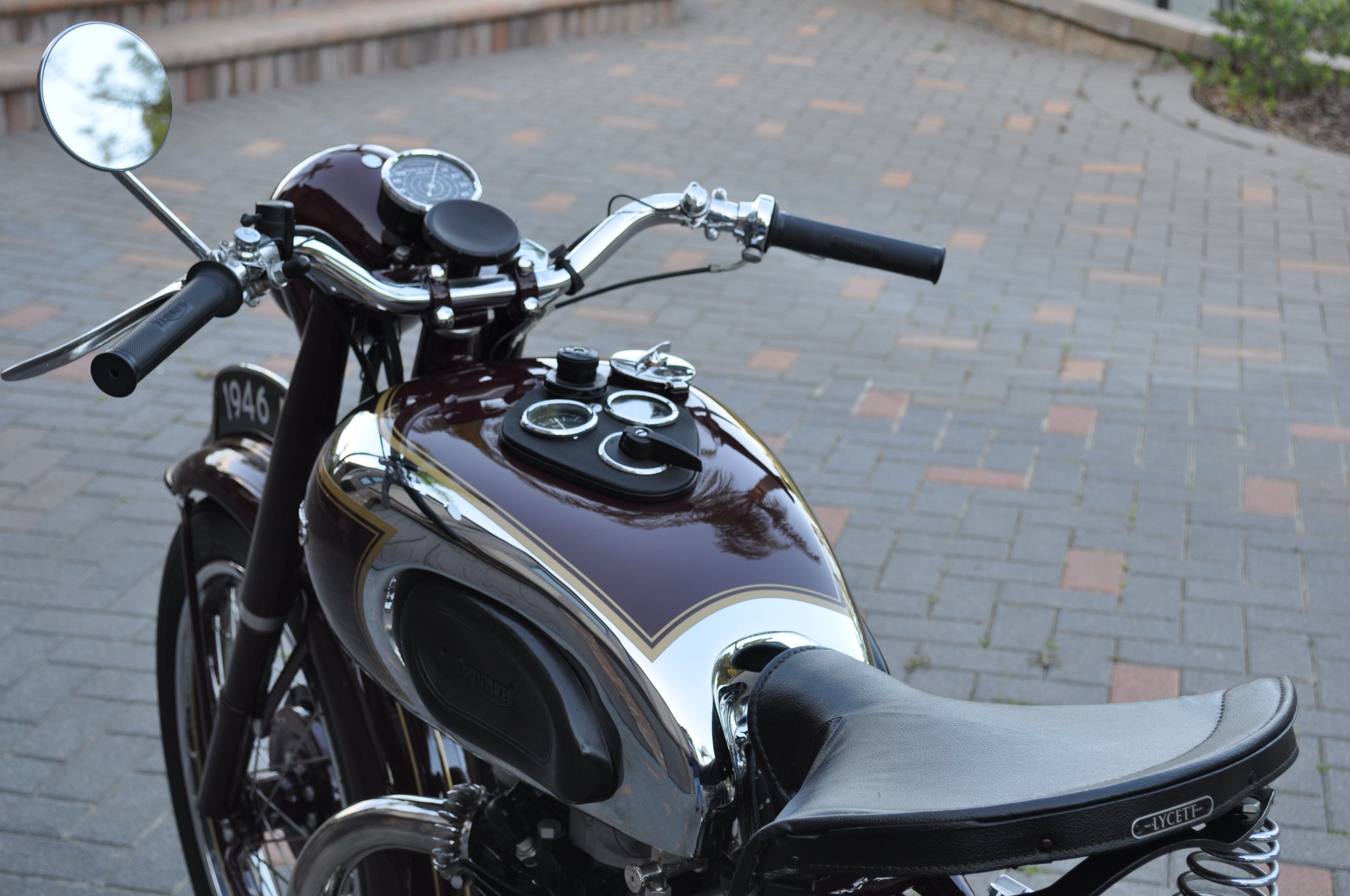
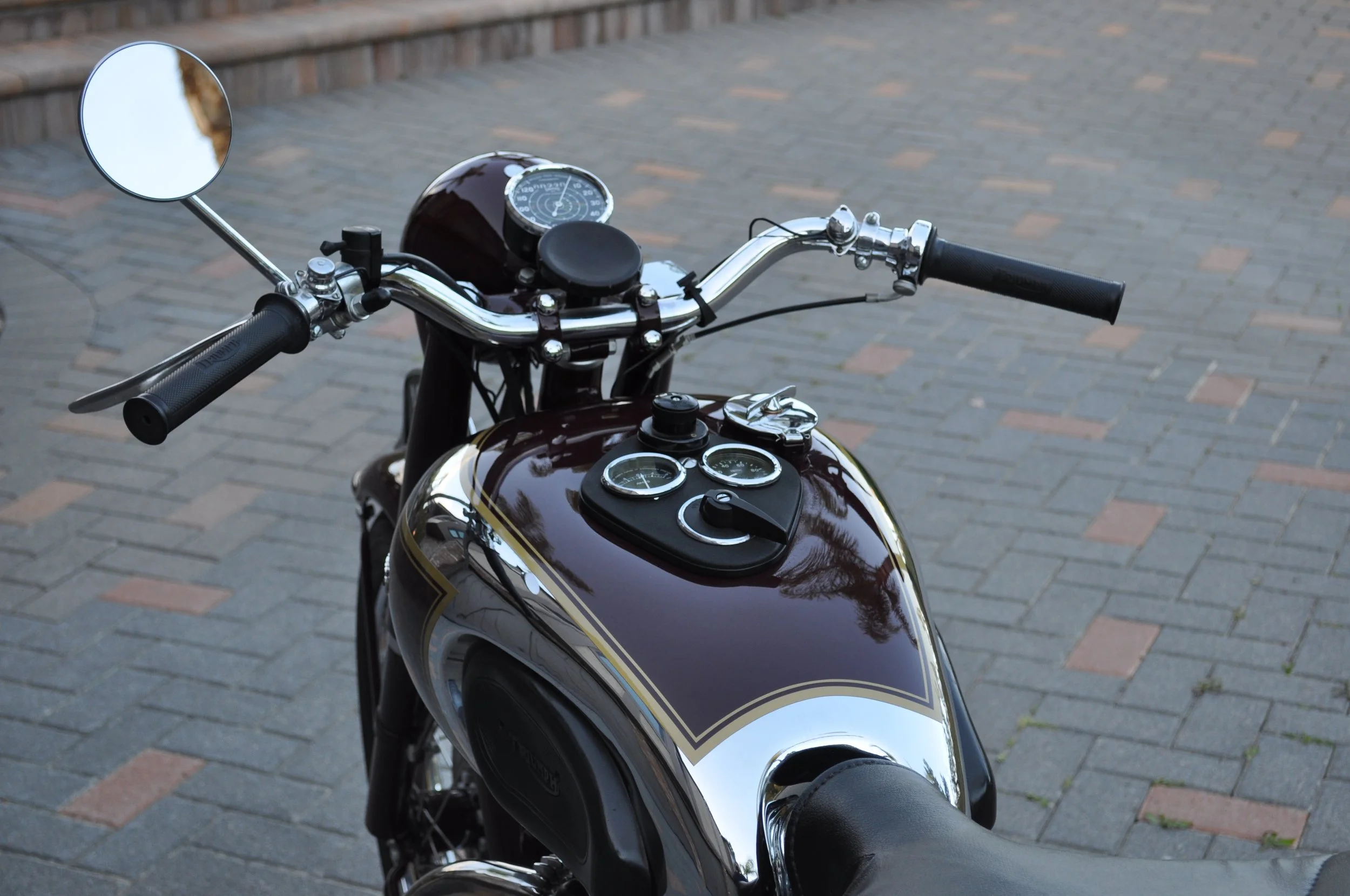
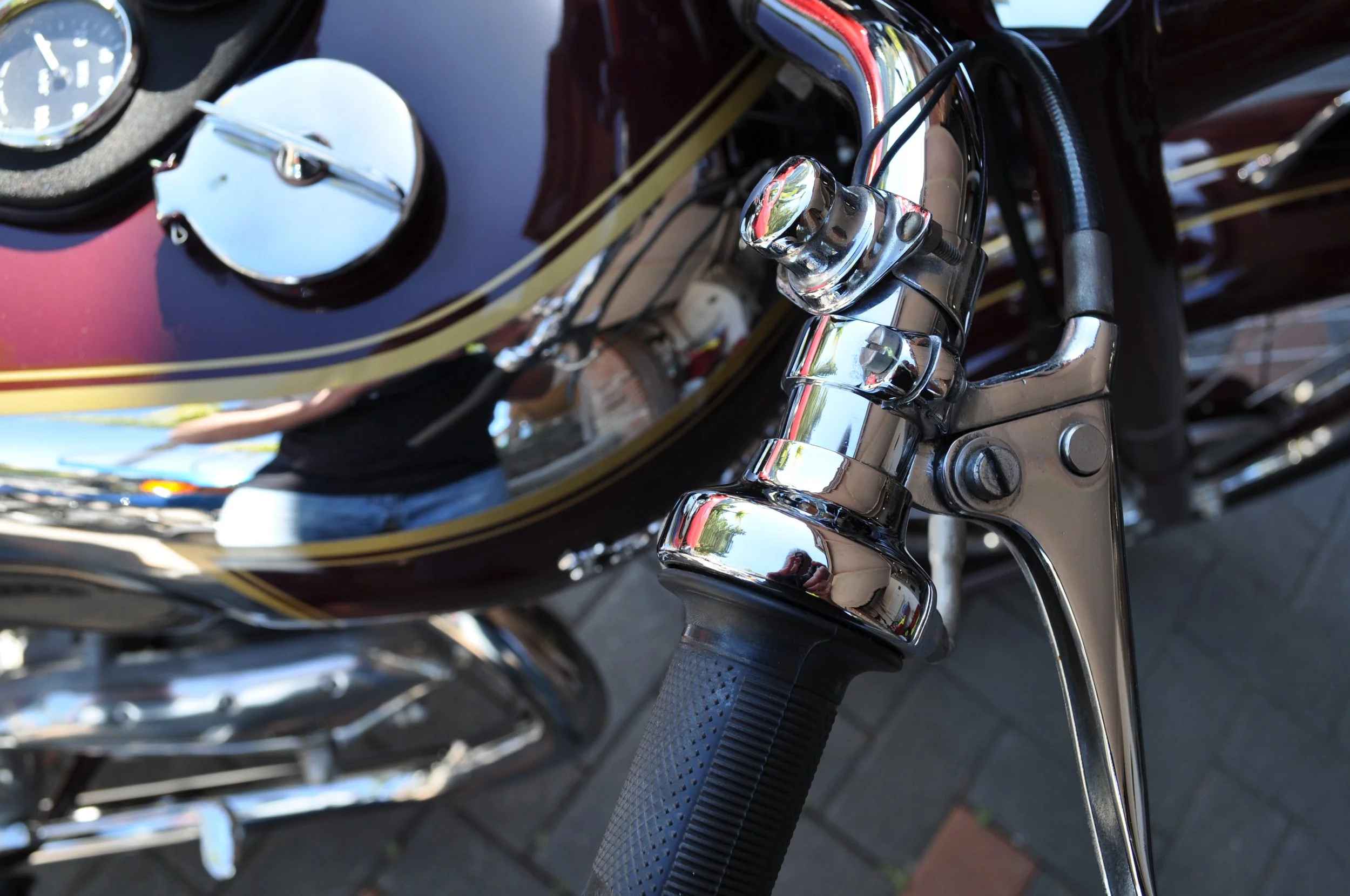
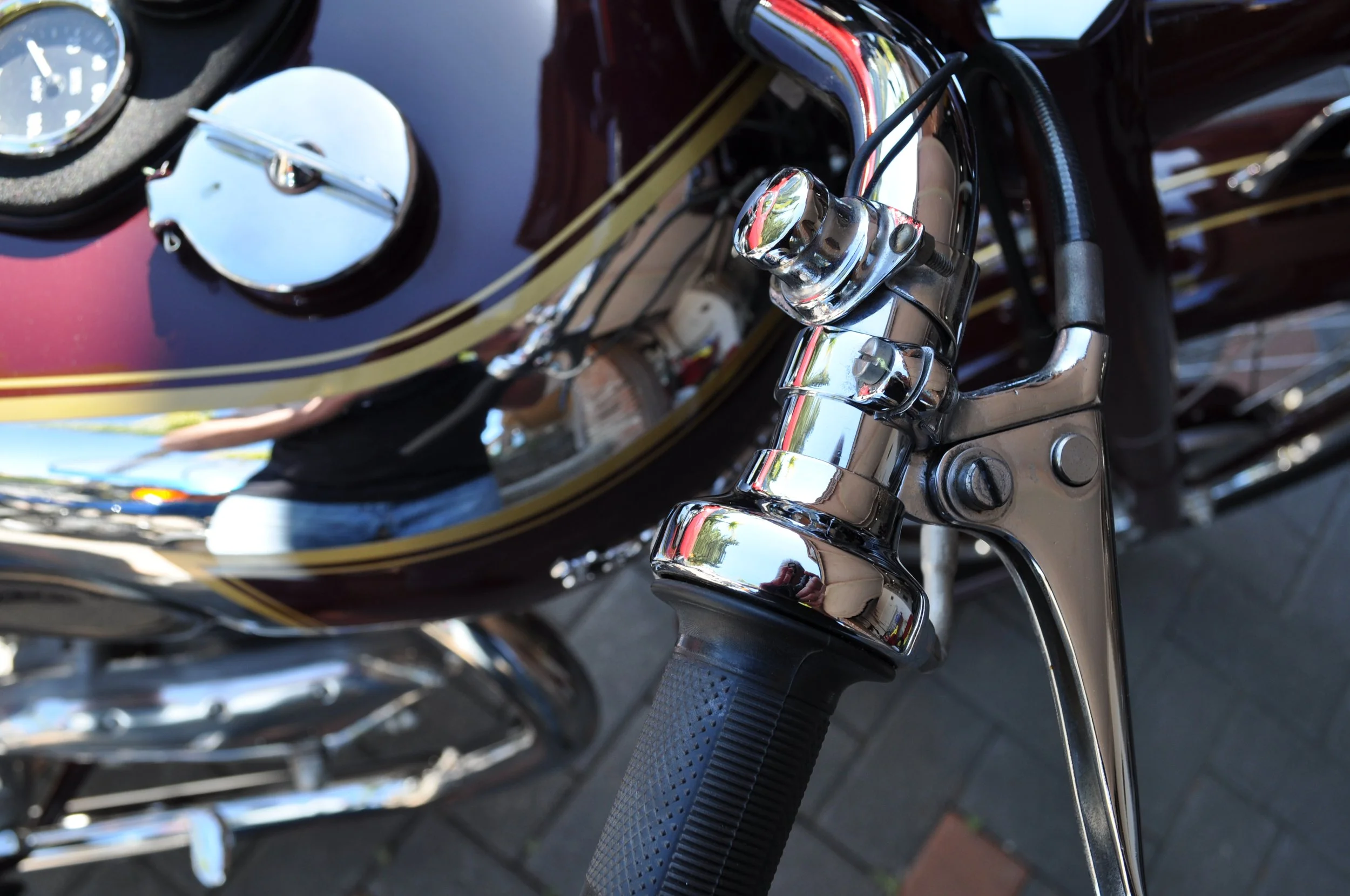
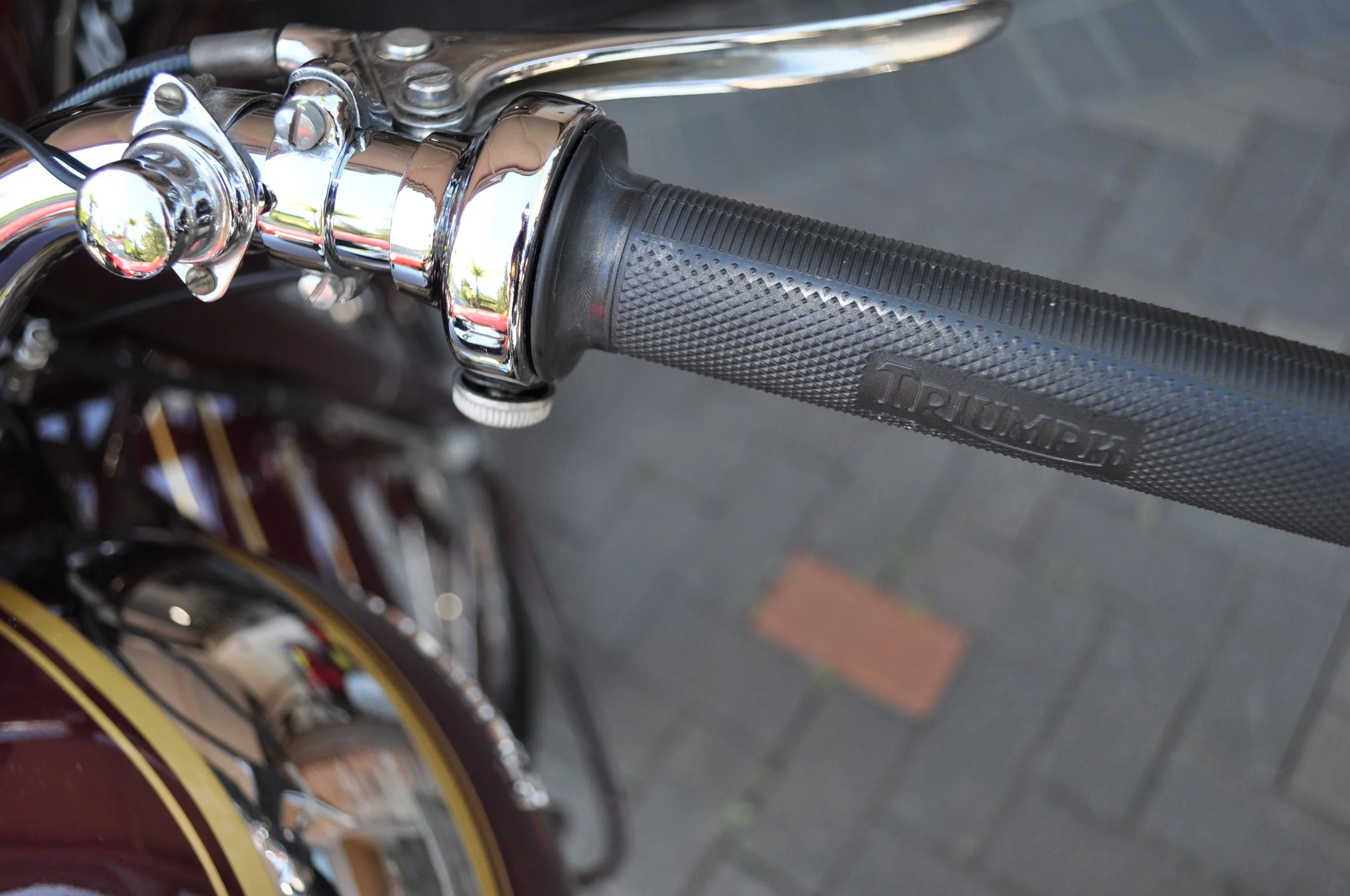
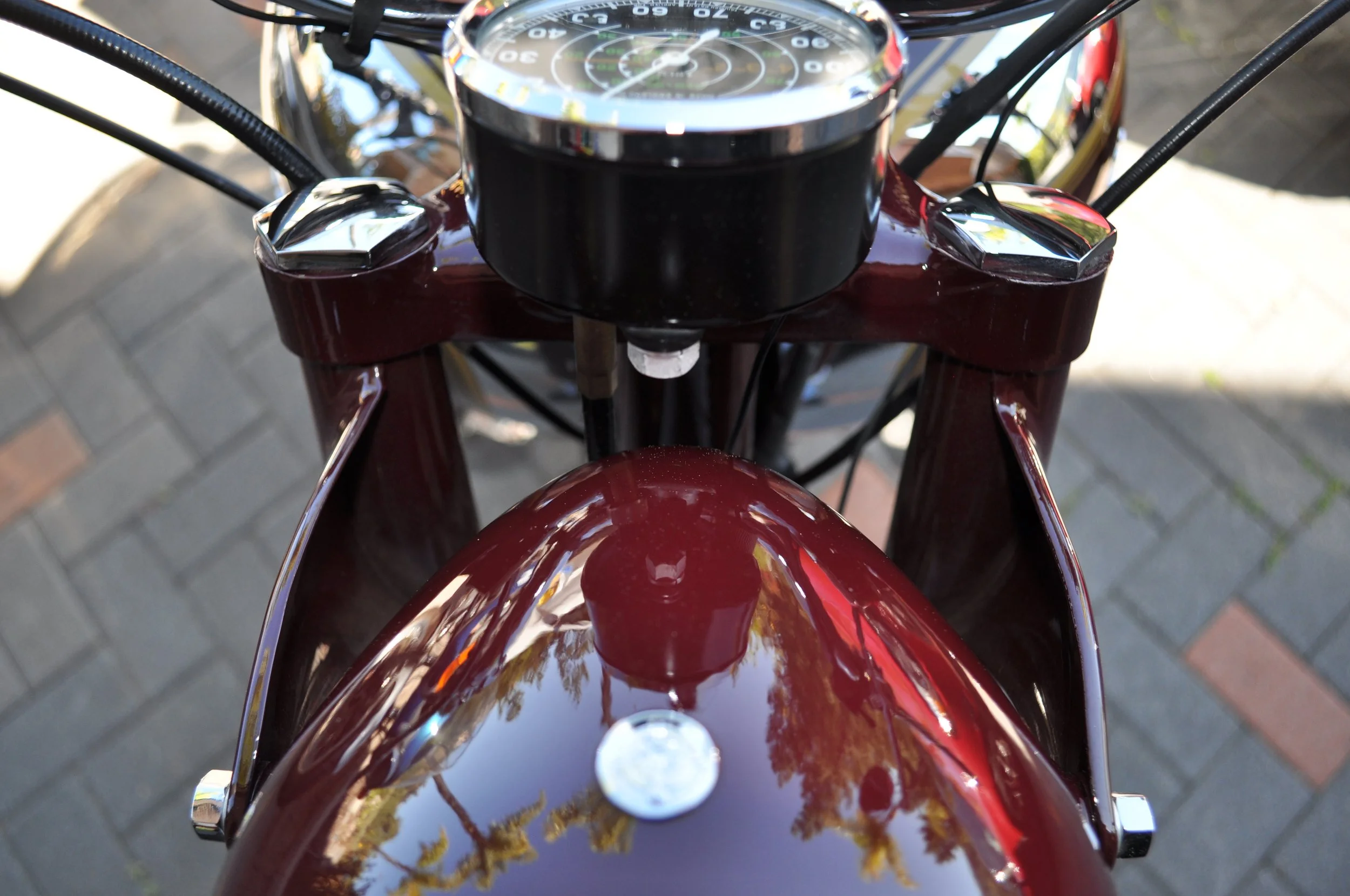
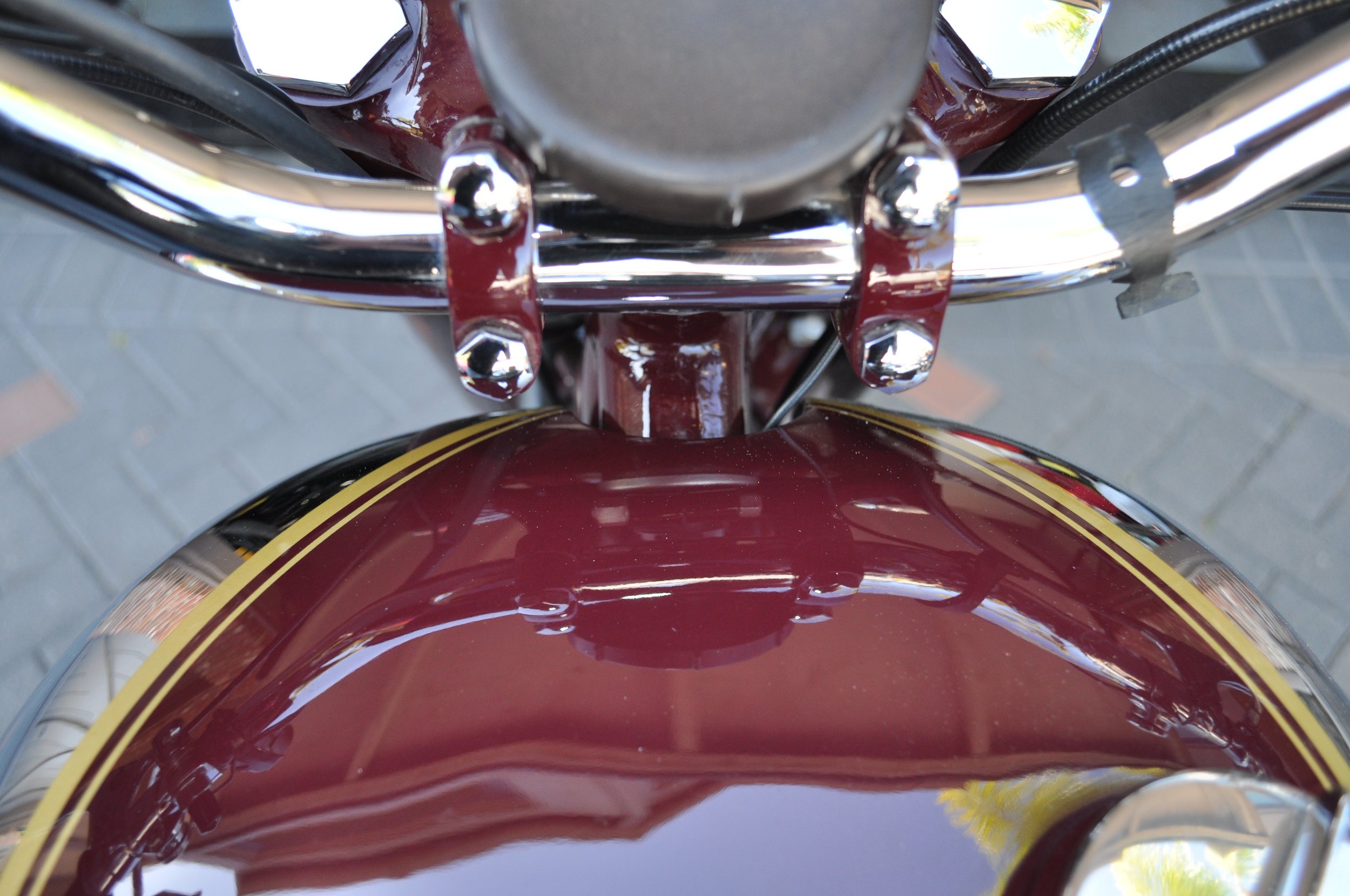
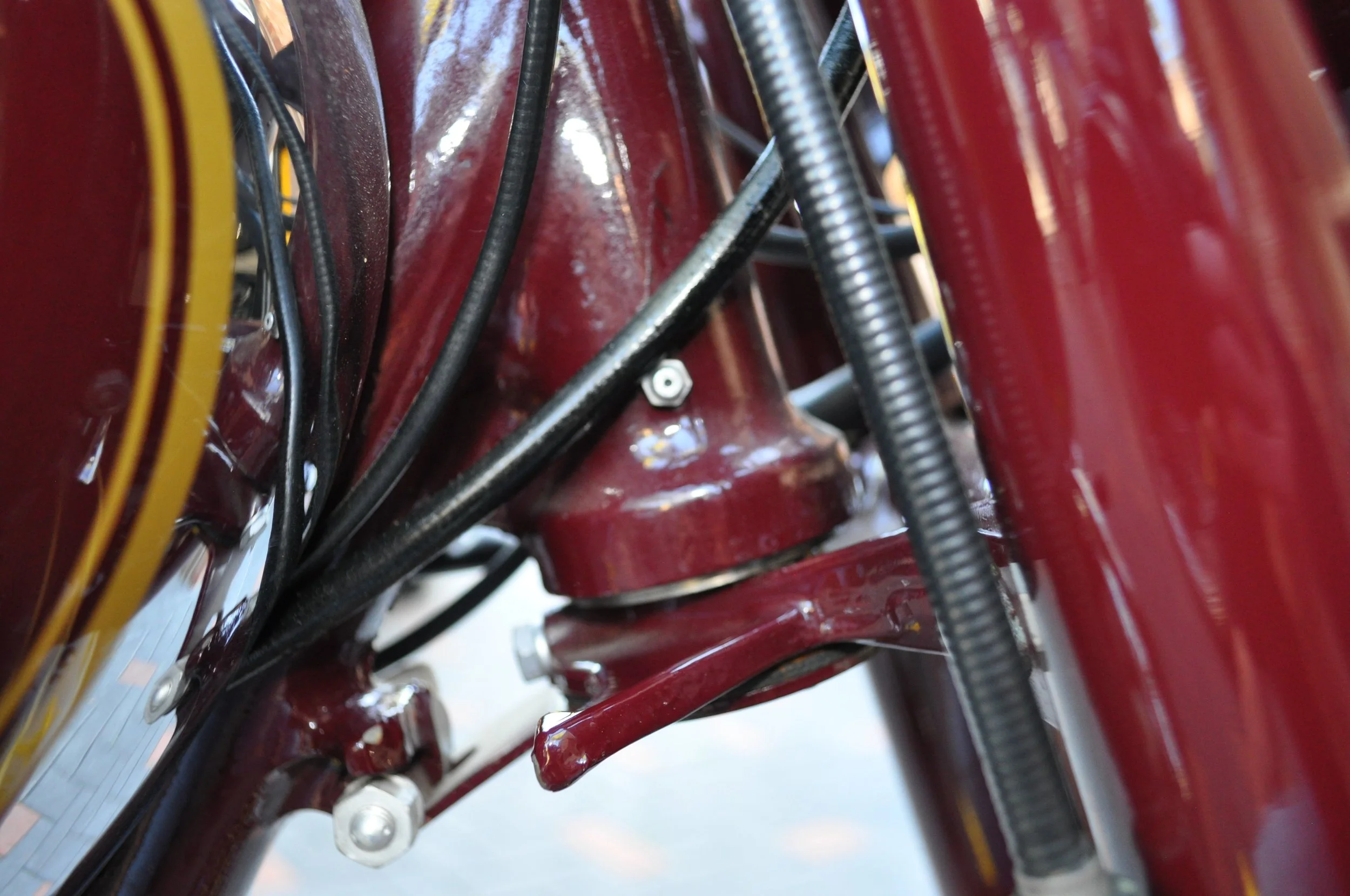
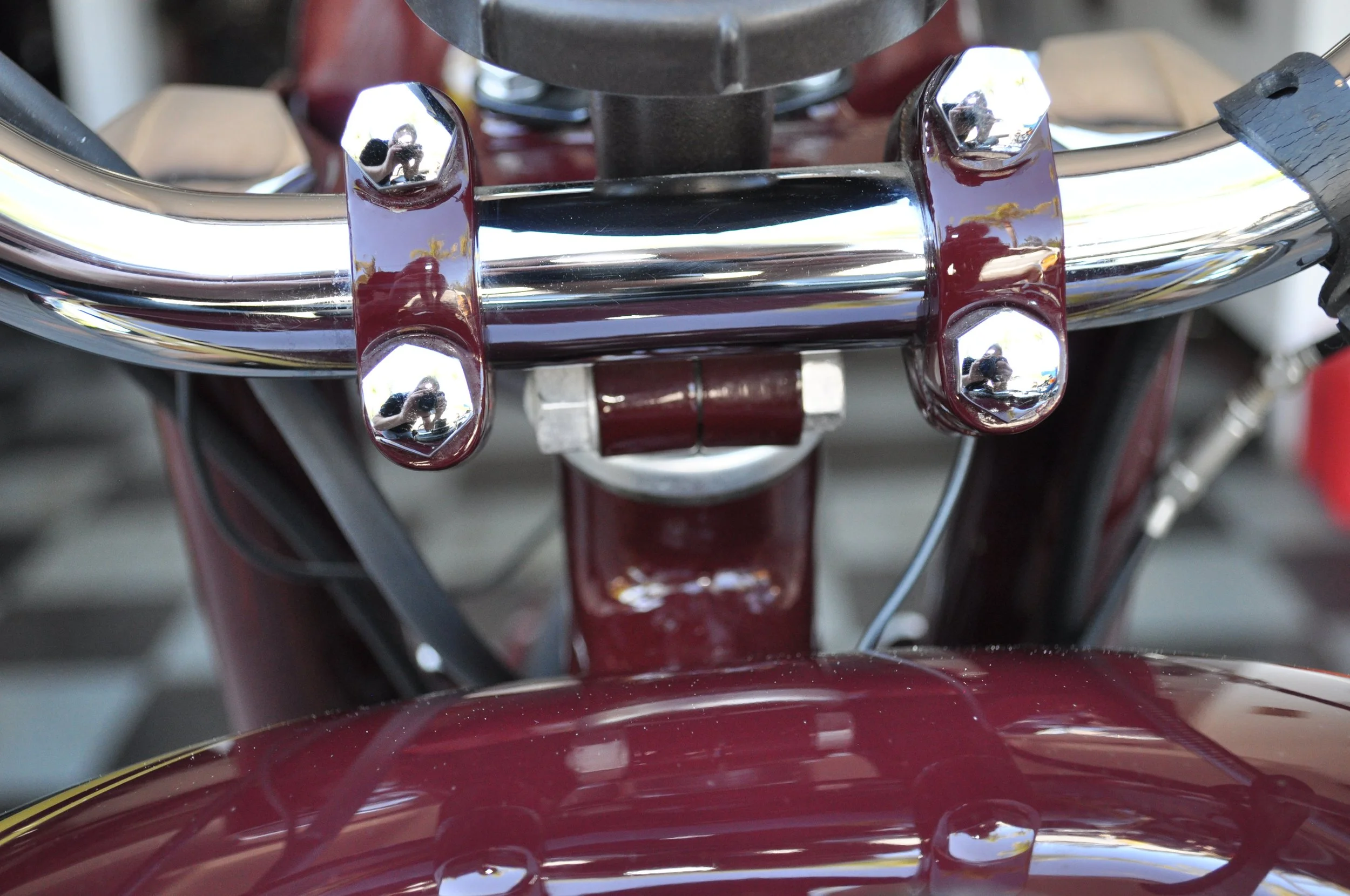
Aesthetically the motorcycle was not finished in the more typical black or silver colors of the British motorcycle industry. Instead, a beautiful Amaranth red, a rich wine-plum color, was used throughout the motorcycle. Beautiful chrome on the side panels of the tank and the wheels and the elegant simple curves of the chromed exhaust pipe and muffler system tastefully outlined the motorcycle perfectly.
The combination of its high-performance and beautiful aesthetics made the 1937 Triumph Speed Twin an immediate sales success. Over the next two years the sales of the Speed Twin were said to take Triumph from huge financial problems to a much better position of strength .
But then a significant part of the history of Western civilization happened. On September 3rd, 1939, England and France declared war on Germany after its invasion of Poland. Approximately one year later, on November 14, 1940, the German Luftwaffe bombed Coventry, England, and completely destroyed the Triumph Motorcycle factory. Triumph quickly rebuilt a factory at a new location in Meriden, England. By 1942 the Meriden facility was producing tens of thousands of reconnaissance motorcycles to be used in the military, in addition to other items such as generators and aircraft components.
It took a little time between the end of the war in the summer of 1945 to switch over from producing the military items the Meriden factory was producing and started to produce the 1946 models. The Speed Twin was the main focus and a number of changes were instituted.
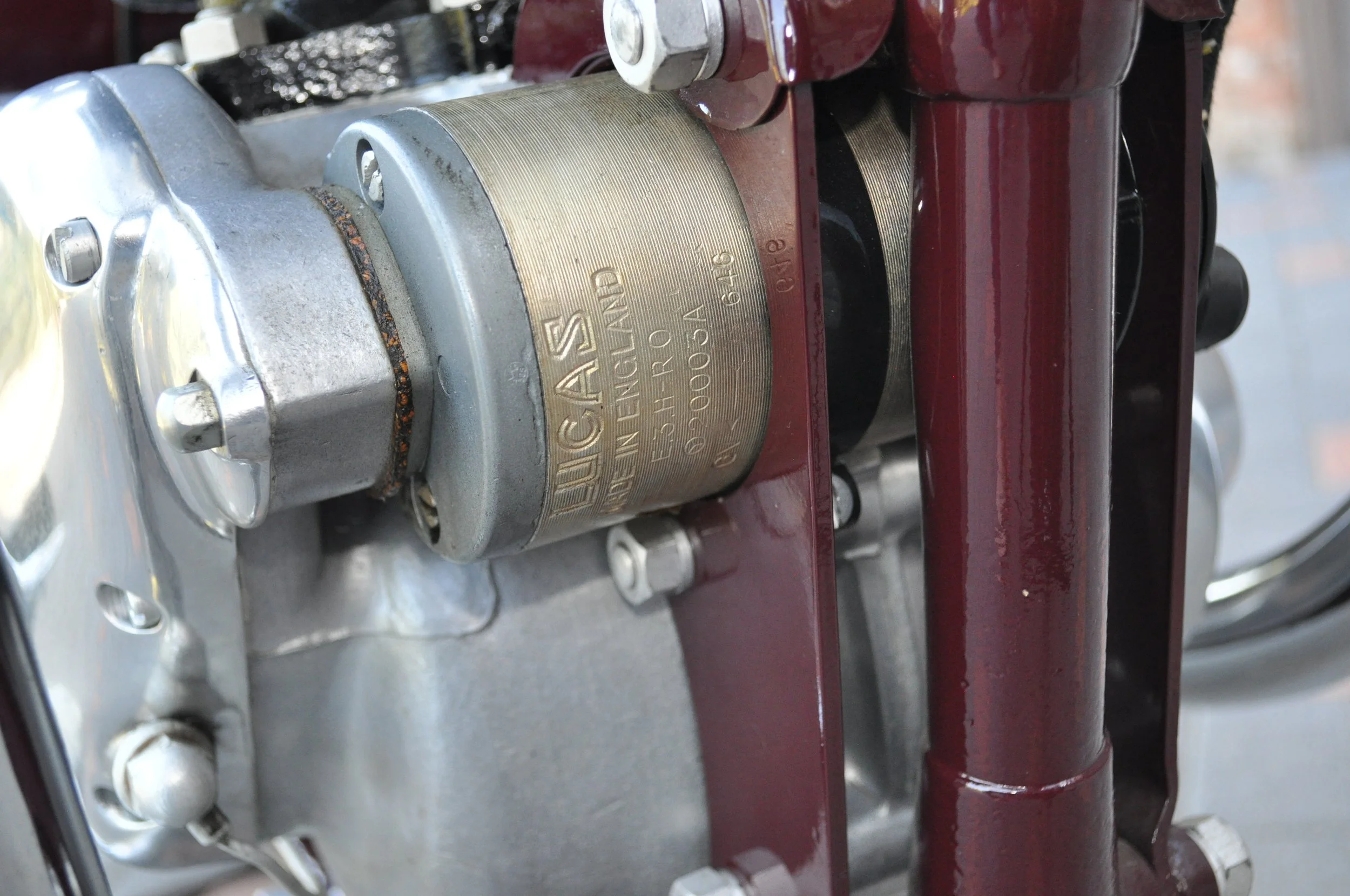
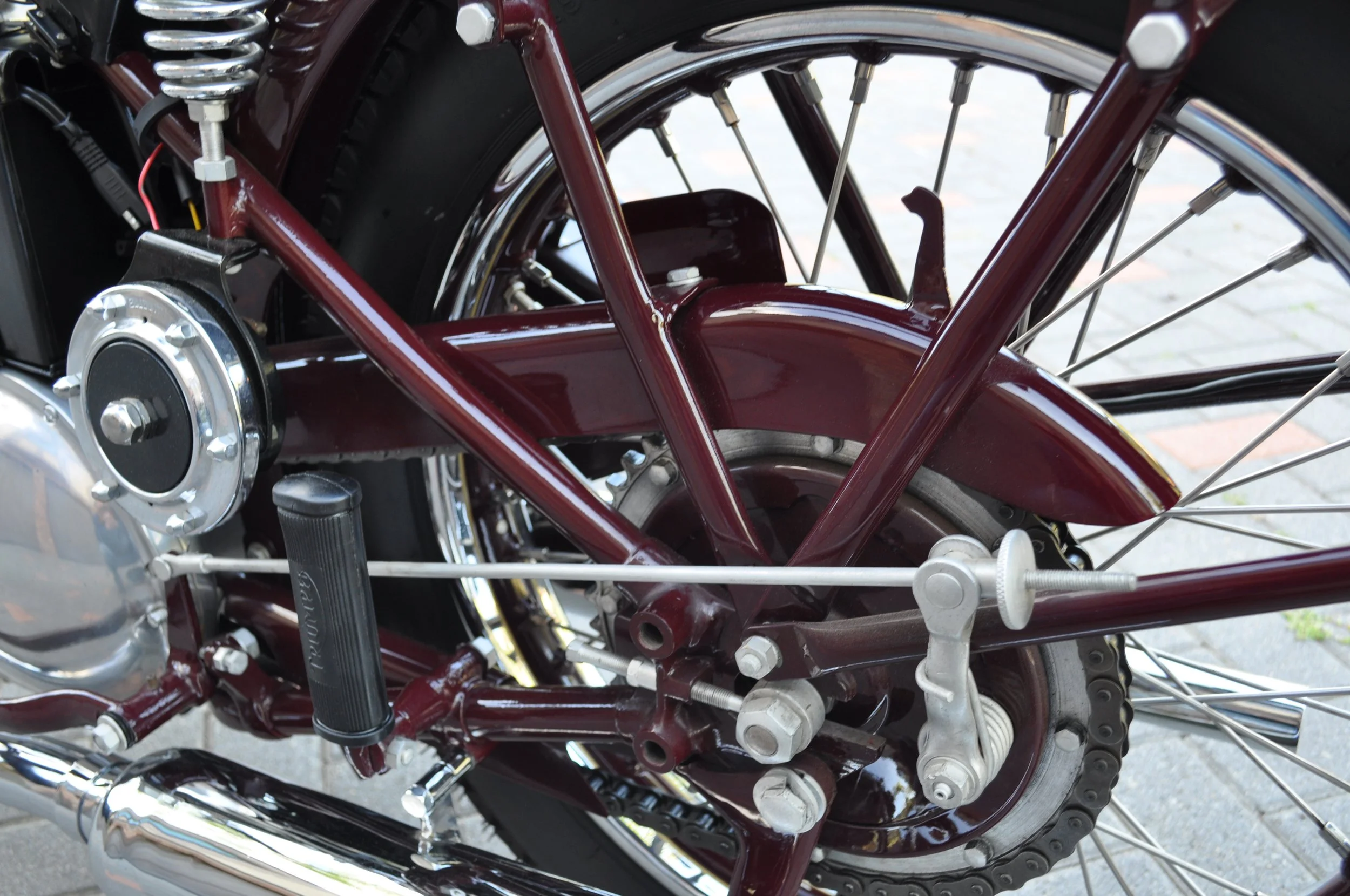
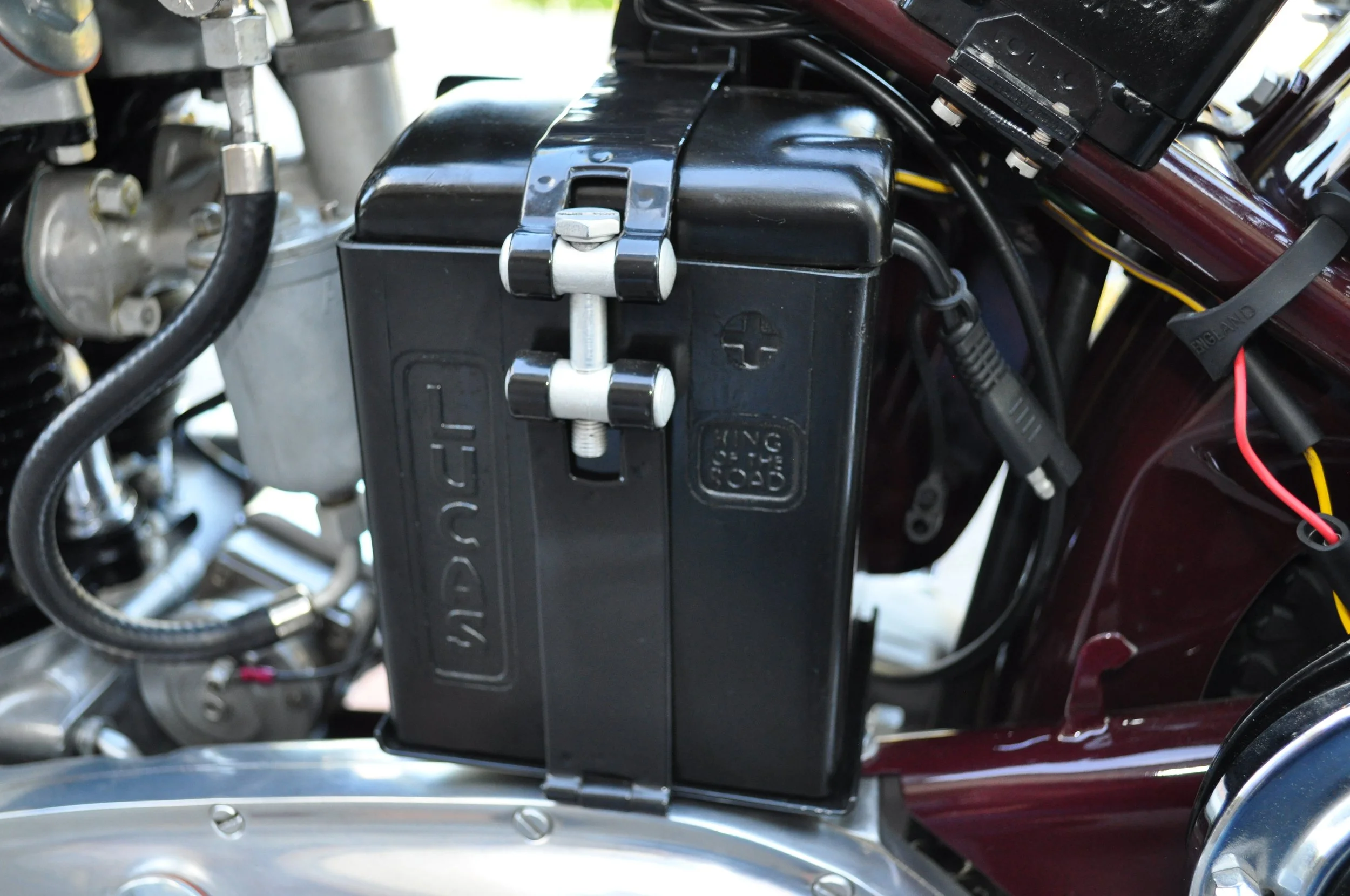
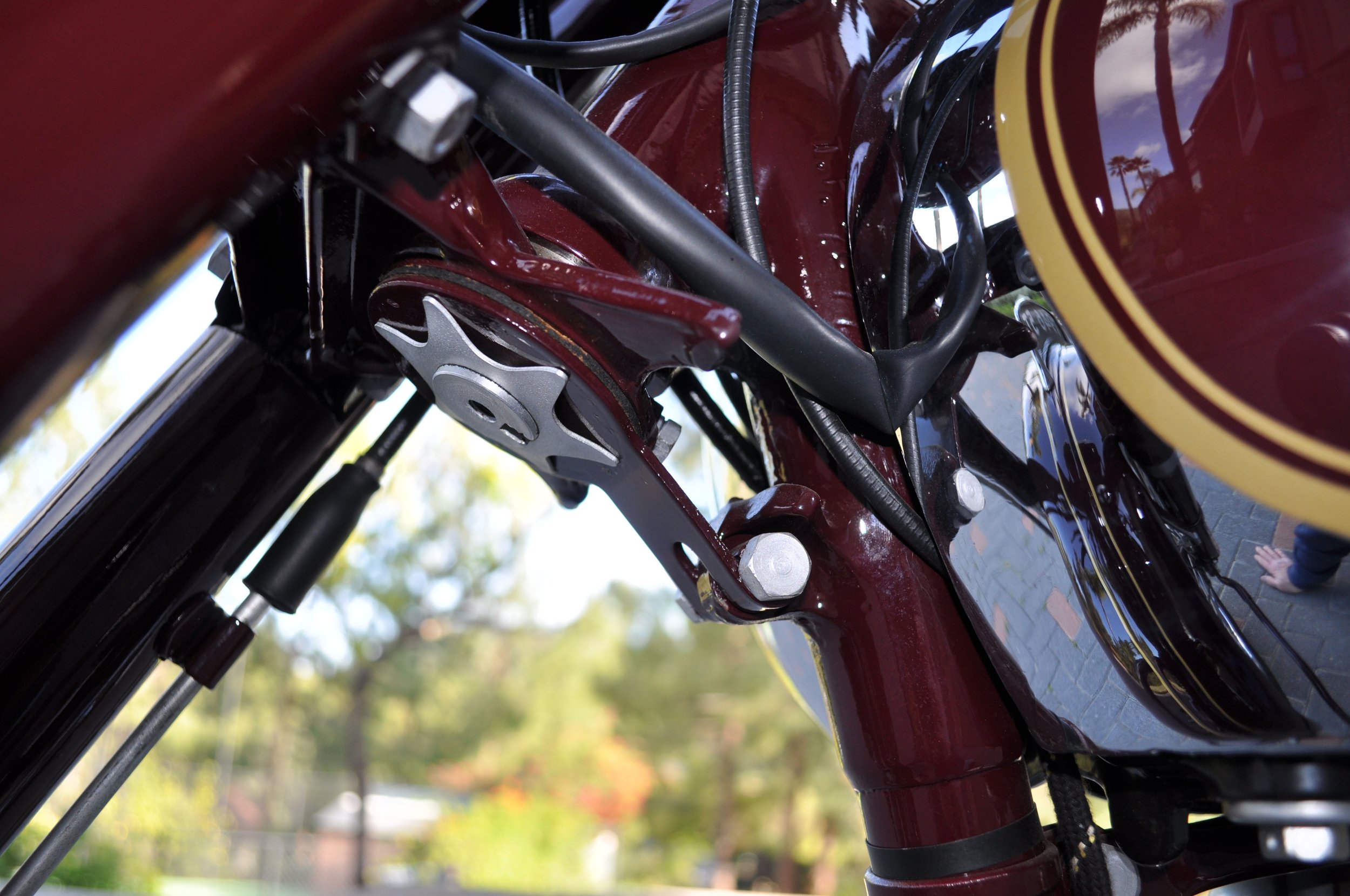
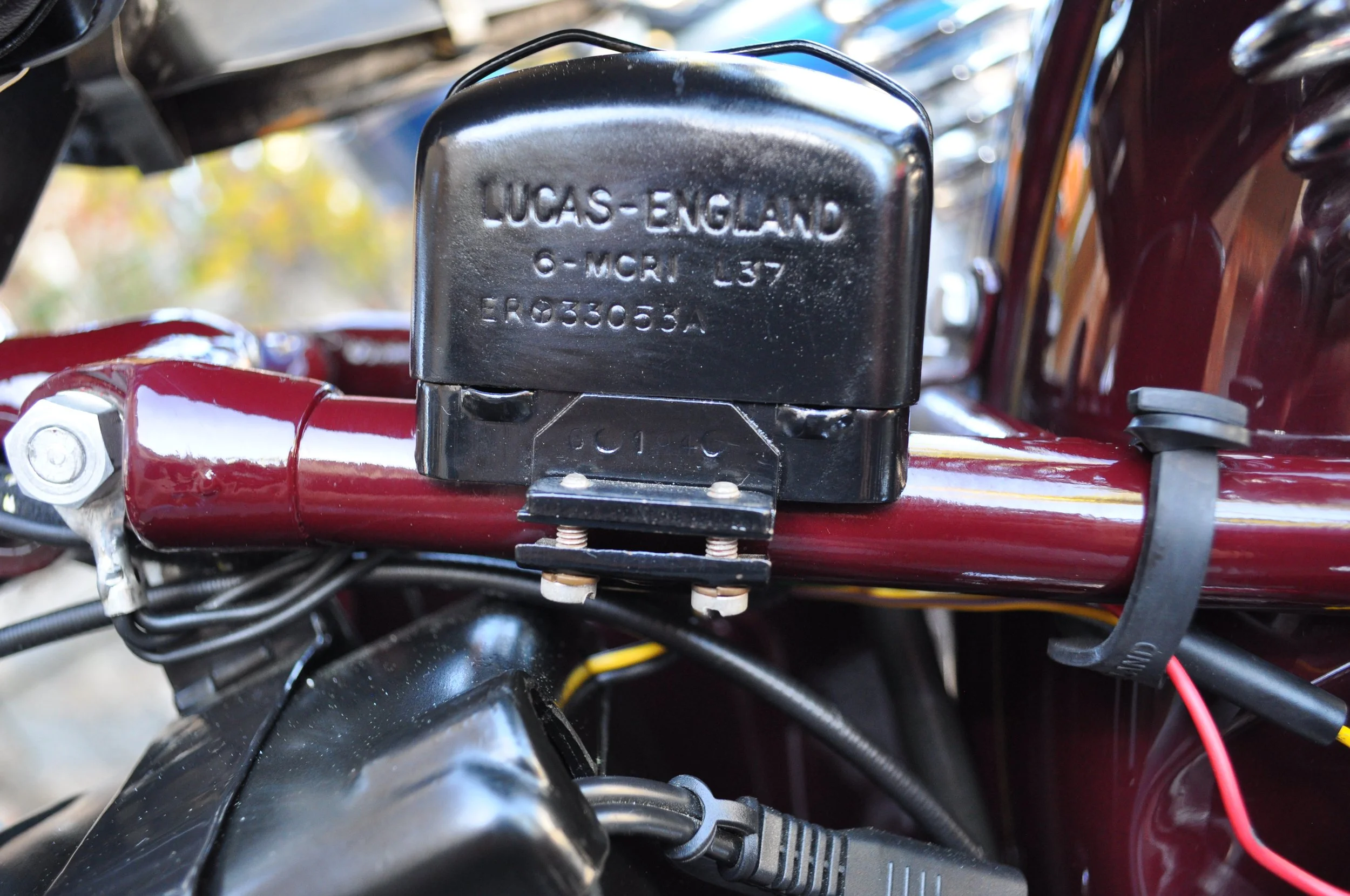
The biggest change was the introduction of hydraulically damped telescopic front forks on the new Speed Twin as Turner had planned. This allowed for a complete transformation in the handling and stability of the motorcycle versus the pre-war girder front fork. Another change was increasing the fuel capacity from 3 gallons to 4 gallons with obvious benefits. Lessons learned from the problems encountered with the pre-war Speed Twin stimulated changes to the top end oiling system as well as making an eight-stud, cylinder-based configuration standard. Finally, the Lucas “Magdyno” unit, which was a combined ignition system and generator, was split into separate components for improved reliability and servicing. These changes brought the Speed Twin truly into the modern era. During the 1930s and 40s all manufacturers moved increasingly away from foot clutch-hand shift to hand clutch-foot shift and from girder style front forks to telescopic- hydraulic. The Speed Twin had become fully modern. The final significant improvement would be the addition of a rear swing arm and suspension system as opposed to the rigid frame. This did not happen until the 1954 model. There was an attempt to develop a rear suspension system called the sprung hub which was available between 1948 and 1953 on the Speed Twins.
From 1954 on, the Triumph Speed Twins did not have any truly fundamental engineering changes moving forward in time over the next nearly 30 years. Between 1954 and 1983, when the Meriden factory closed, the types of changes that occurred were small evolutionary changes in engine size, oil in frame designs, disc brake systems, etc. The motorcycles coming out of Meriden prior to August 23rd of 1983 were shockingly similar in look and general design to the ones that came out in 1954. And outside of the rear suspensions of the 1954 models, these bikes were very similar to the 1946 machines. In my opinion, it is the addition of the hydraulic-telescopic front fork that modernized the Triumph Speed Twin the most over all those decades.
I have written of my original attraction to the Triumph Bonnevilles of the 1960s in my entry on the 1969 Triumph Bonneville in our collection. It was these motorcycles that I was seeing and desiring in my youth. Therefore, it was these motorcycles that I wanted to acquire when I had the capability of doing so later in life.
But as I got involved with the Antique Motorcycle Club of America and started to encounter these elegant and beautiful British motorcycles from the 30s, 40s, and 50s I developed a new attraction for them. I decided on the first post-war Speed Twin Model produced by Triumph as target for acquisition. It was the father of the 1959 Triumph Bonneville, which by that time had increased in size to 650 cc's and sported dual carburetors. If the 1959 Triumph Bonneville is the father of all subsequent Bonnevilles, then the 1946 Speed Twin is the grandfather of all of them. It is thoughts like this and the history of things that often make something attractive to me.
Also, very importantly, is the actual riding experience of these vintage motorcycles. Though riding almost any motorcycle is just simply one of the most fun things you can do in life, each machine has its positive and negative qualities and characteristics. The first time I rode a late 1940s Triumph Speed Twin I was amazed at how engaging and pleasant it was. Edward Turner, the Speed Twin Designer, always said that 500 cc was the optimal engine size for the 360-degree vertical twin. Any bigger and vibrations would start to become bothersome. During that first ride I noted how smooth and jewel-like the engine felt. There certainly was less vibration at higher RPMs then my 650cc Bonneville. The motorcycle was also very light with a dry weight around 365 lb. This gave it easy turn-in and handling and makes braking relatively effective even with the drum brakes. That ride hooked me on obtaining one in the future.
I really wanted a 1946 model. The first Speed Twin after World War Two. The grandfather of all Triumph Vertical Twins that came in the future. I waited ten years to find the right one. They simply did not come up for sale very often. Occasional 1948 or 1949 models, with the notoriously problematic sprung hubs, would come up for sale. They were often in not too good a condition with frames that look like they had been in significant accidents and with parts that my increasingly trained eye noted to be from a variety of other model years. Over a ten-year period I became frustrated in my search.
Then I went to the 2017 Hanson Dam annual fall British motorcycle ride in the Los Angeles area. It was a beautiful day, sunny and 72 degrees in the first weekend of November. I was told at one point that there was nearly a thousand bikes being displayed and many in the annual prestigious competition for best bikes in each marque. Motorcycles were lined up in about six rows over the length of approximately a football field. My friends and I walked up and down the rows, appreciating the amazing quality and quantity of vintage British motorcycles as well as the other brands that had come along for the ride.
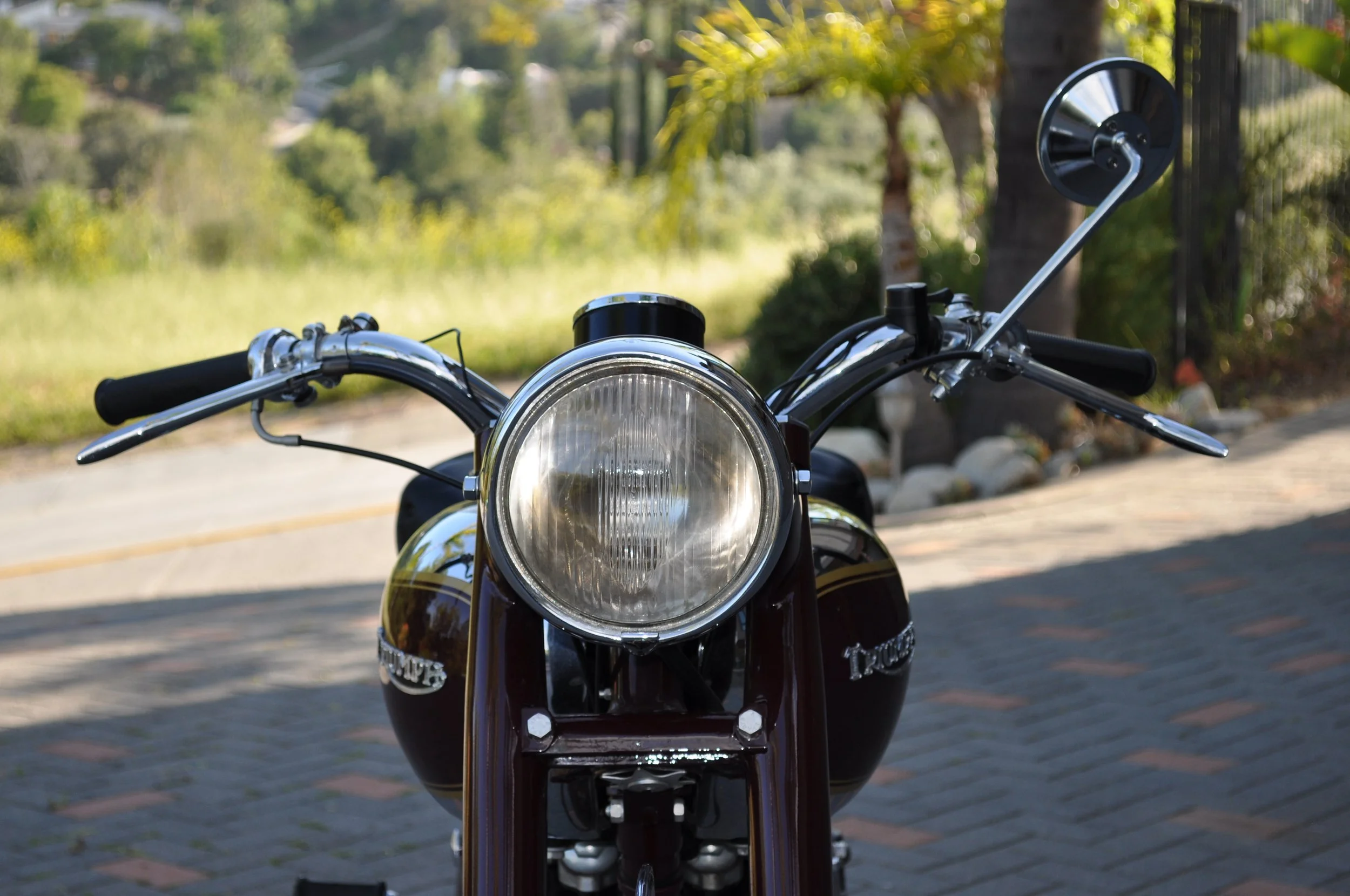
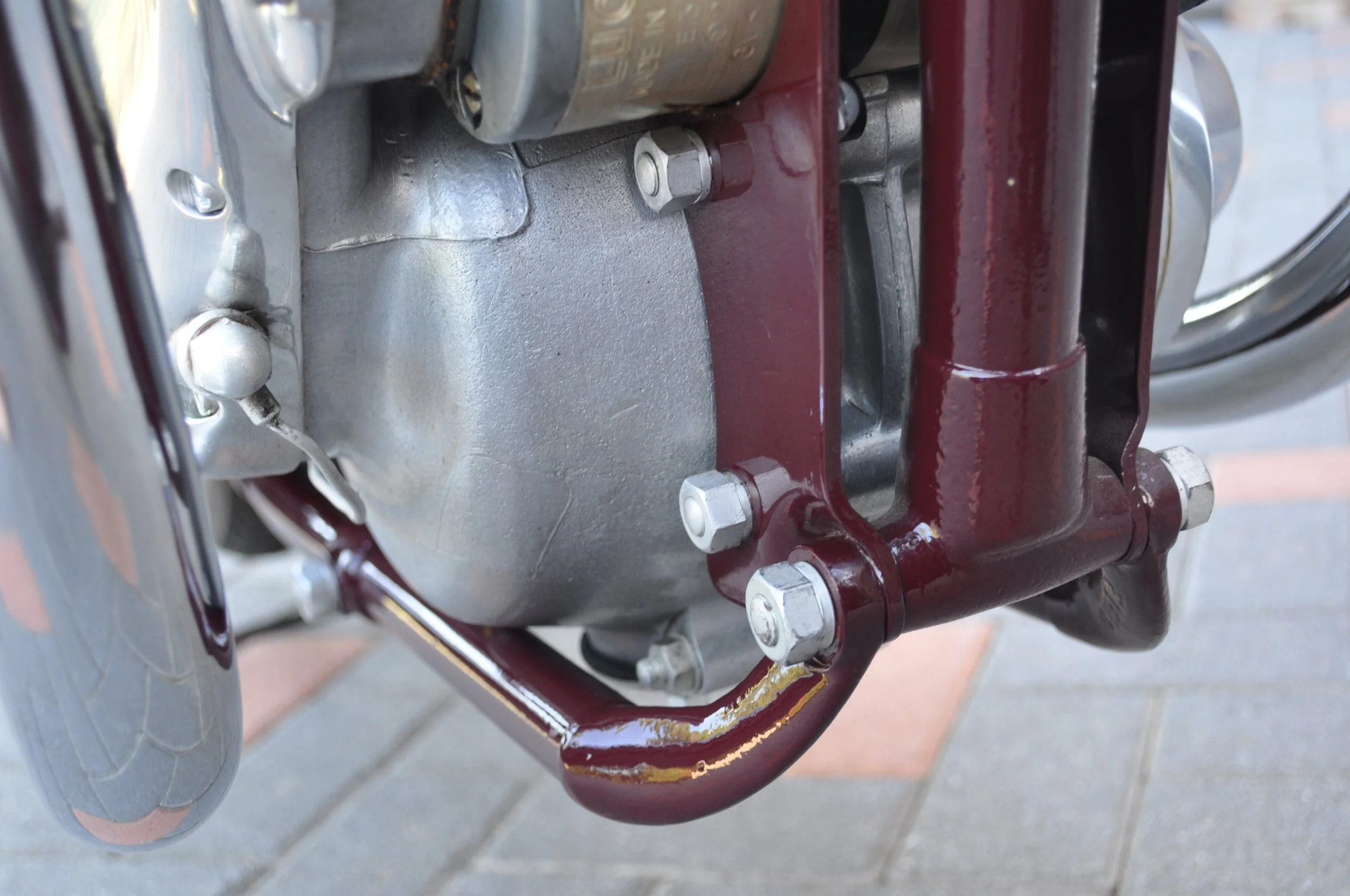
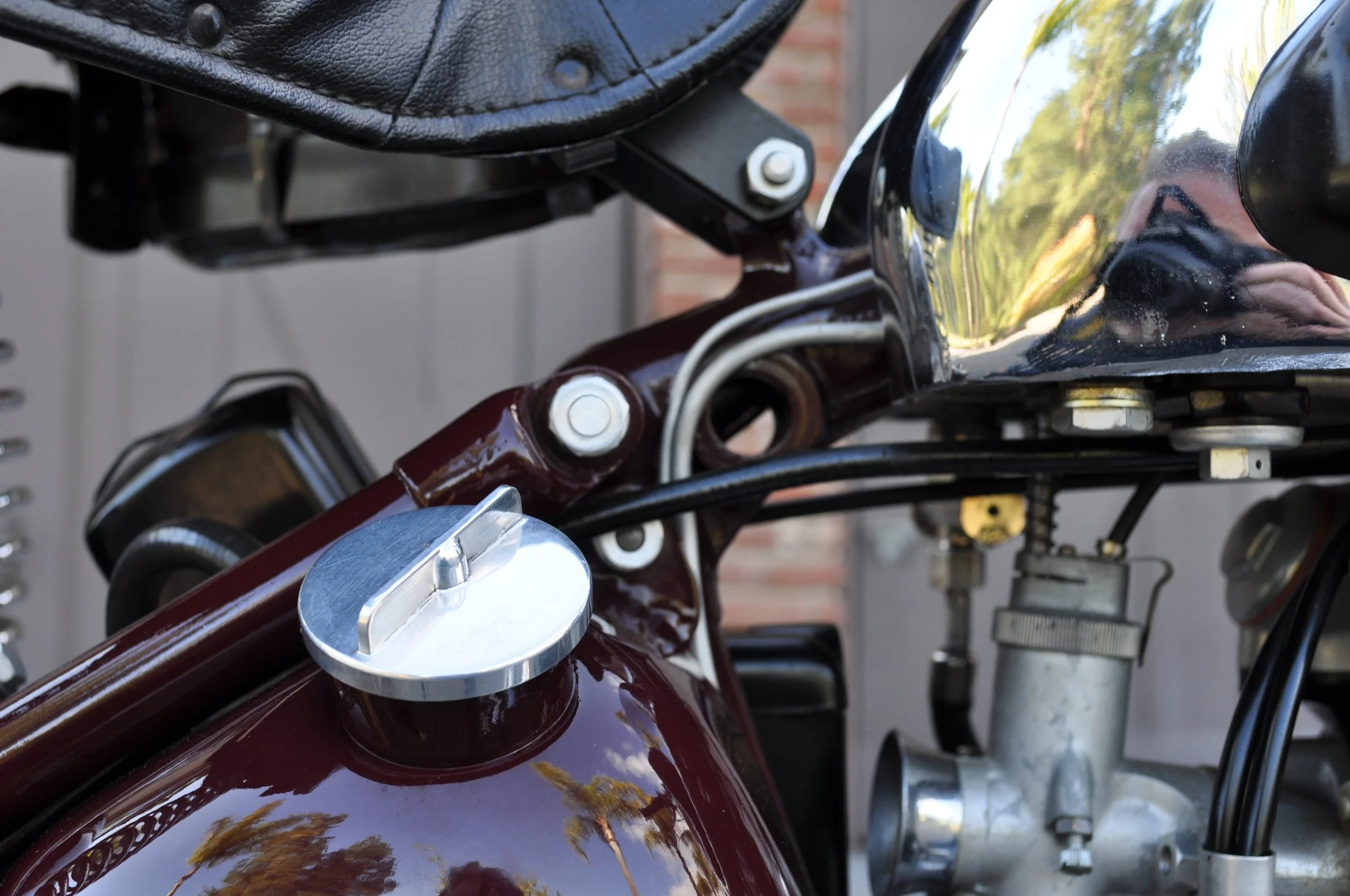
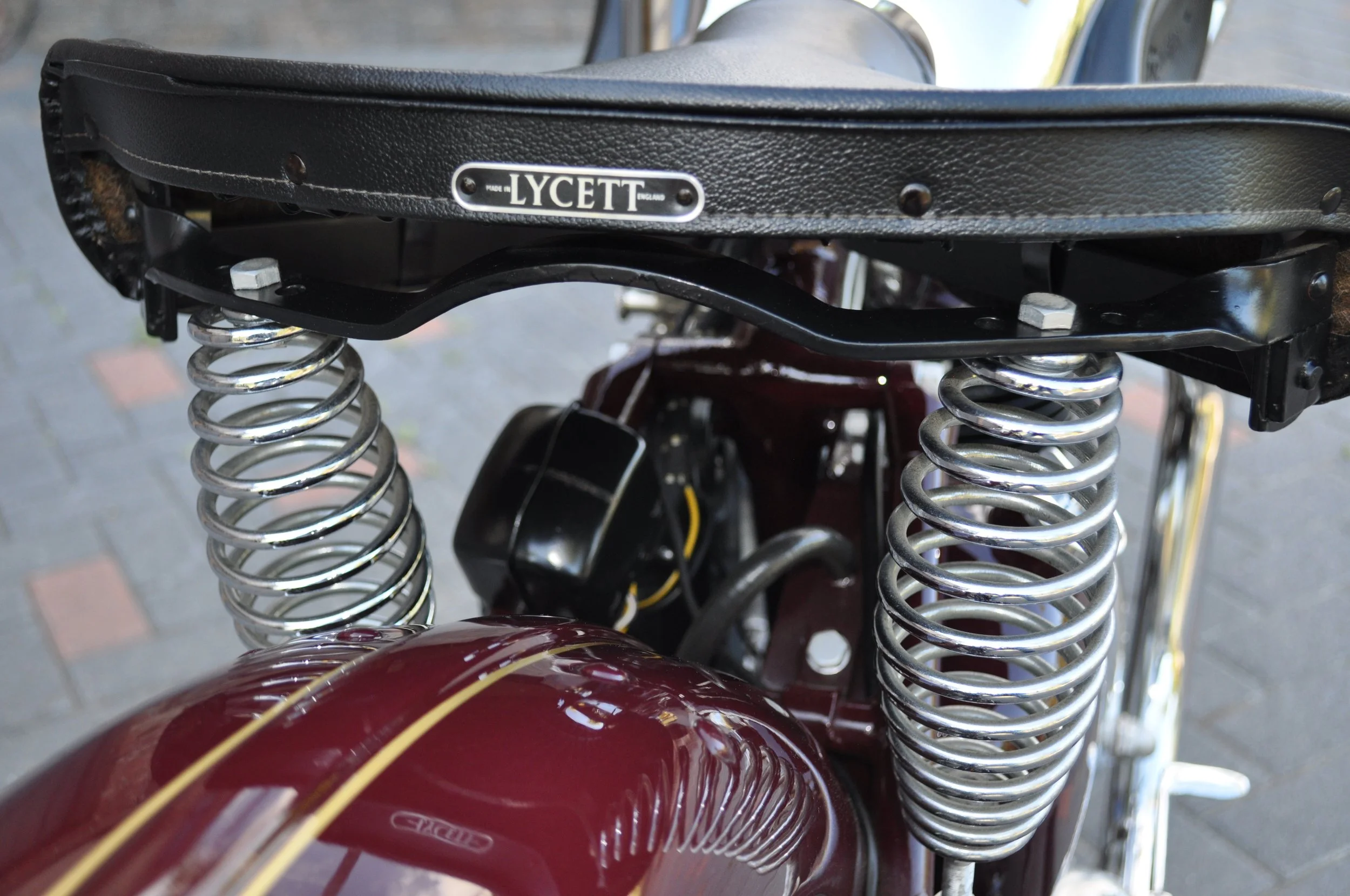
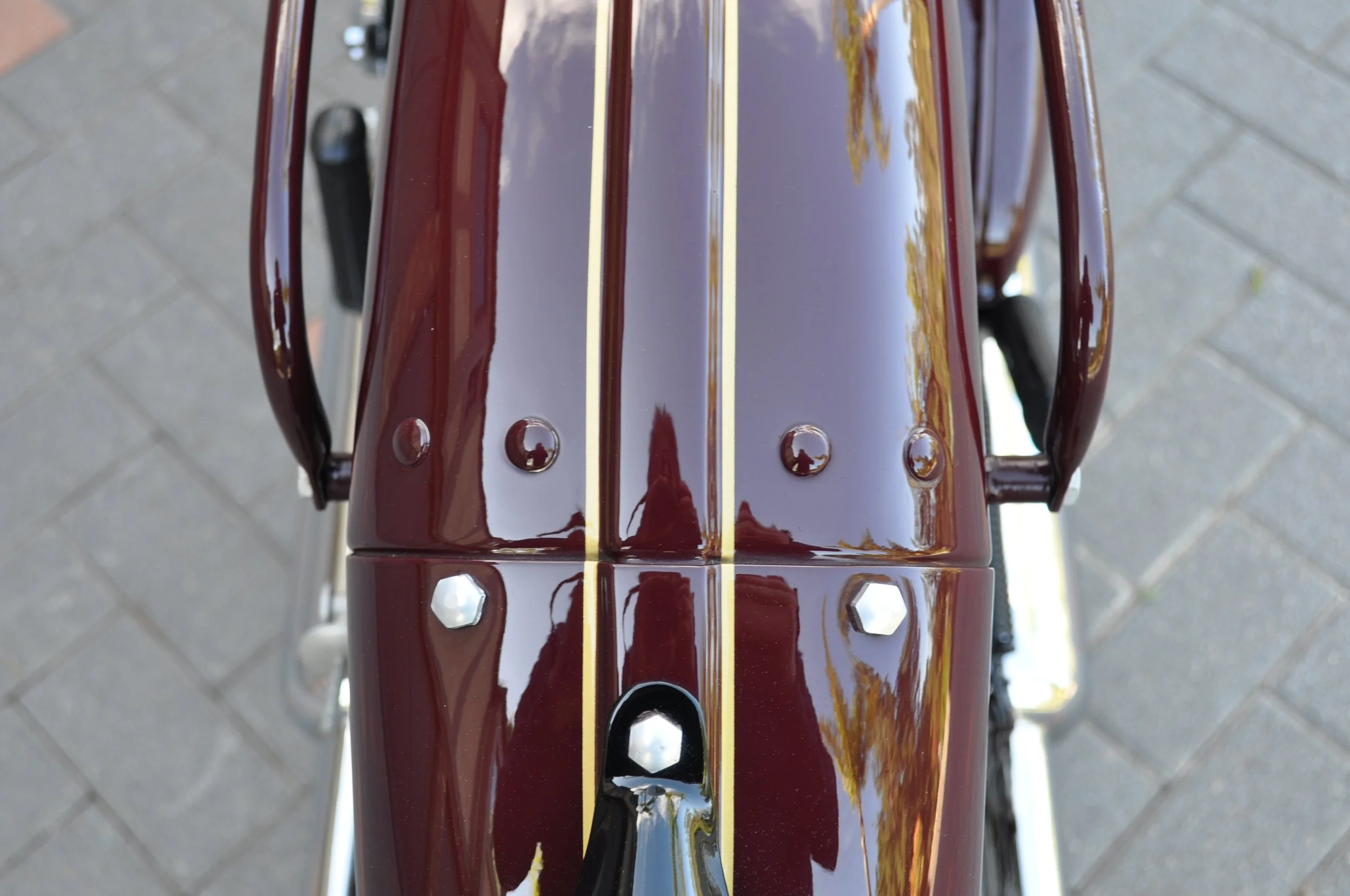
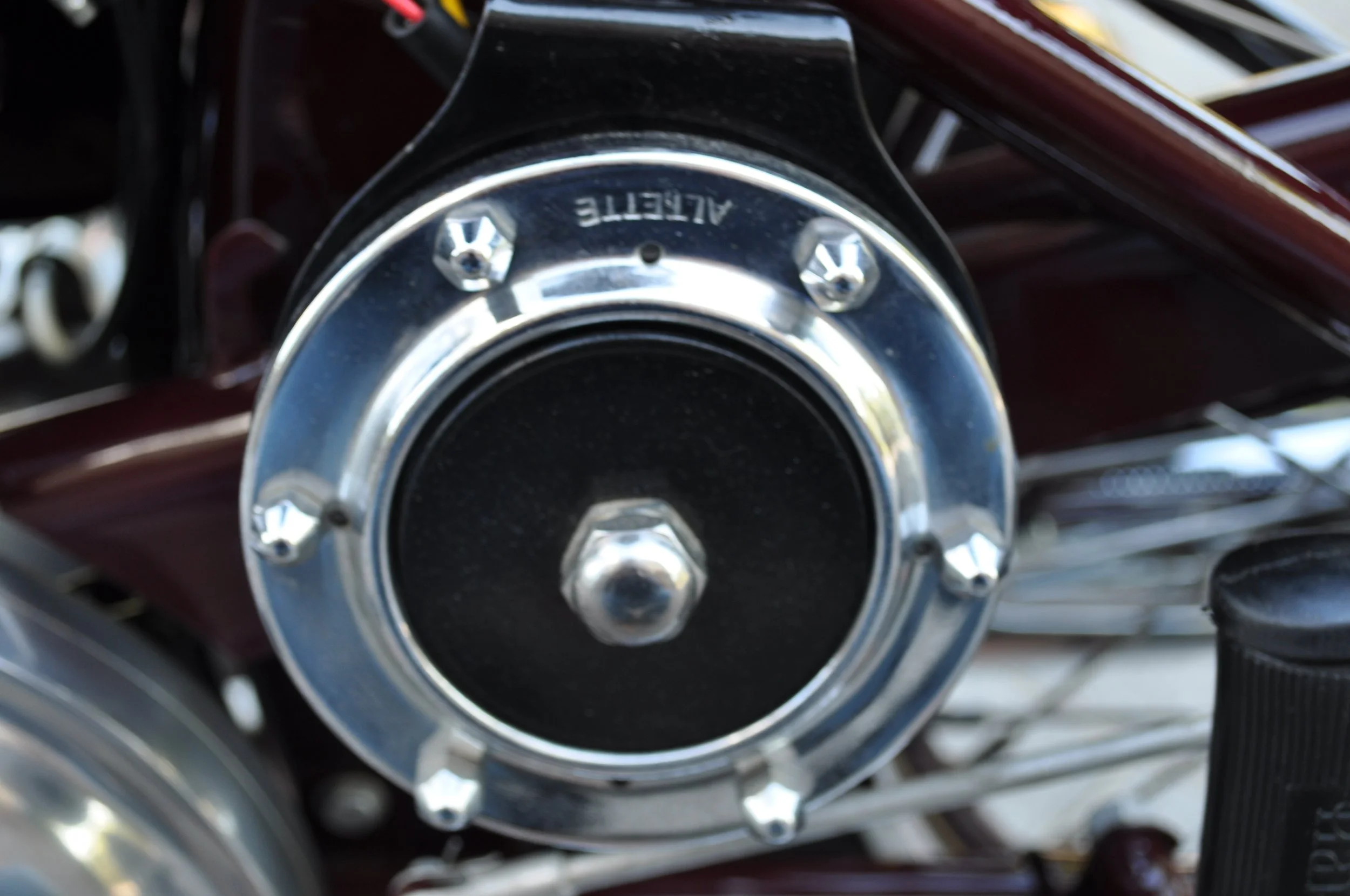
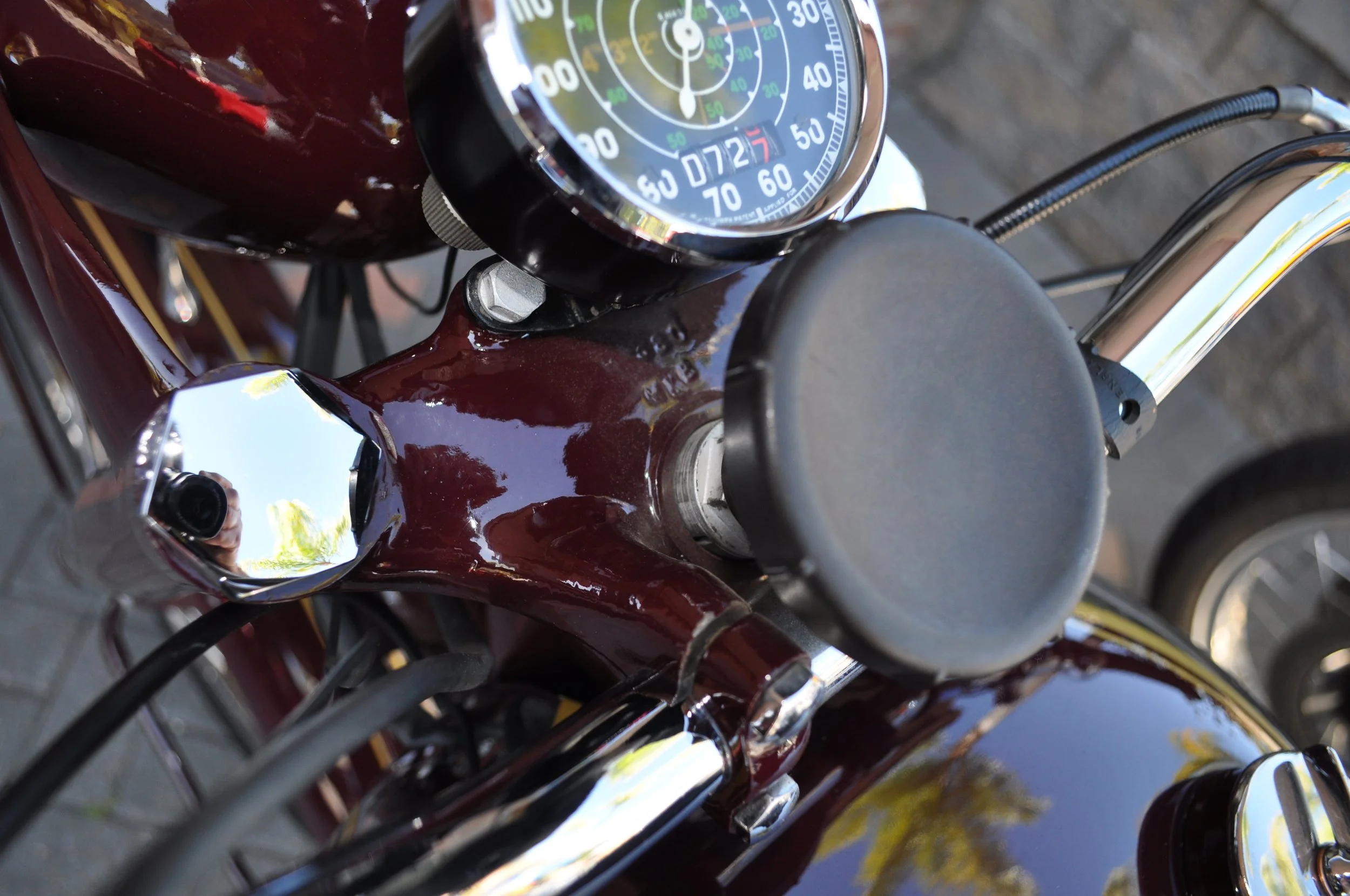
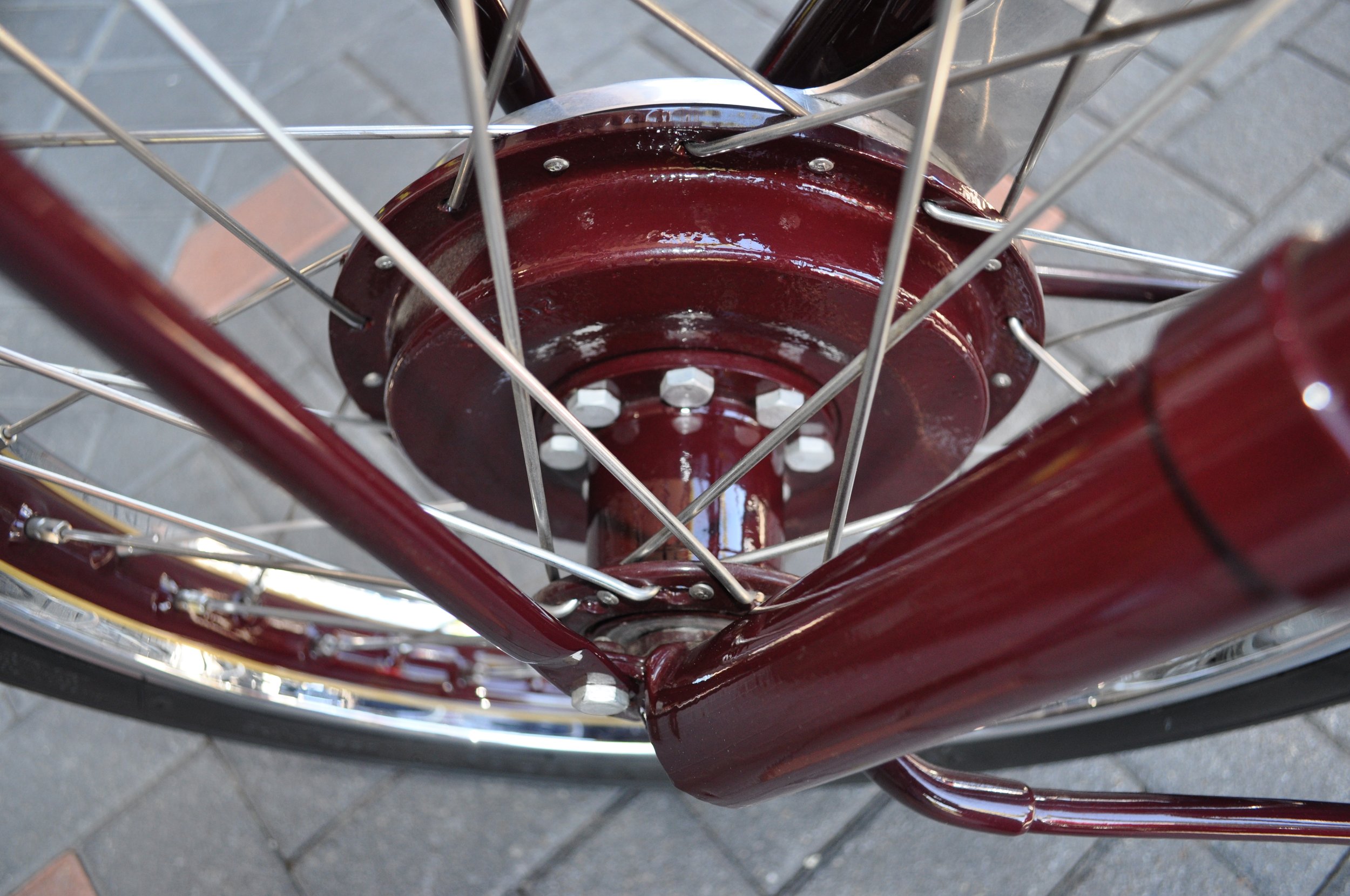
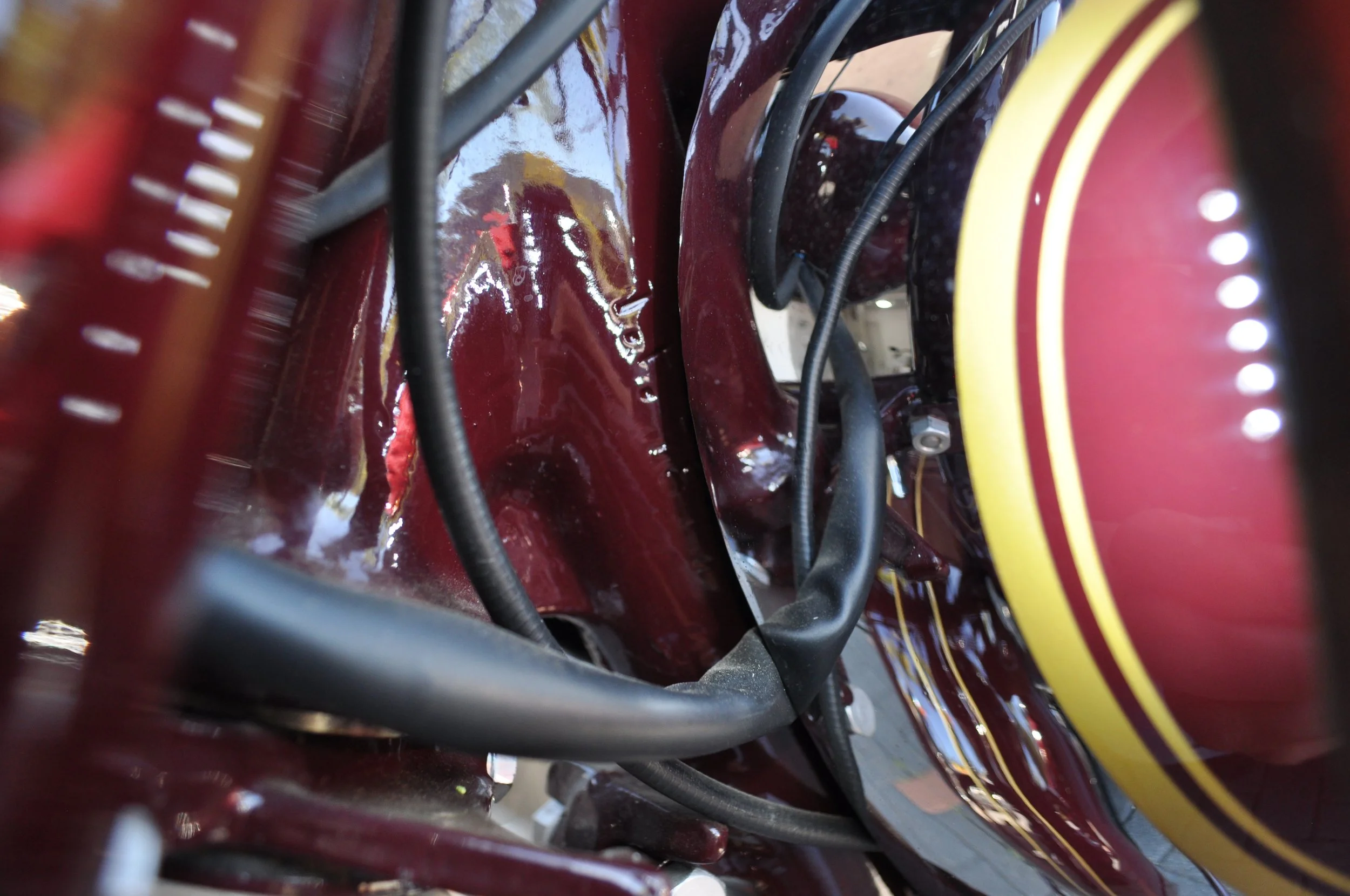
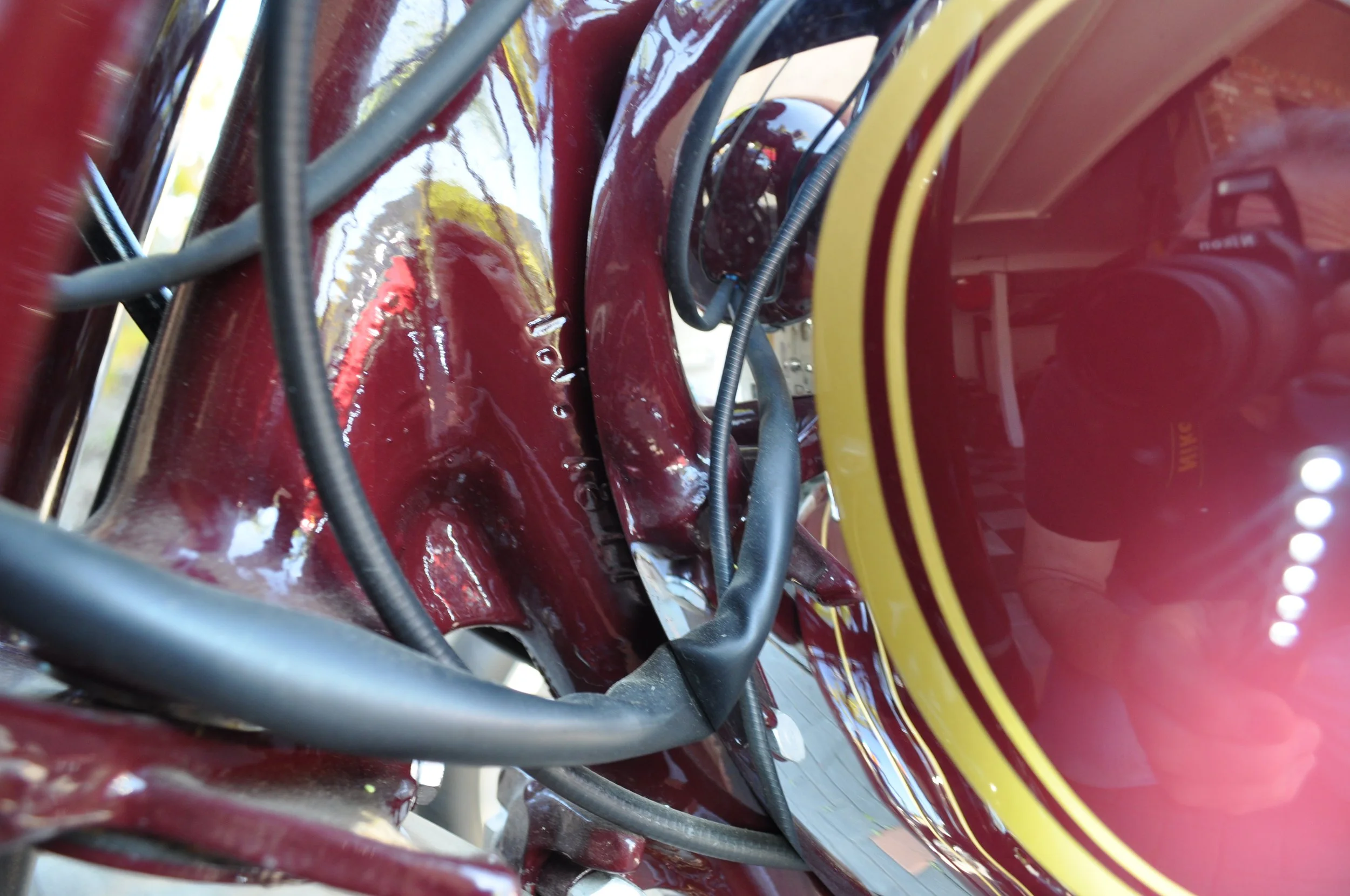
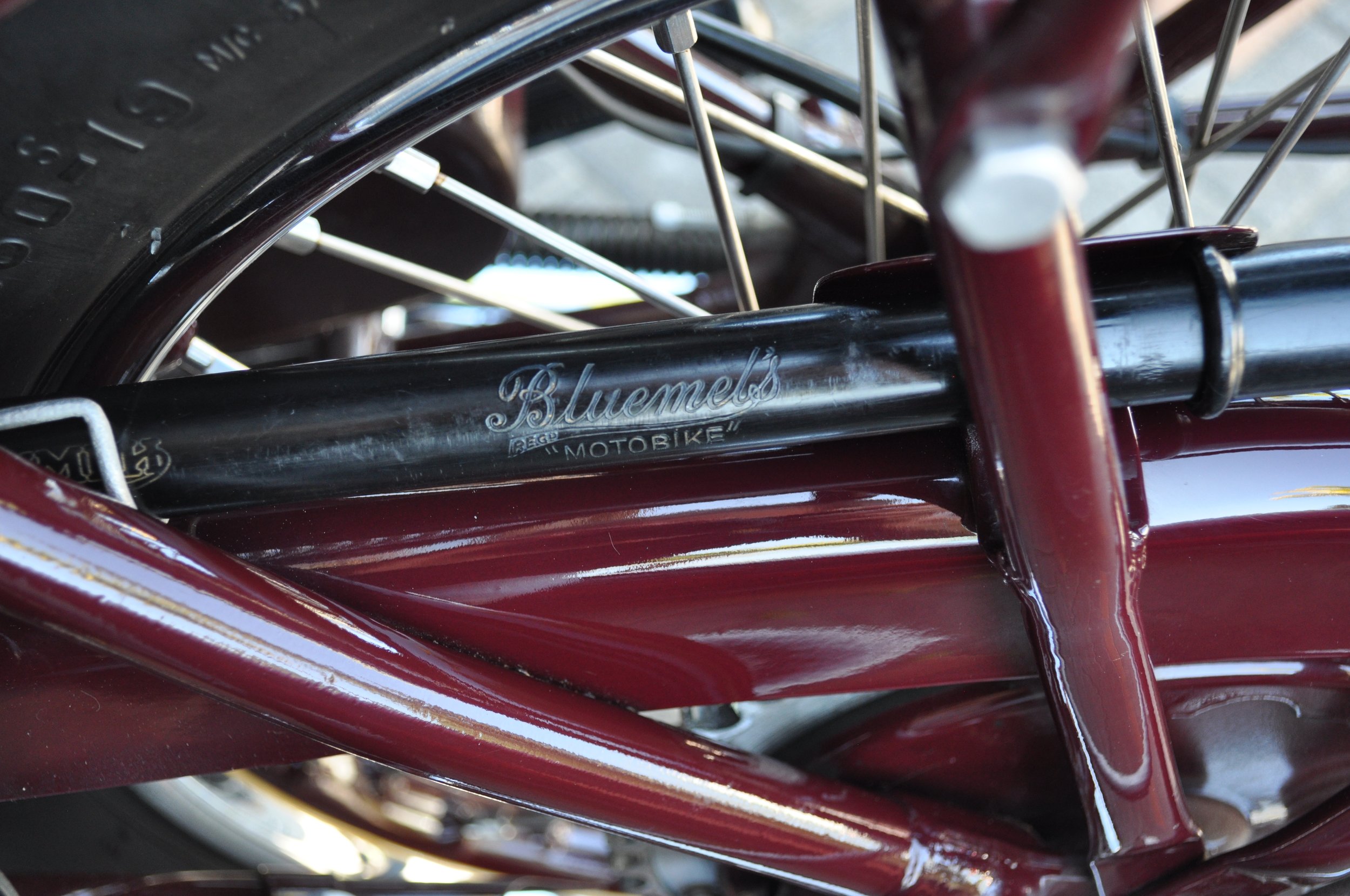
Then I saw it. It literally stopped me in my tracks. The Amaranth red paint, perfectly applied to everything - the frame, the tank, the fenders, the oil tank, the headlamp and even the outside edges of the wheels were all bathed in this luscious, perfect and most beautiful paint. It is almost as if they just dipped the whole motorcycle in a vat of Amaranth red paint and leaving exposed chrome on the sides of the tank, the exhaust system, the handlebars and the edges of the wheels. The feeling I got from the design of the bike in which each part felt like it was carefully integrated into a cohesive whole-no afterthoughts, all planned! Then you add in the paint and the chrome and the result is a spectacular work of art. The perfection stunned me.
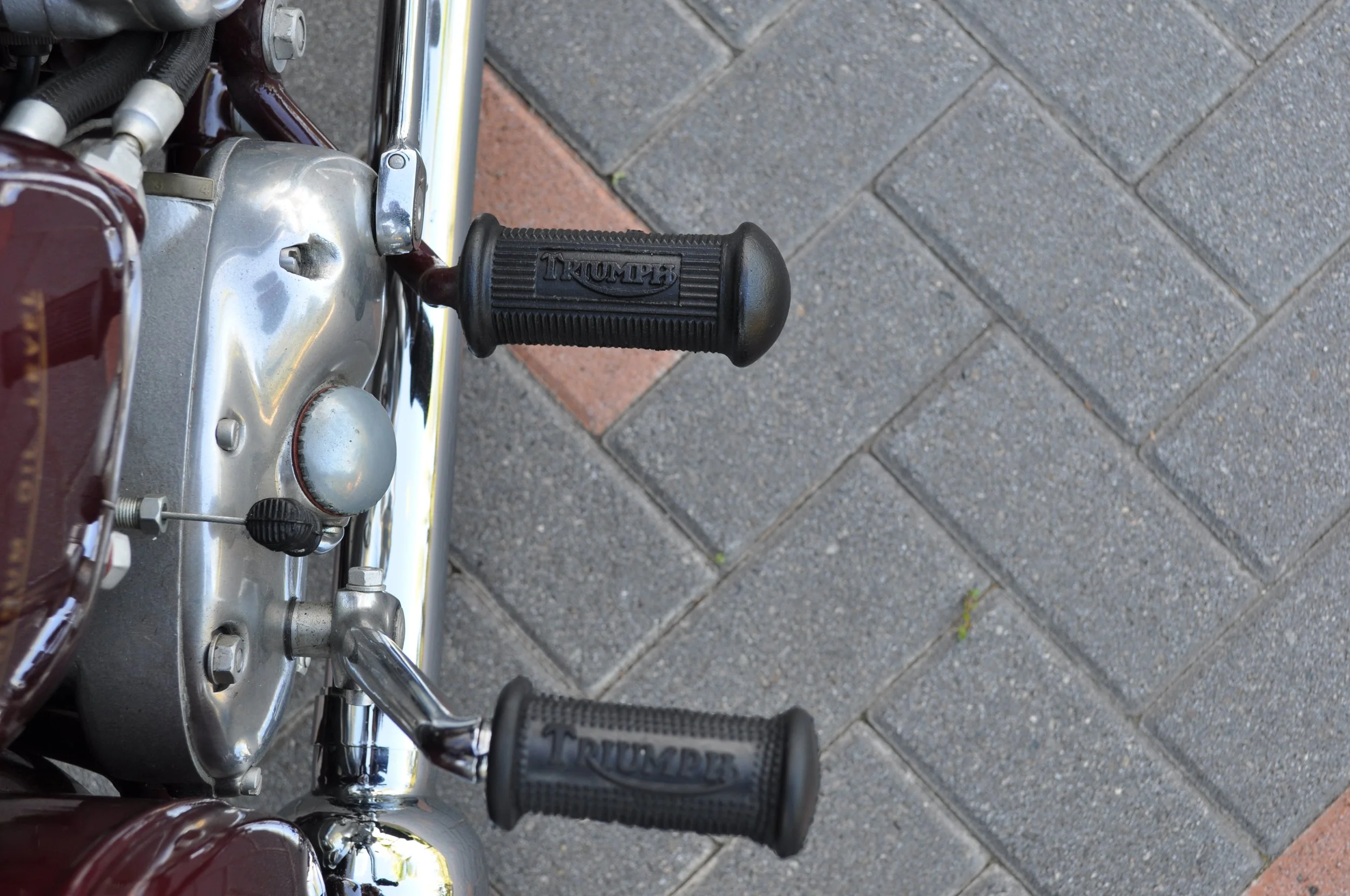
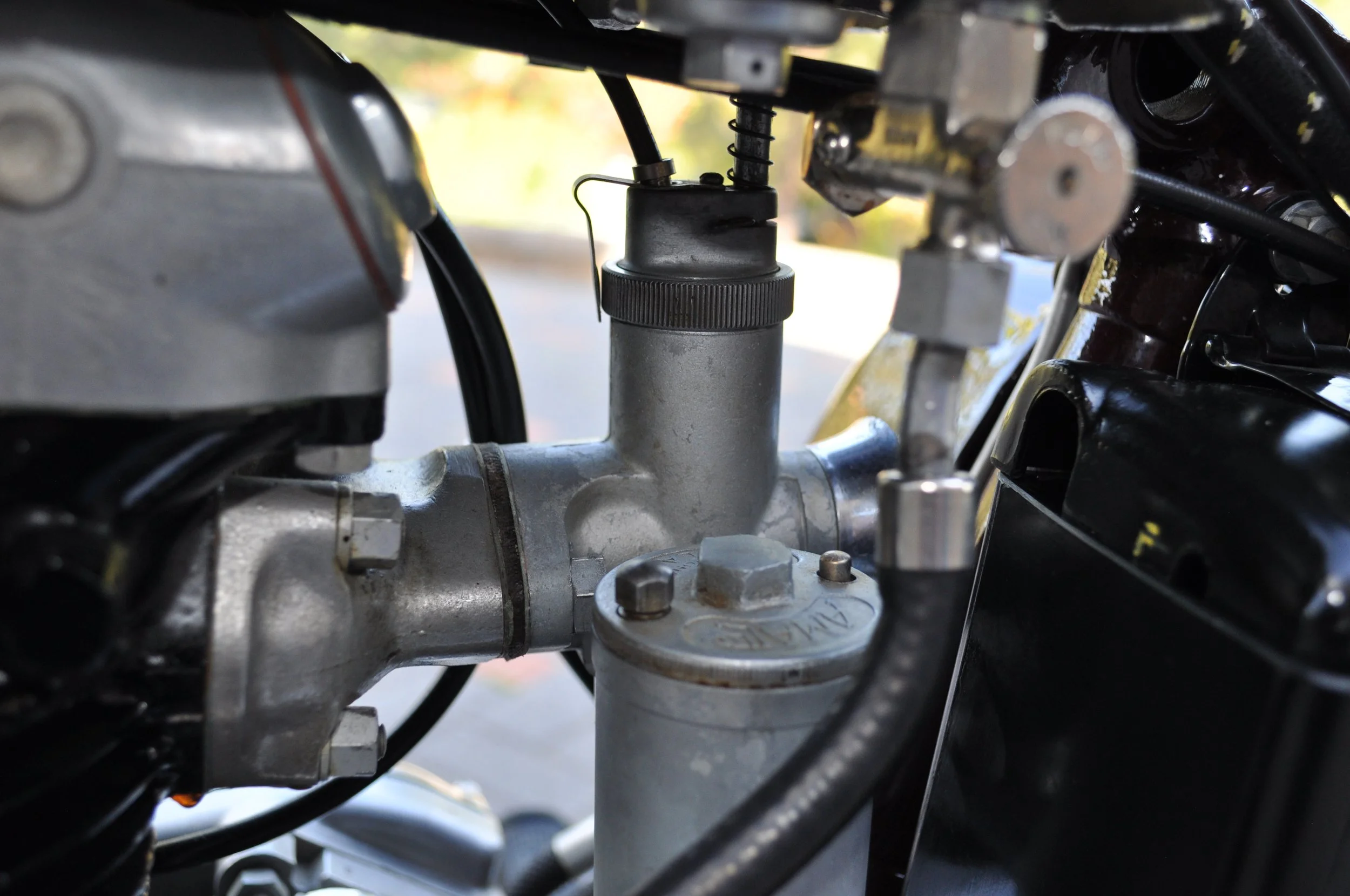
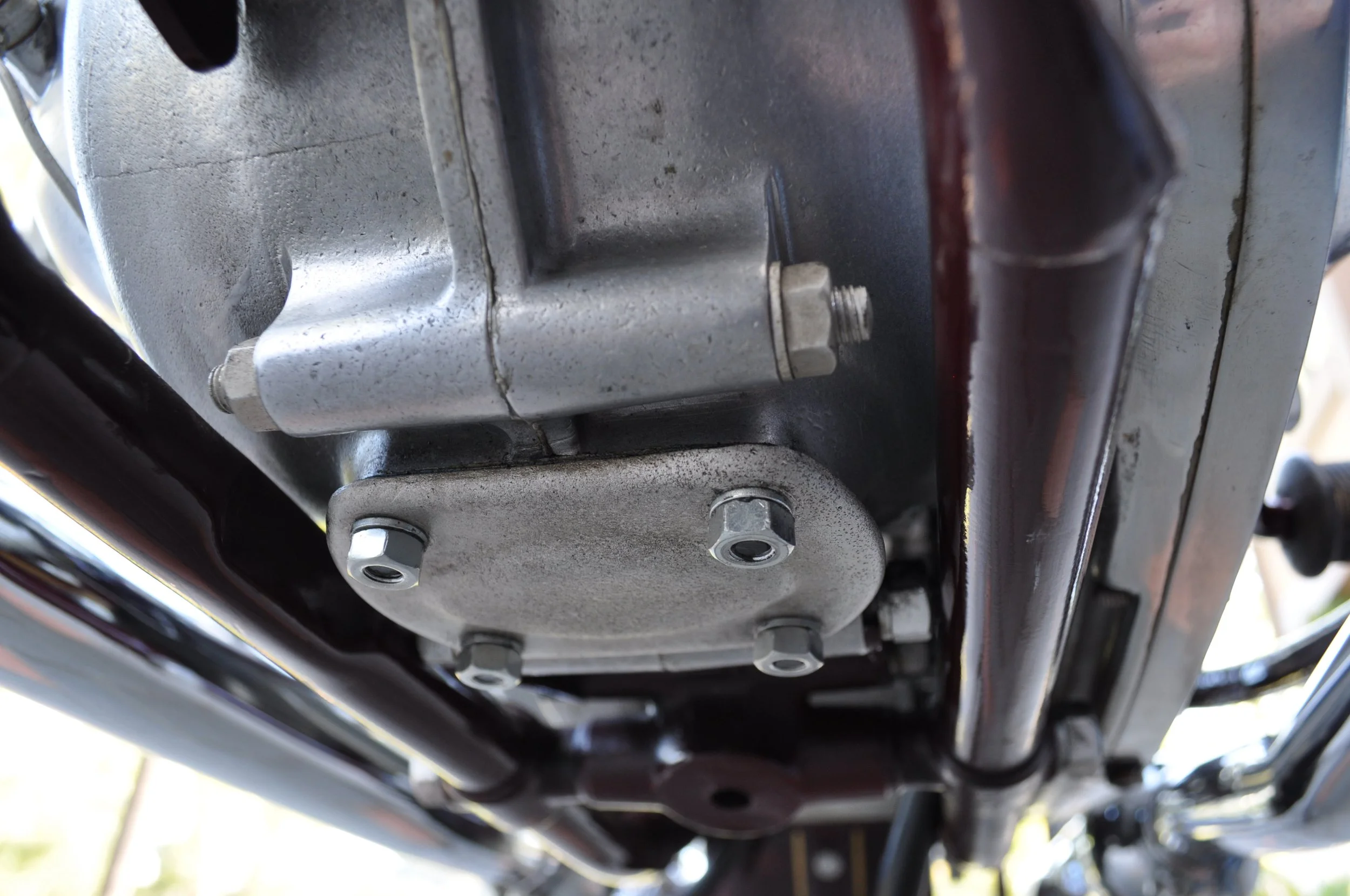
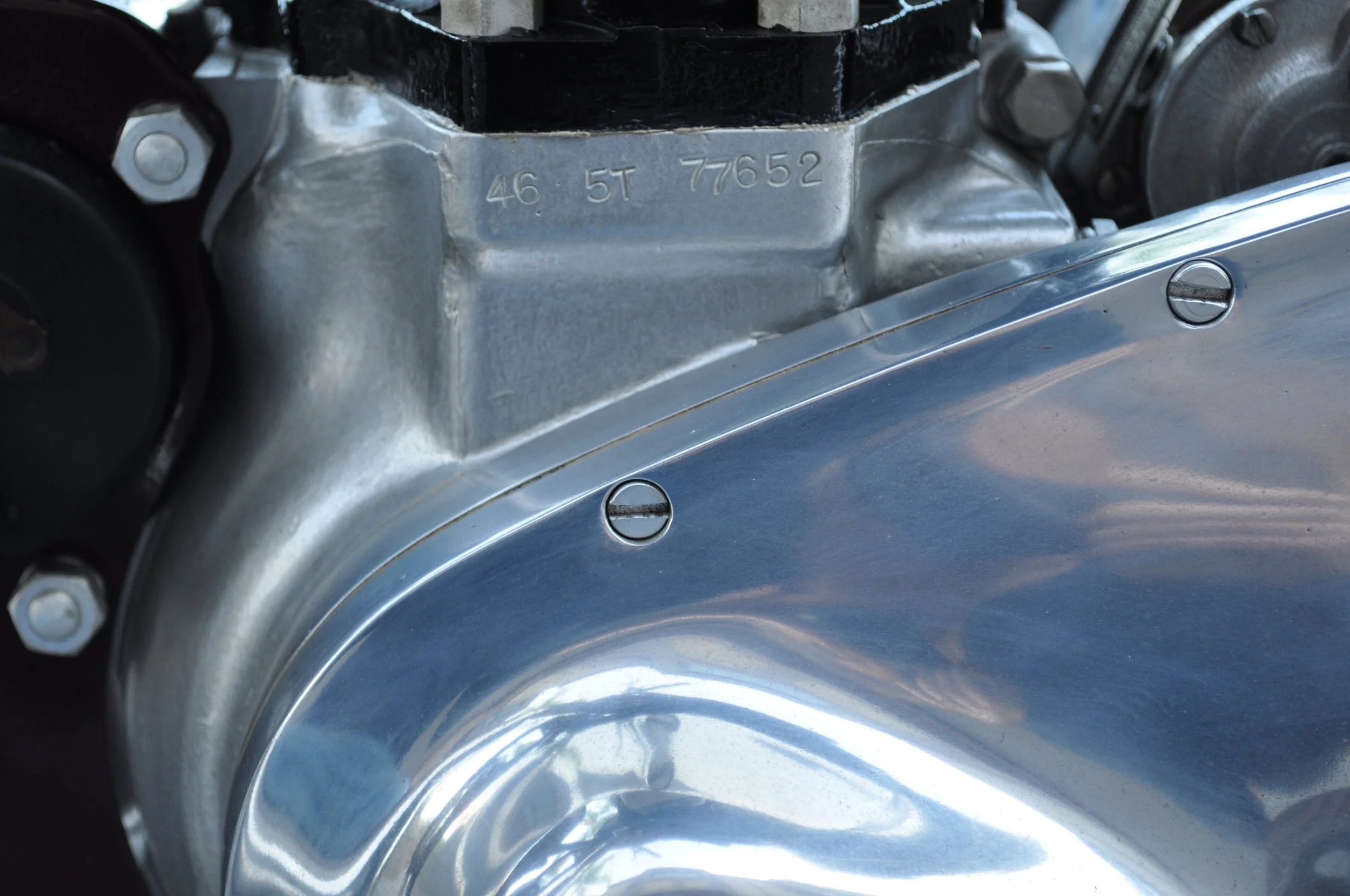
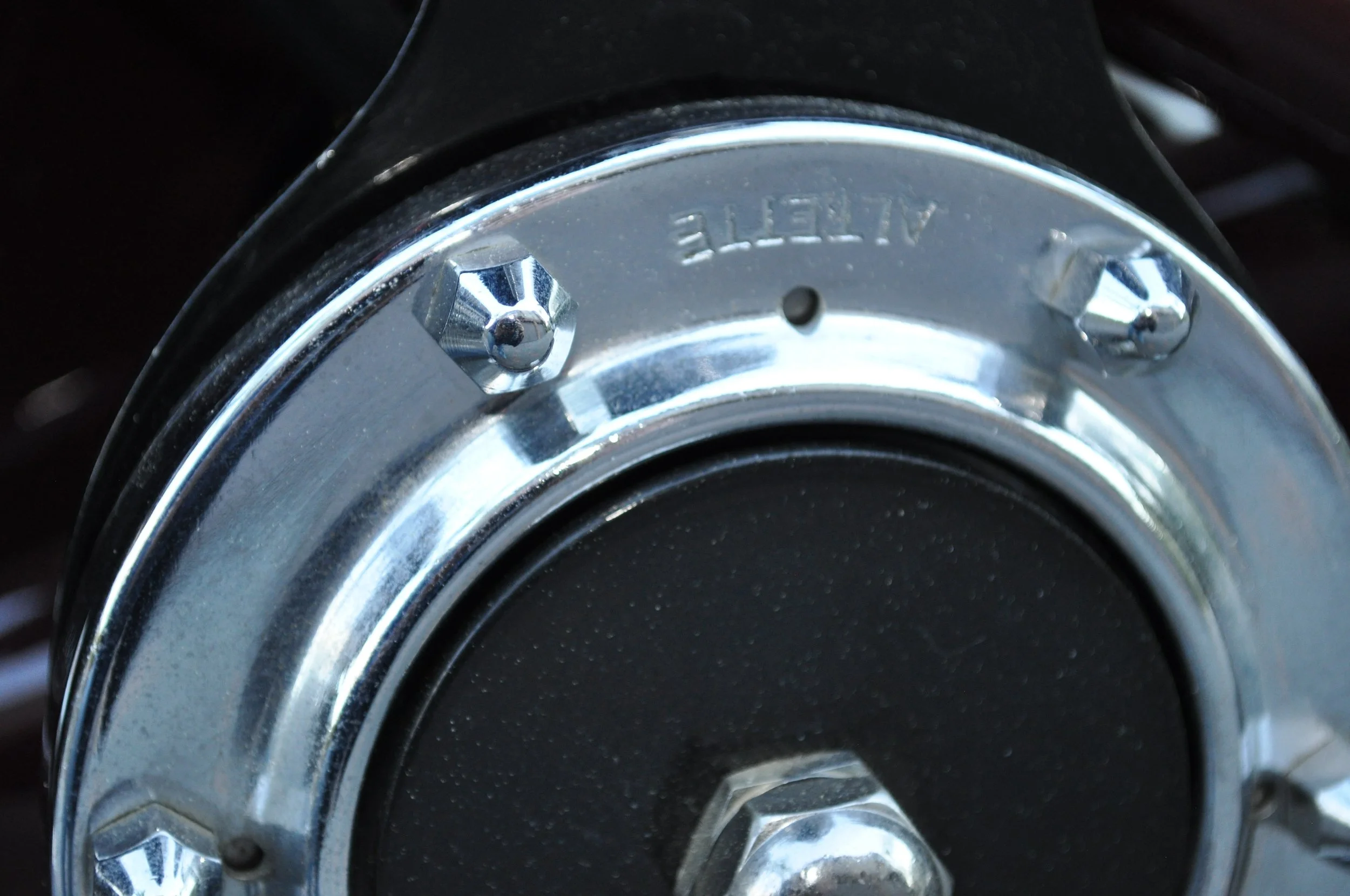
I walked around the bike several times in each direction, trying to find one imperfection. I couldn't. I felt like it was the first post-World War II Triumph Speed Twin produced as a 1946 model and all the Triumph owners and managers followed the bike through its manufacturing process to ensure that this first example was as good as they could get it. Not one nut or bolt appeared to be non-OEM. Not one screw or bolt was boogered up. It was absolutely concourse and in number one condition. It is almost like being in love.
I went up to the organizer to find out the identity of the owner. I was finally able to locate this gentleman after it was announced that this motorcycle had won best of show among all Triumph motorcycles. He was walking back to his jewel with a trophy in hand. Trying to remain calm, I congratulated him on his victory. He said “thanks a lot”. Then he said, "Next step is next year's Quail competition up in Monterey.” He said he had won awards with his Ariels and other British bikes at Quail but not with a Triumph. I said I understood and told him a little bit about my collection. It turns out we had a few friends in common and he invited me to stop by his home, not too far away see his collection.
After many phone calls and visits to his house I somehow was able to convince him to sell the motorcycle to me. I now had bookend Triumph Vertical Twin motorcycles in my collection. The 1946 on one side and the 2016, the newest model, on the other side separated by 70 model years. The familial resemblance is unmistakable. In the middle is the 1969.
Triumph motorcycles, which had nearly died during World War Two, and then shuttered their manufacturing in the 80s- but resurrected in the early 90s, has been kept alive largely based on the success of their vertical twin middleweight motorcycles. These motorcycles began and have continued, model by model, with the Triumph Speed Twin. I am very happy to have a most perfect and beautiful example of the grandfather of them all.